
Customer Data Is Spoken on Every Call
“Can you confirm the last four digits of the card?”
“Sure, it’s actually 4512 8890 2231 7764, the full number, if that helps.”
Customers share personal information on calls all the time. Card numbers, dates of birth, home addresses, account numbers, ID numbers. Usually because they’ve been asked to. Sometimes because they’re trying to be helpful.
All of it ends up in the recording. And once calls are transcribed for review, it ends up in text too — easy to search, copy and share.
How QA spreads customer data
Quality review is one of the main reasons recordings get opened. That’s also what makes it a privacy risk.
More people see more calls. Every reviewer, team leader and trainer who opens a call sees whatever the customer said on it.
Transcripts are easy to copy. A number spoken on a call is hard to reuse. The same number written in a transcript can be copied in a second.
Calls get shared for training. A good example call gets passed around a team, including the customer details in it.
Access is often too broad. In many setups, anyone who can review calls can review every call, across every team.
Why this matters
- Customers trust you with it. They shared their details to get help, not to have them read by a dozen people.
- It’s a compliance question. Contact centres in banking, lending, insurance and telecom are increasingly asked how call data is protected and who can see it.
- One leak is enough. A single screenshot of a transcript with a full card number can become a serious incident.
Reducing exposure without losing visibility
QA still needs to hear calls. The goal is to make sure the people reviewing them see what they need to judge the call, and not more.
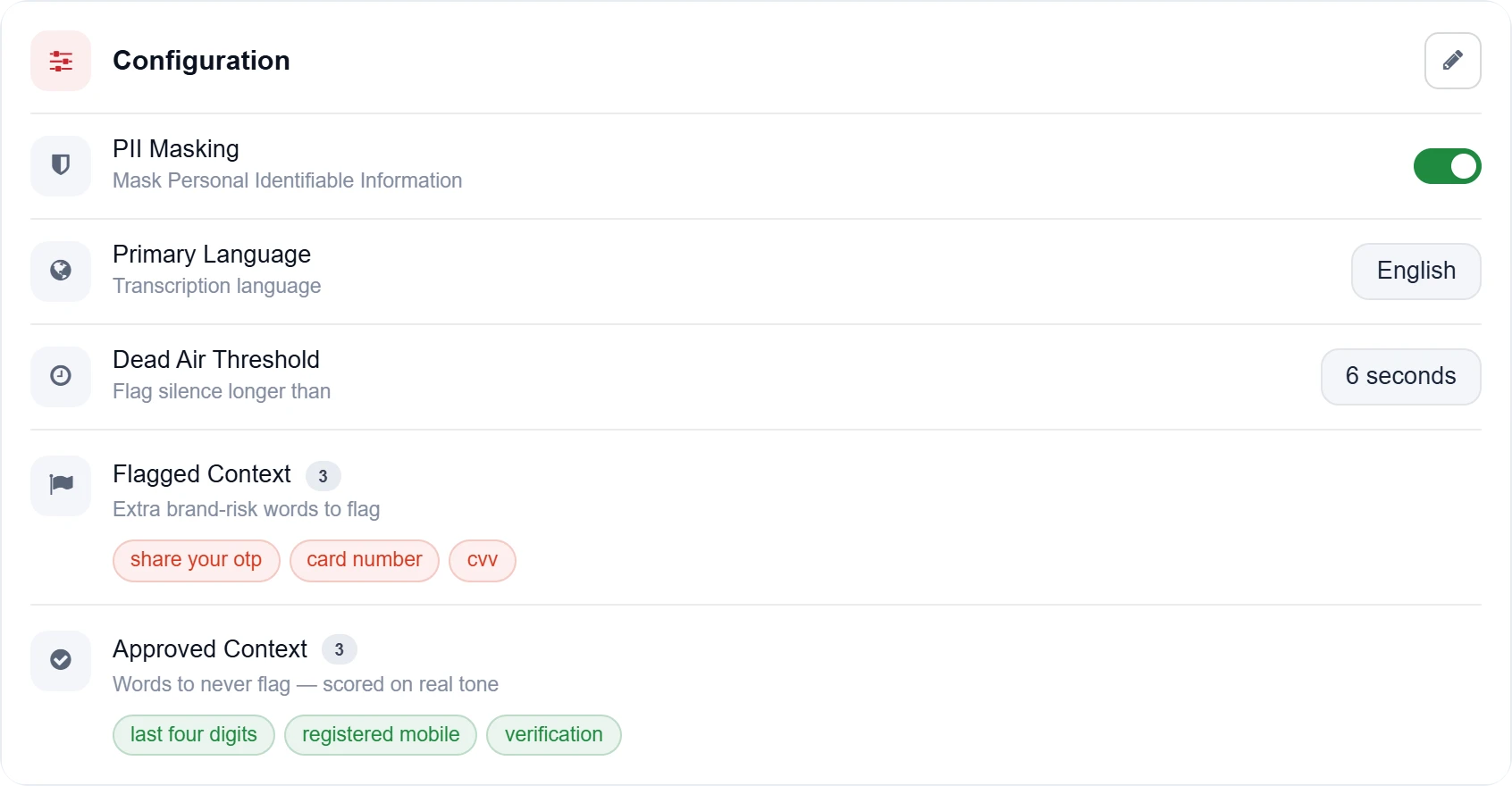
From The Heartbeat app: a loan servicing team’s workspace, with PII masking switched on. Words like “share your OTP”, “card number” and “CVV” are flagged, so calls where an agent asks for more than they should stand out.

From The Heartbeat app: a call summary with masking on. The customer’s name, date of birth, mobile number, address, card number and account number are replaced by tags such as <PERSON> and <CREDIT_CARD>. The reviewer can still see exactly what the call was about, and the ₹4,250 amount stays, because money amounts aren’t personal data.
Three things do most of the work:
1. Mask personal data in transcripts. Card numbers, dates of birth and similar details replaced in the text, so a reviewer can follow the call without reading the customer’s private information.
2. Limit who can see which calls. People should only see the teams and workspaces they’re responsible for, not the whole organisation’s calls.
3. Keep data where it belongs. Knowing where recordings are processed and stored matters, especially for regulated businesses.
Habits that help on the floor
Ask for less. If the last four digits are enough to verify, train agents to stop customers before they read the full number.
Don’t share calls with details in them. When using a call for training, use a masked transcript or a clip without the customer’s information.
Review access regularly. People change roles. Their access to recordings should change with them.
Set masking before calls arrive. Masking applied from the start protects every call. Turning it on later doesn’t change calls already processed.
How The Heartbeat handles this
The Heartbeat reviews 100% of your agents’ calls, in any department. Analysts + AI go through every recording, in Hindi, English or Hinglish, and every AI flag is checked by a trained analyst before it reaches you.
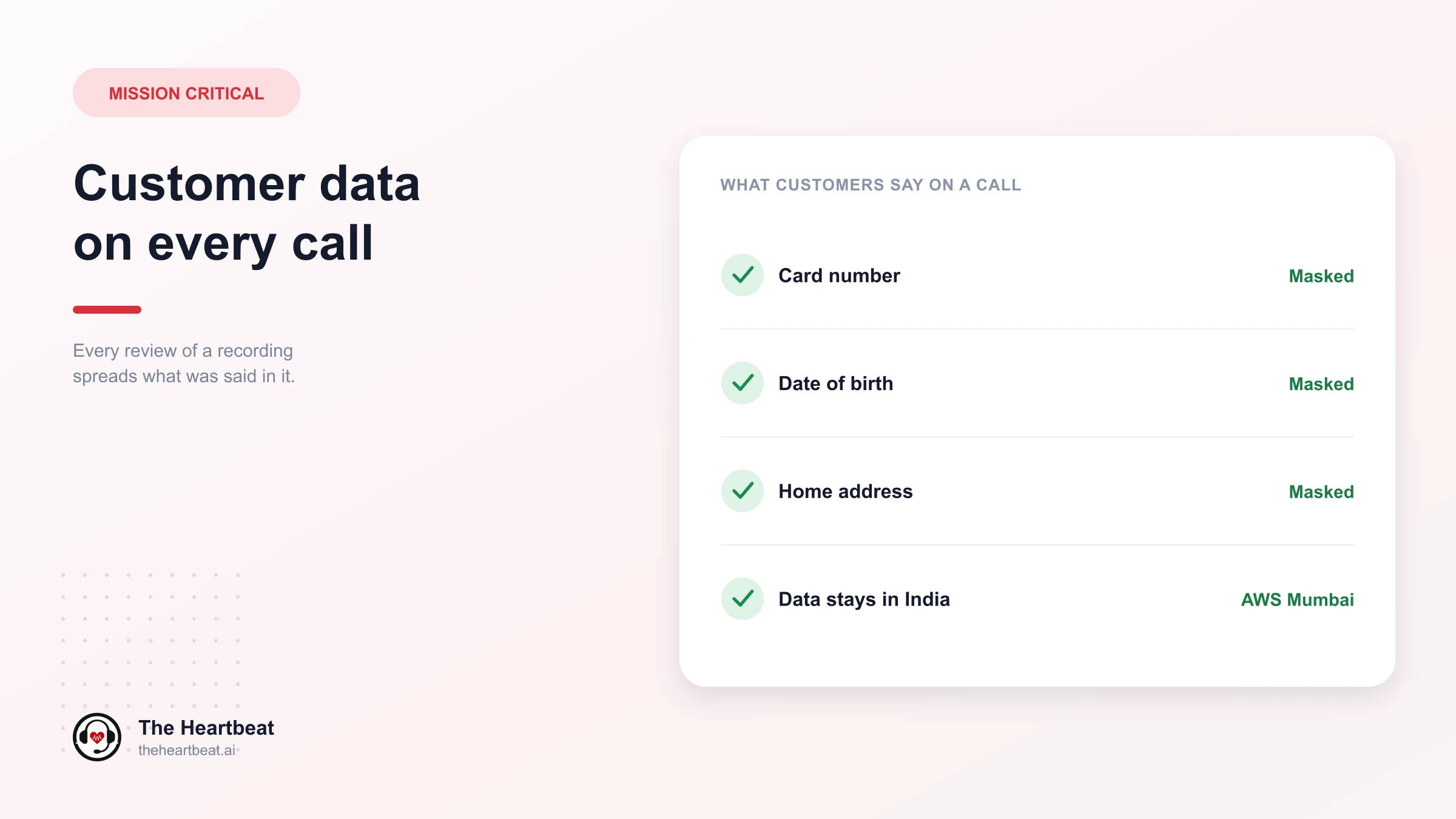
PII masking is set for each workspace and applied to the call summary, so names, card numbers, dates of birth, addresses and account numbers are replaced by tags. Access is permission-based: every screen is permission-gated, users see only the workspaces they’re assigned to, and internally only the analyst team assigned to your account can reach your data. Recordings and everything derived from them are processed and stored on AWS ap-south-1 (Mumbai), so your data stays in India.
Your customers tell your agents things they’d tell almost nobody else. Make sure it stays that way.