"I Never Said That": Coaching Without Evidence
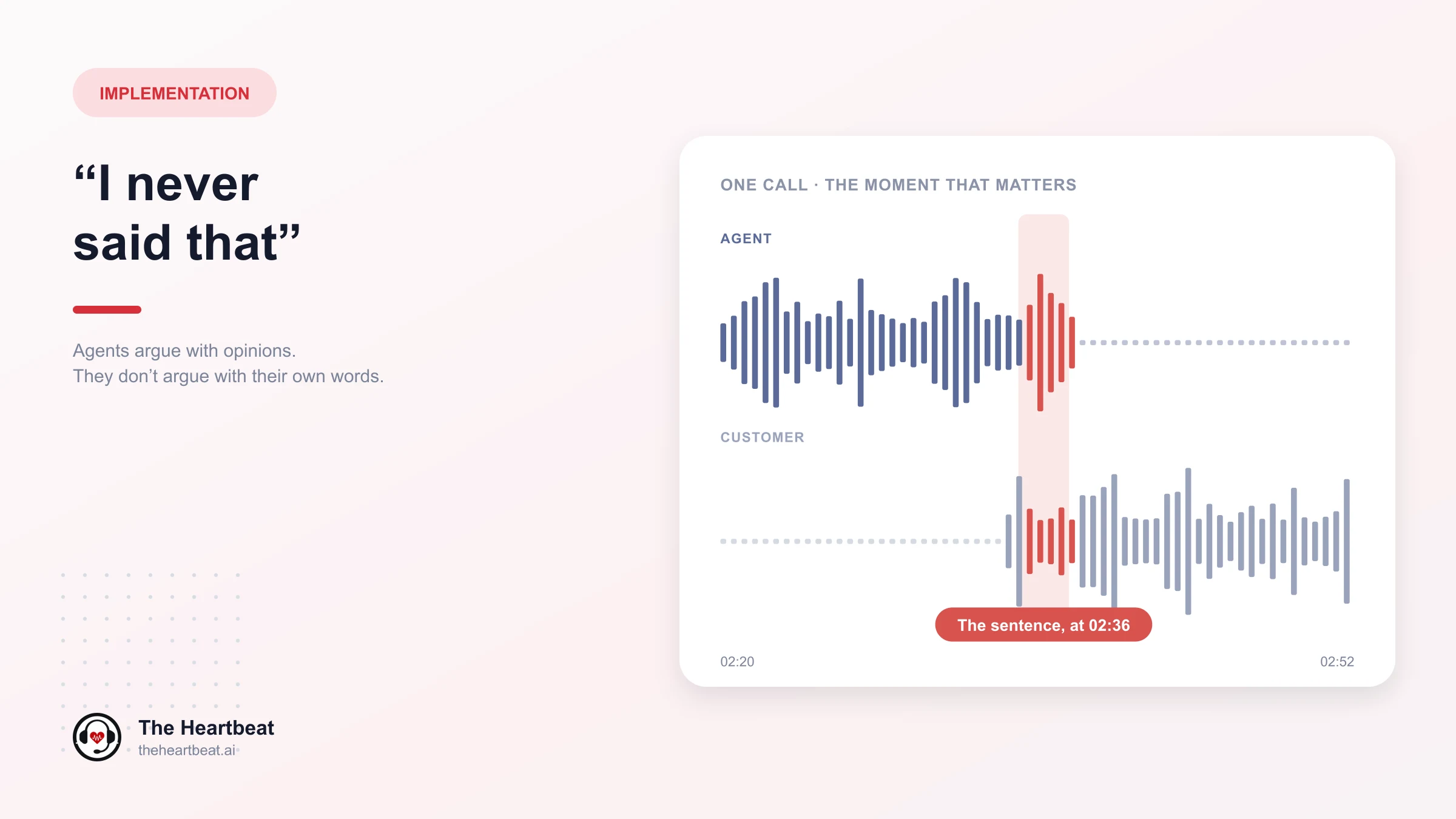
"You were rude to the customer on Tuesday." "I wasn't rude. I don't even remember that call." Ten minutes later, the coaching session is an argument — and nobody can settle it.
ContinueField notes on call QA, conversation intelligence, and compliance for regulated Indian contact centres — from the team behind The Heartbeat.
"You were rude to the customer on Tuesday." "I wasn't rude. I don't even remember that call." Ten minutes later, the coaching session is an argument — and nobody can settle it.
Continue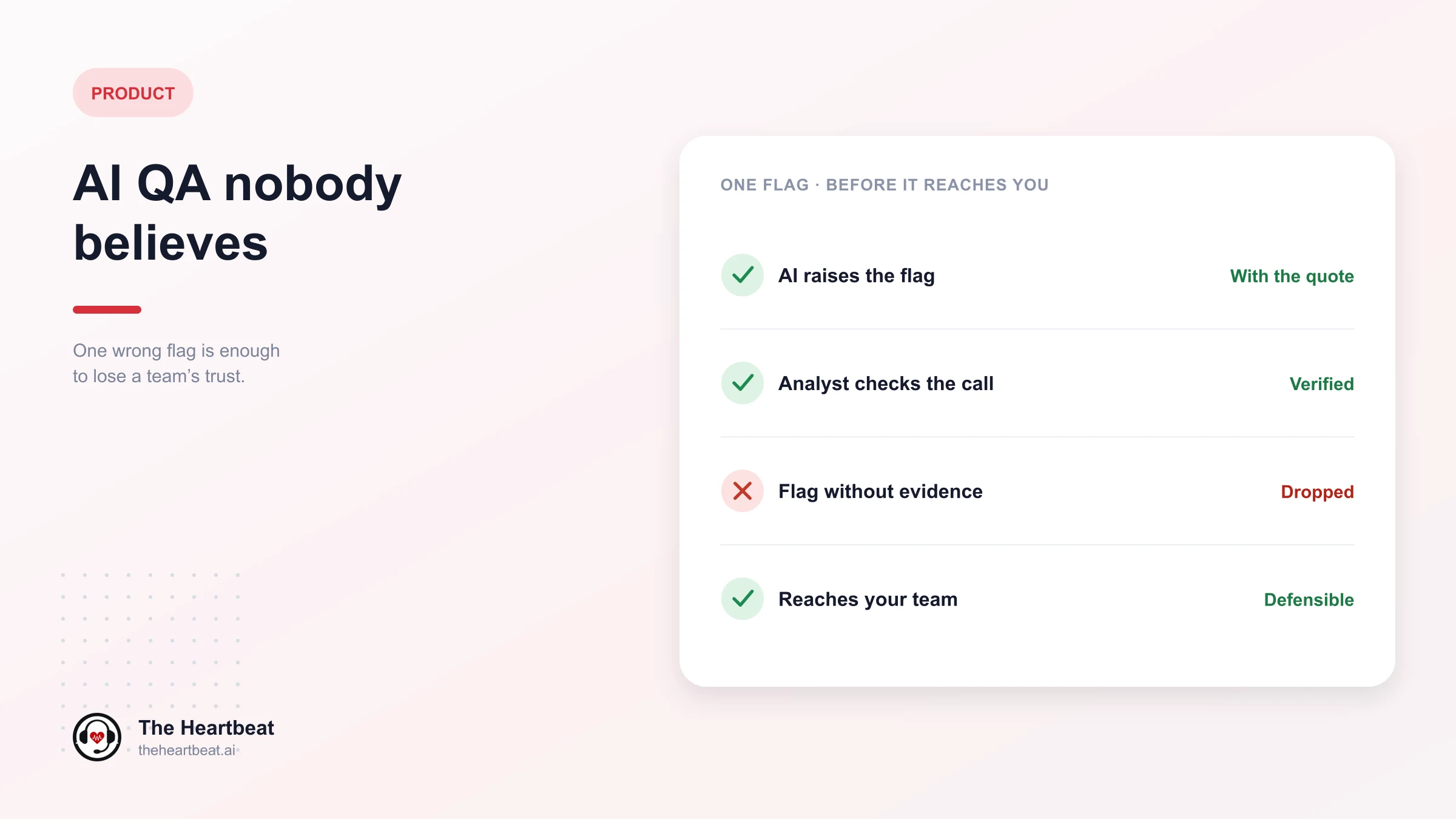
The tool flags an agent for rudeness. The team leader listens to the call. The agent was quoting the customer. From that day, nobody trusts a single flag — and the team goes back to sampling by hand.
Continue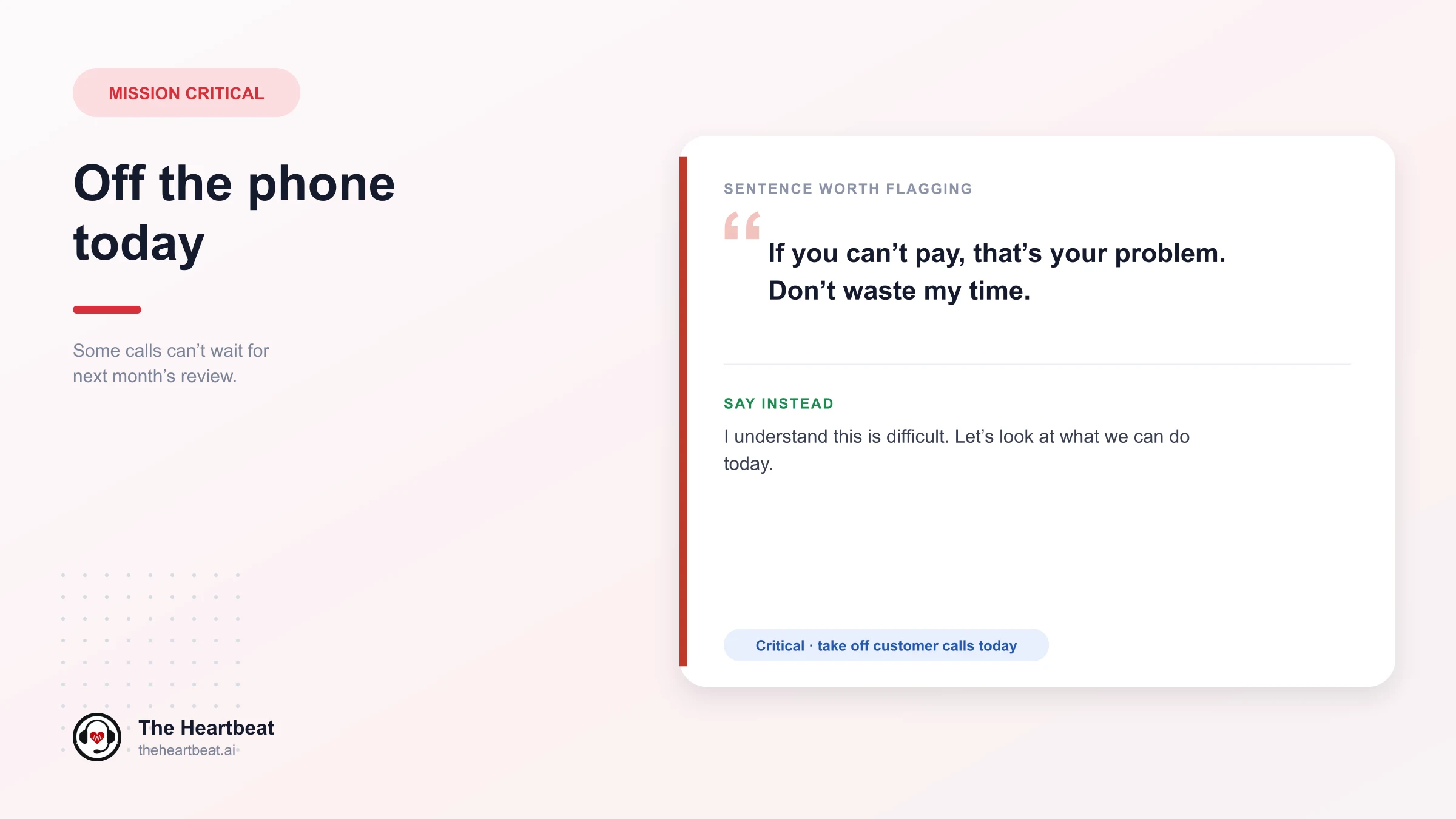
An agent says something on a call that should never be said to a customer. Nobody hears it for three weeks. In that time, the same agent takes another six hundred calls.
Continue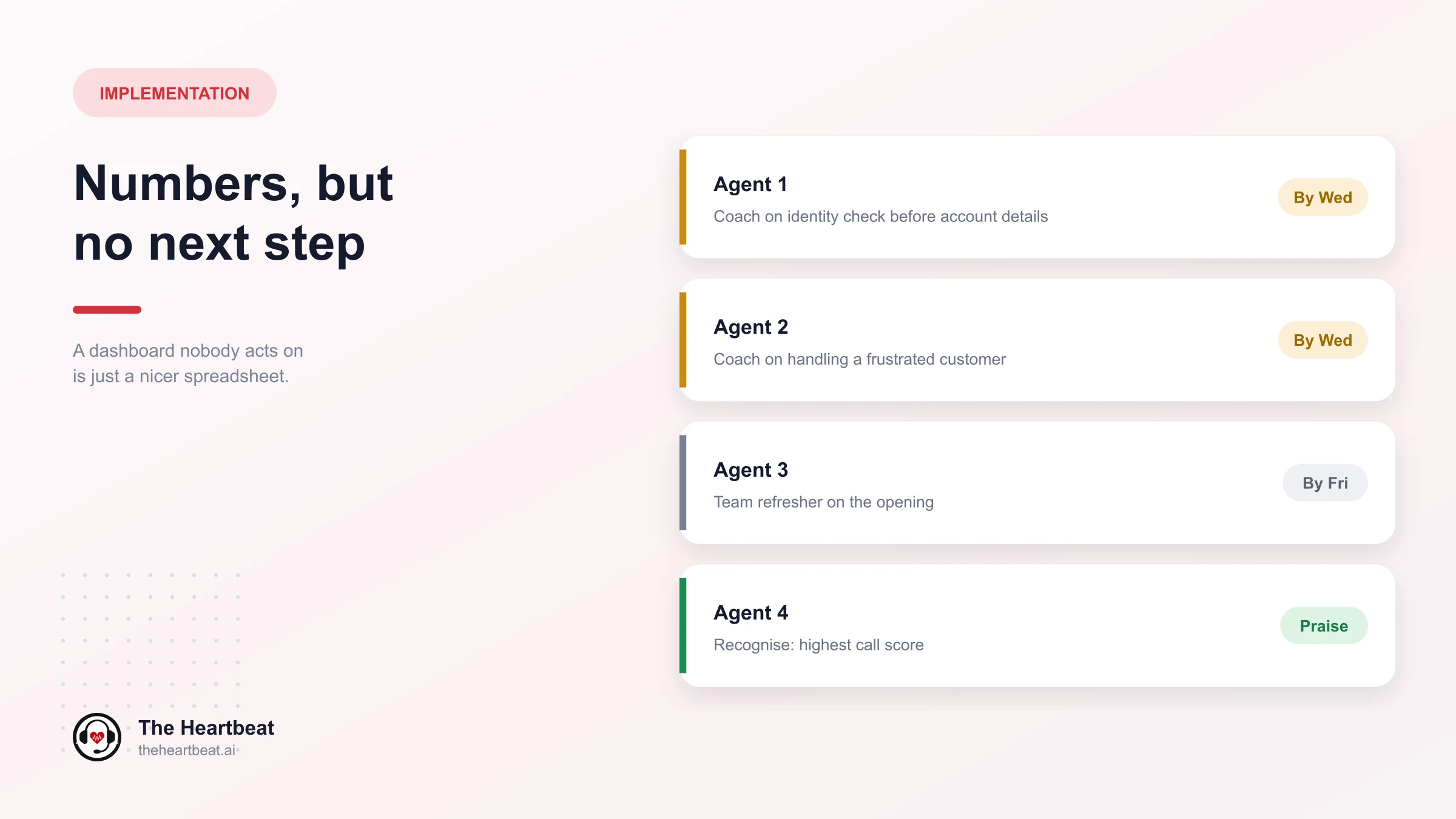
The dashboard is open on Monday morning. Scores, trends, charts. Everyone agrees the numbers are interesting. By Friday, nothing has changed — because nobody was told what to do.
Continue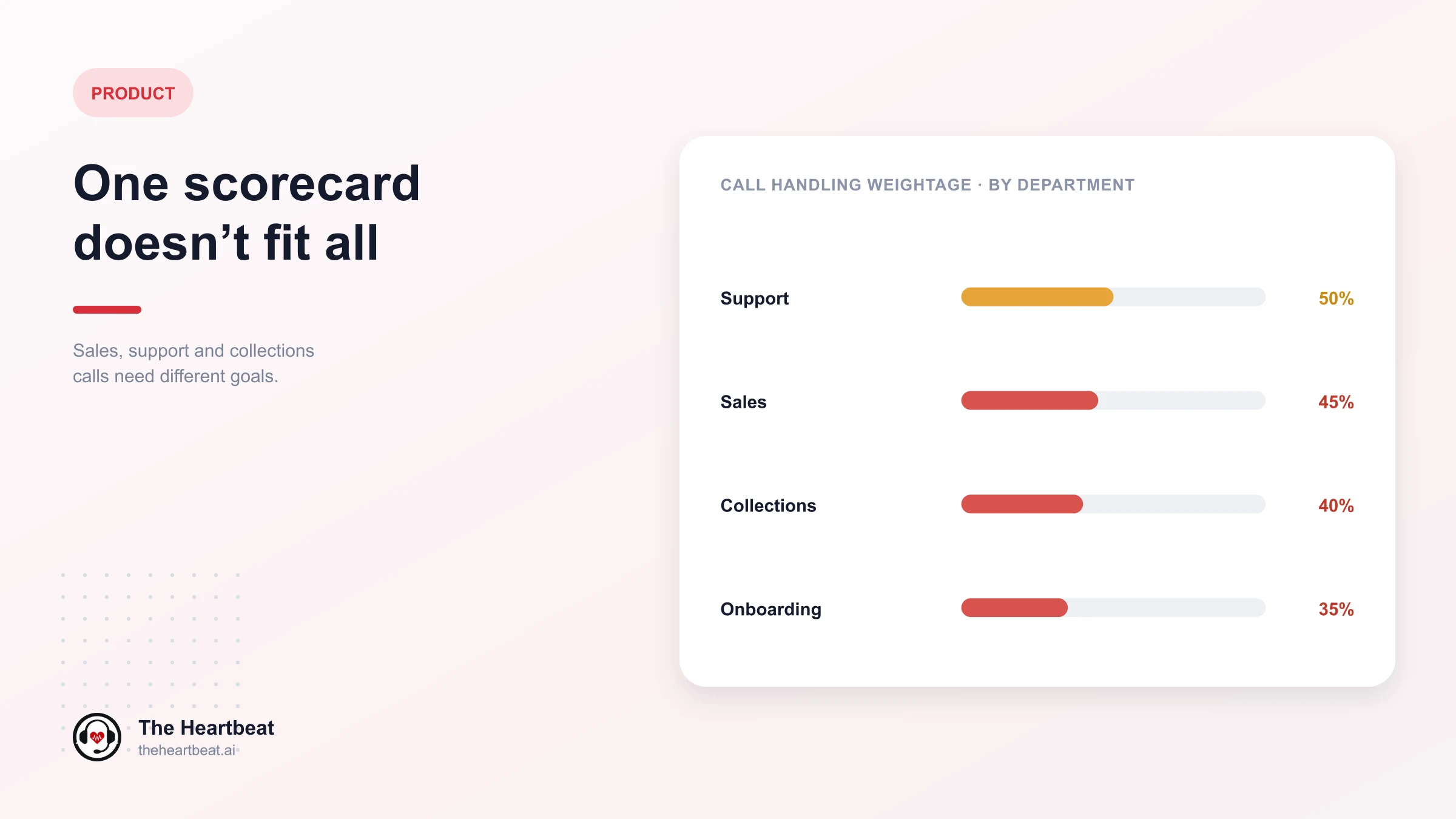
A support agent who spends ten careful minutes fixing a problem and a sales agent who closes in three are both doing their jobs well. Judge them on the same scorecard, and one of them looks wrong.
Continue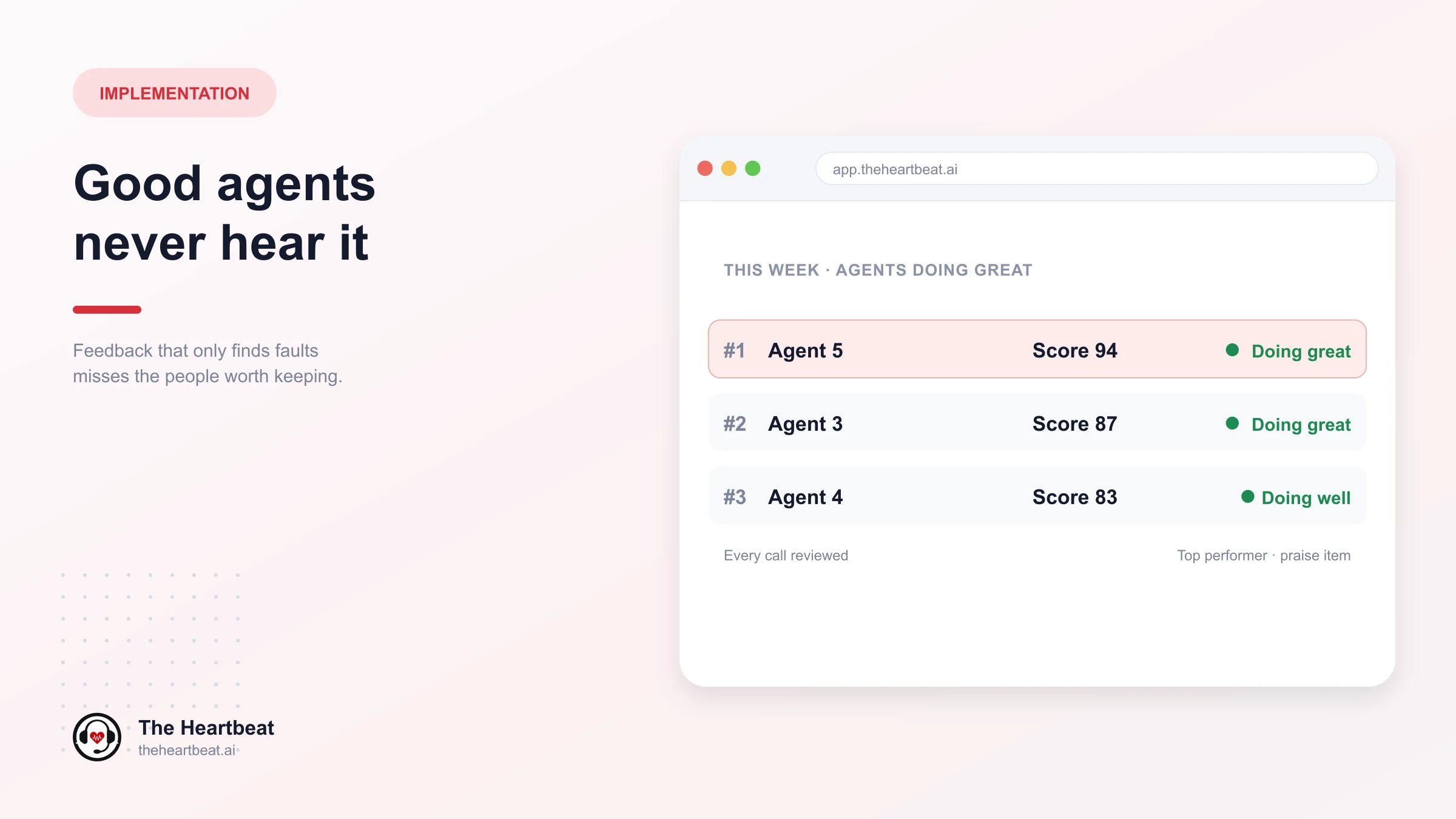
An agent handles forty calls a day, follows every step, stays calm with the angriest customers. In six months, nobody has mentioned it. Then they hand in their notice.
Continue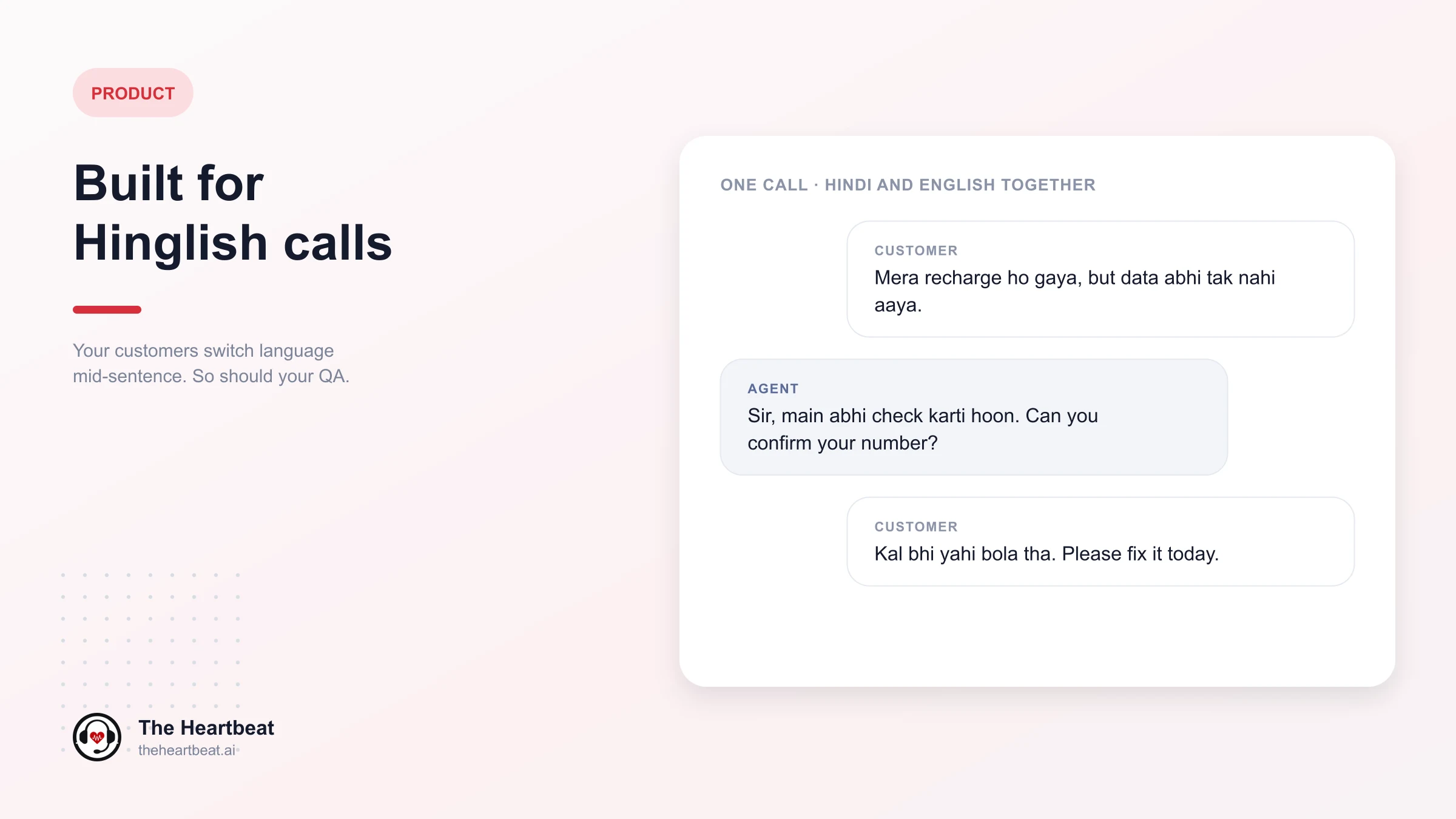
"Mera recharge ho gaya, but data abhi tak nahi aaya." That's one sentence, two languages, and a perfectly normal customer. If your QA tool can't follow it, it can't review the call.
Continue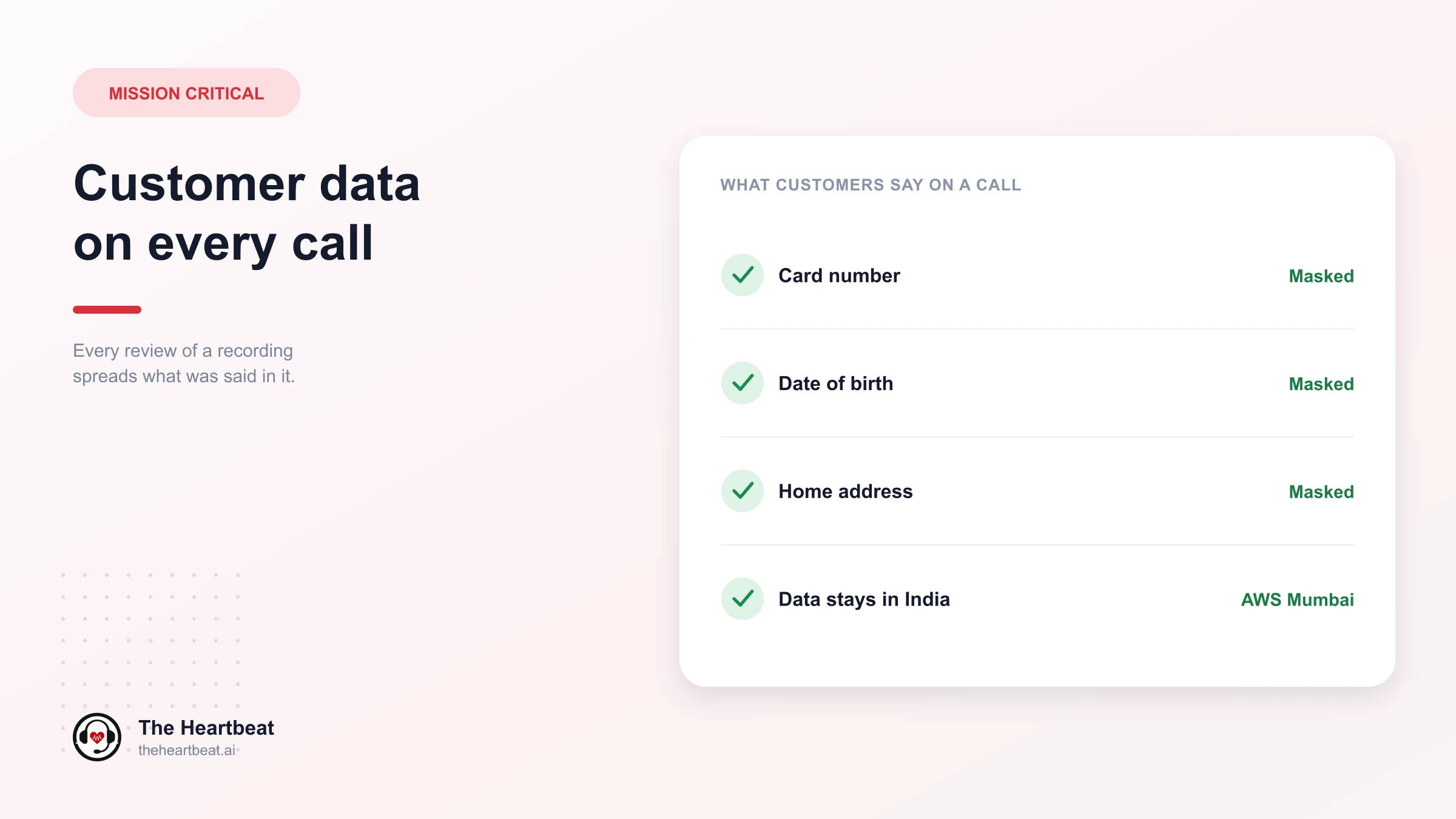
A customer reads out their card number to verify a payment. It's in the recording. It's in the transcript. And every person who reviews that call can now see it.
Continue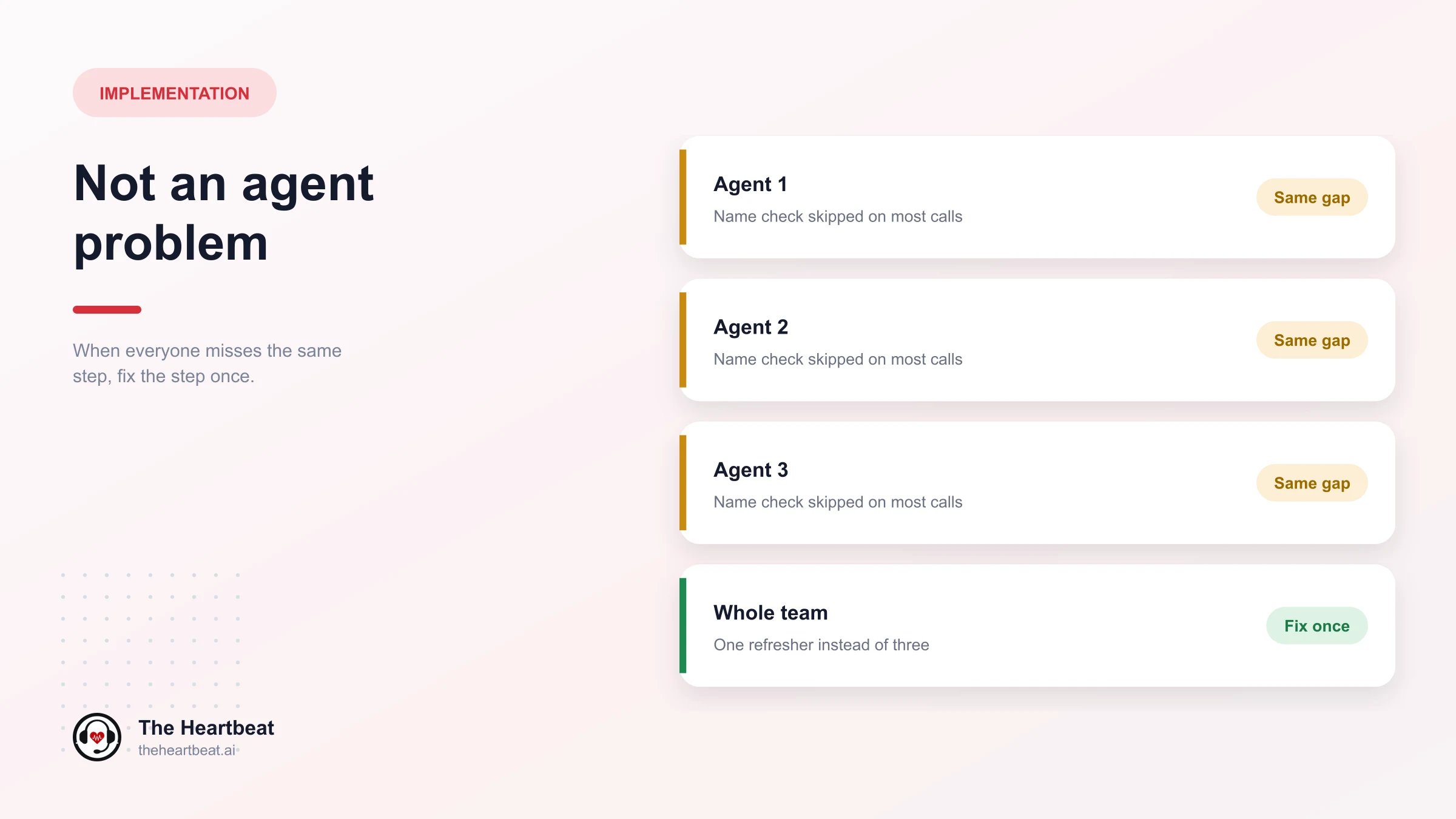
Three team leaders each give their agents the same feedback in the same week. None of them knows the others are doing it. The problem isn't any one agent — it's the step everyone is skipping.
Continue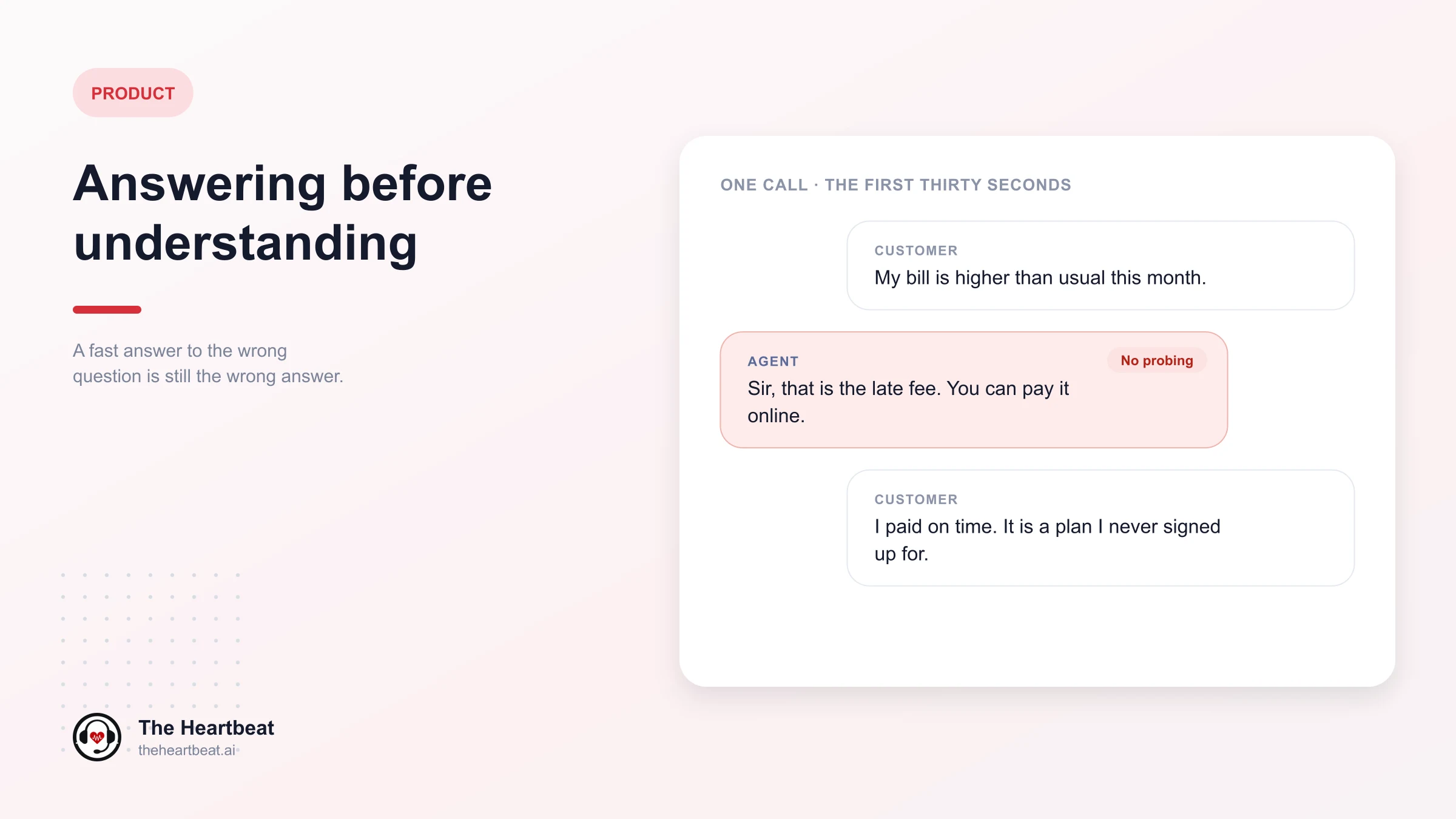
The customer says their bill is higher than usual. The agent explains the late fee. But the customer paid on time — the real problem was a plan they never signed up for. One question would have found it.
Continue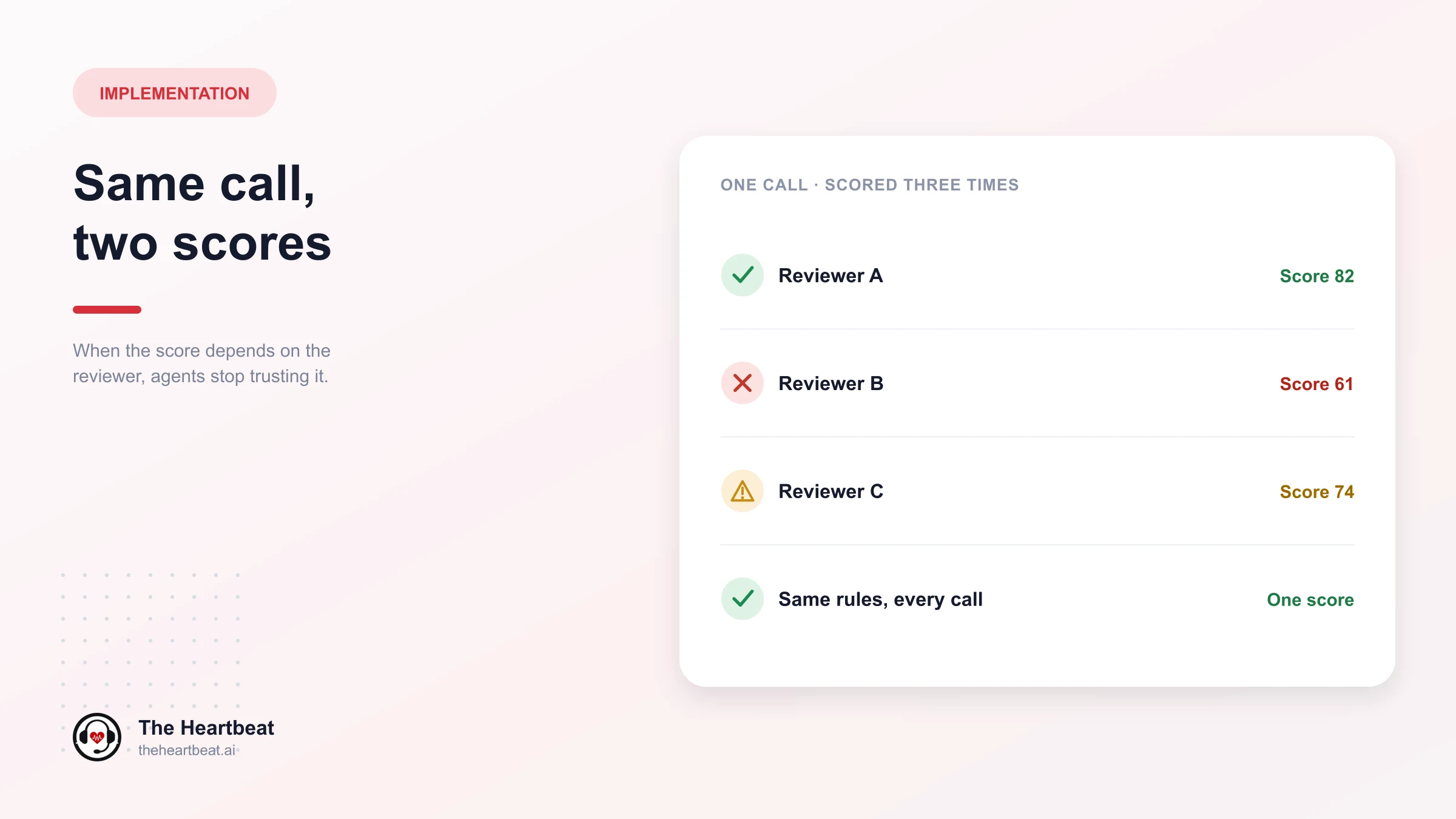
An agent gets 82 from one reviewer and 61 from another, for calls that sounded almost the same. From that day on, every score is an argument about the reviewer — not about the call.
Continue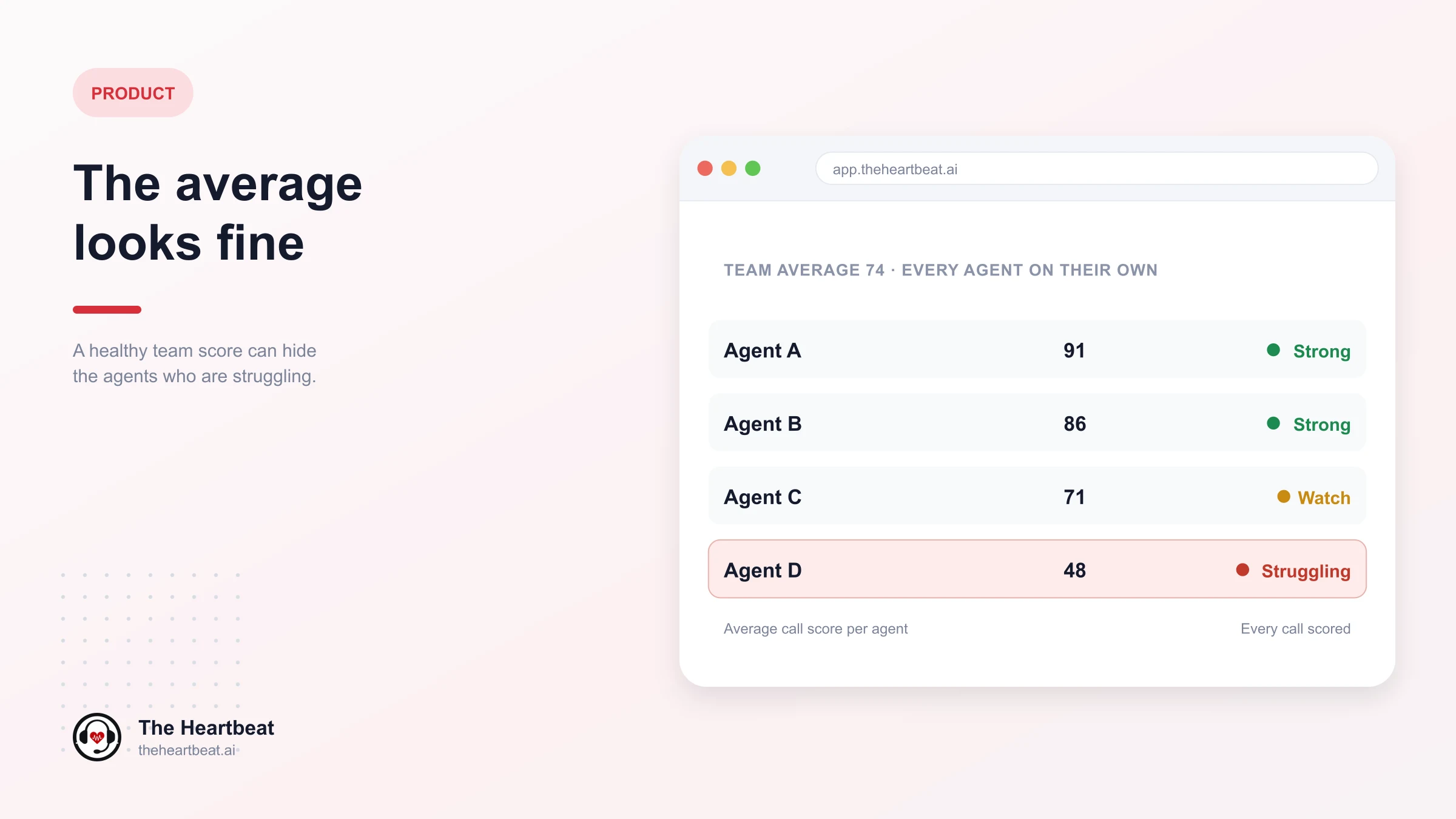
The team scored 80% this month. Everyone relaxes. But inside that number are agents scoring in the 90s — and two who haven't had a good call in weeks.
Continue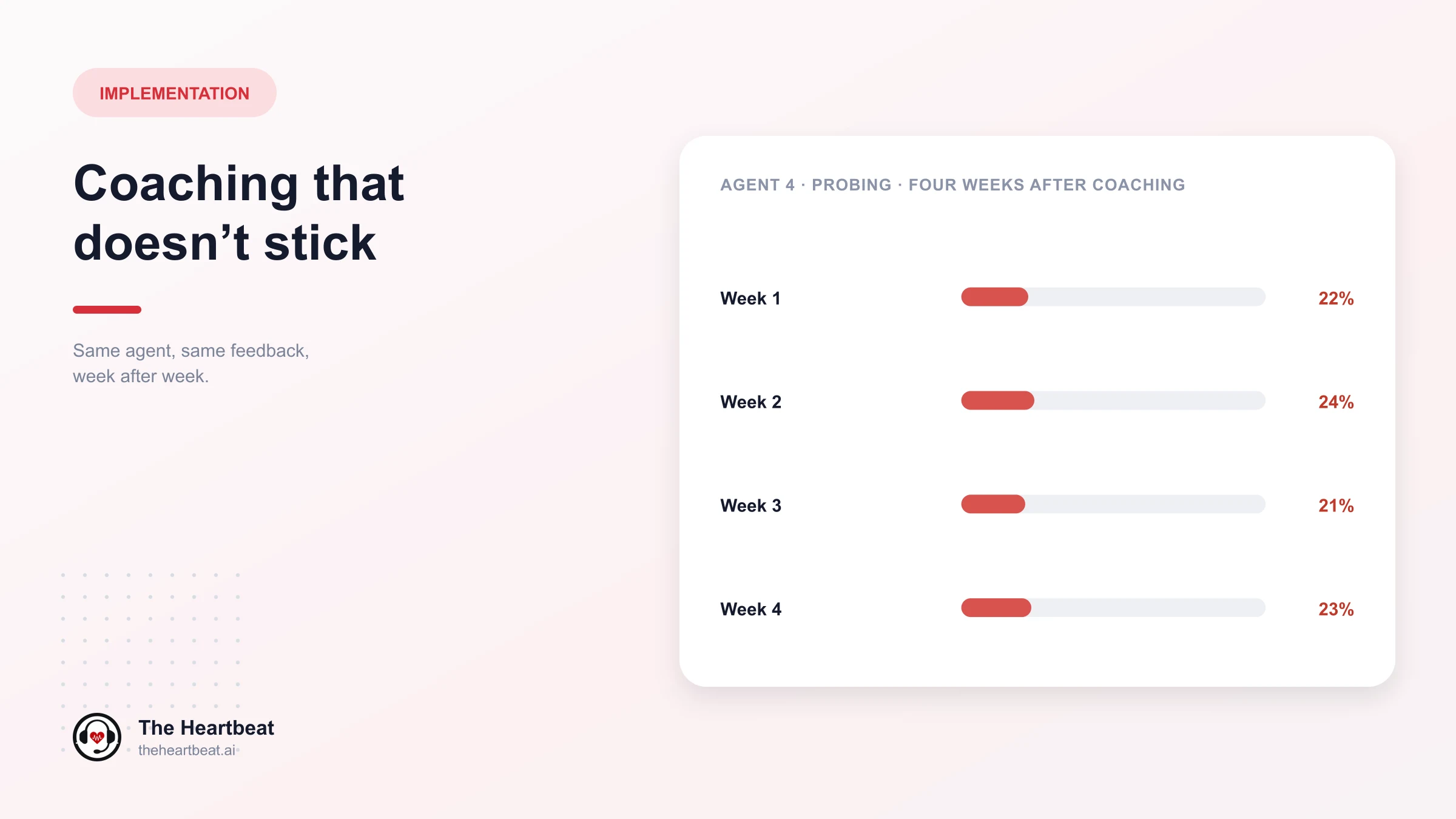
Every team leader has had the conversation: the same agent, the same feedback, the third month in a row. It feels like the agent isn't listening. More often, nobody has checked what actually changed on their calls.
Continue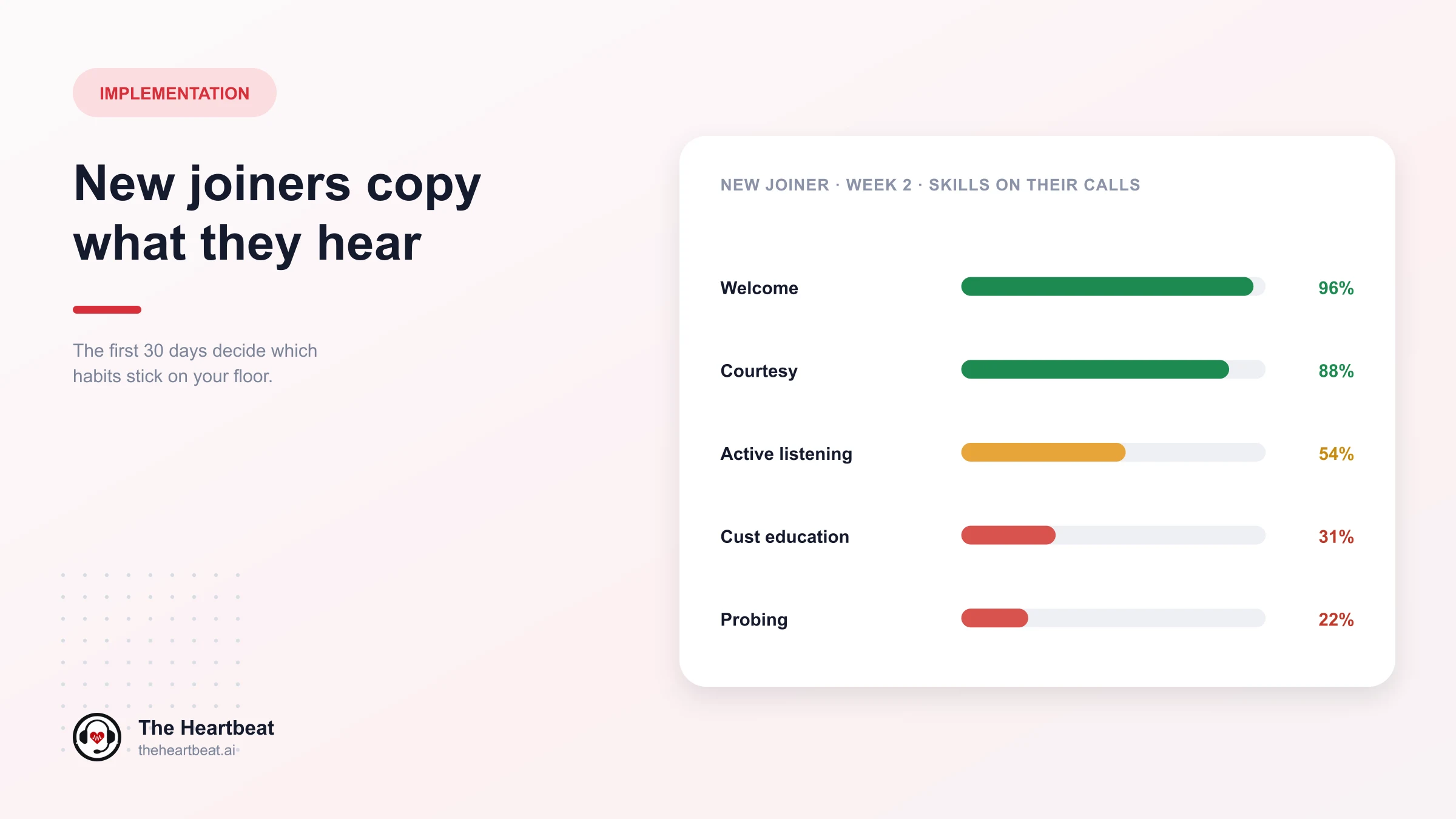
Training ends on Friday. On Monday, a new joiner sits beside an experienced agent and starts copying what they hear. Within a month, those habits — good and bad — are how they handle every call.
Continue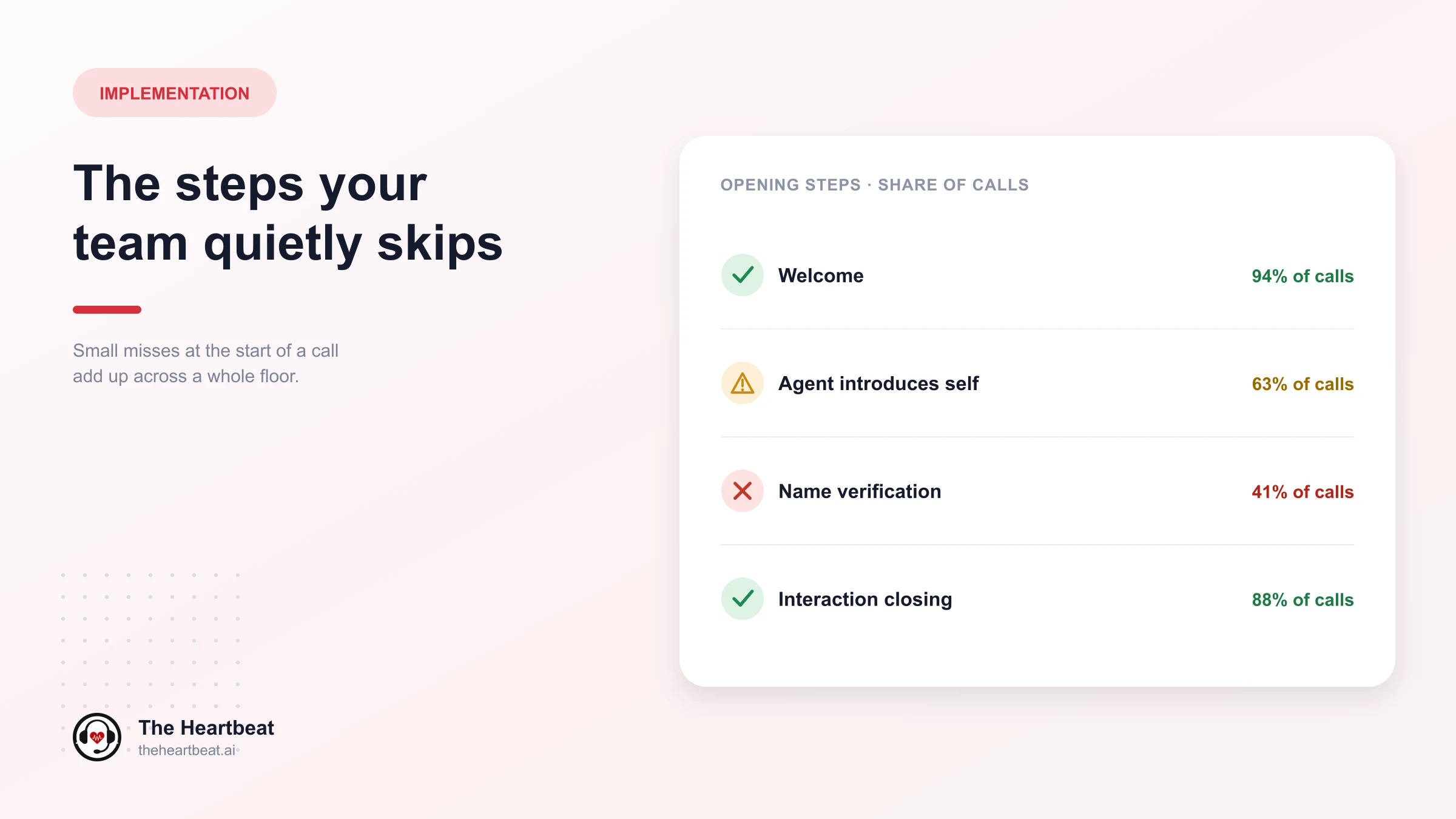
No single skipped greeting ever caused a problem. But when half your team stops checking who they're speaking to, it's no longer a slip — it's how your calls start. And nobody decided it.
Continue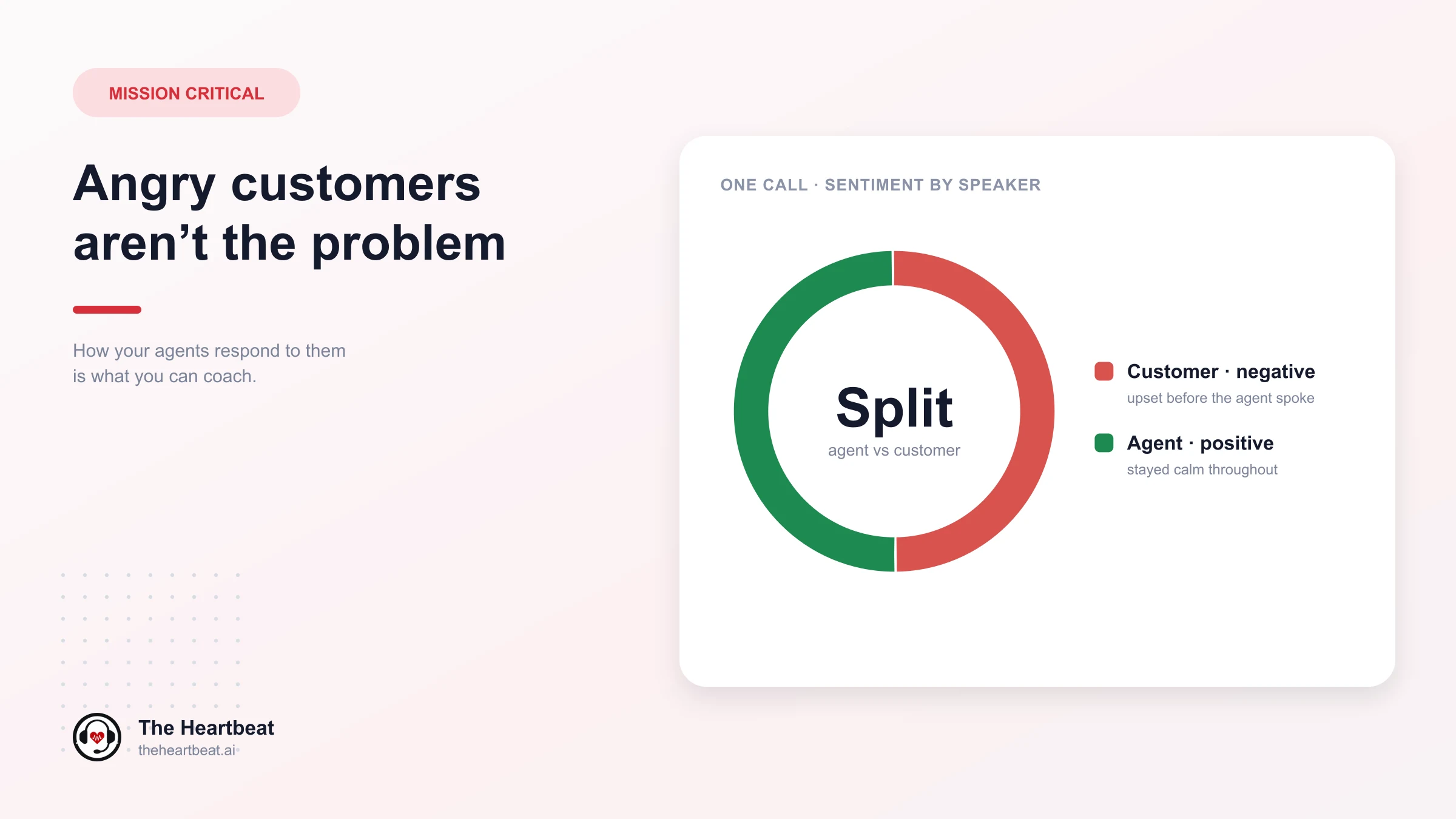
A customer calling about a third failed repair is going to be angry. That's not the agent's fault. But whether the agent stays calm or snaps back decides how the call ends — and that part is entirely coachable.
Continue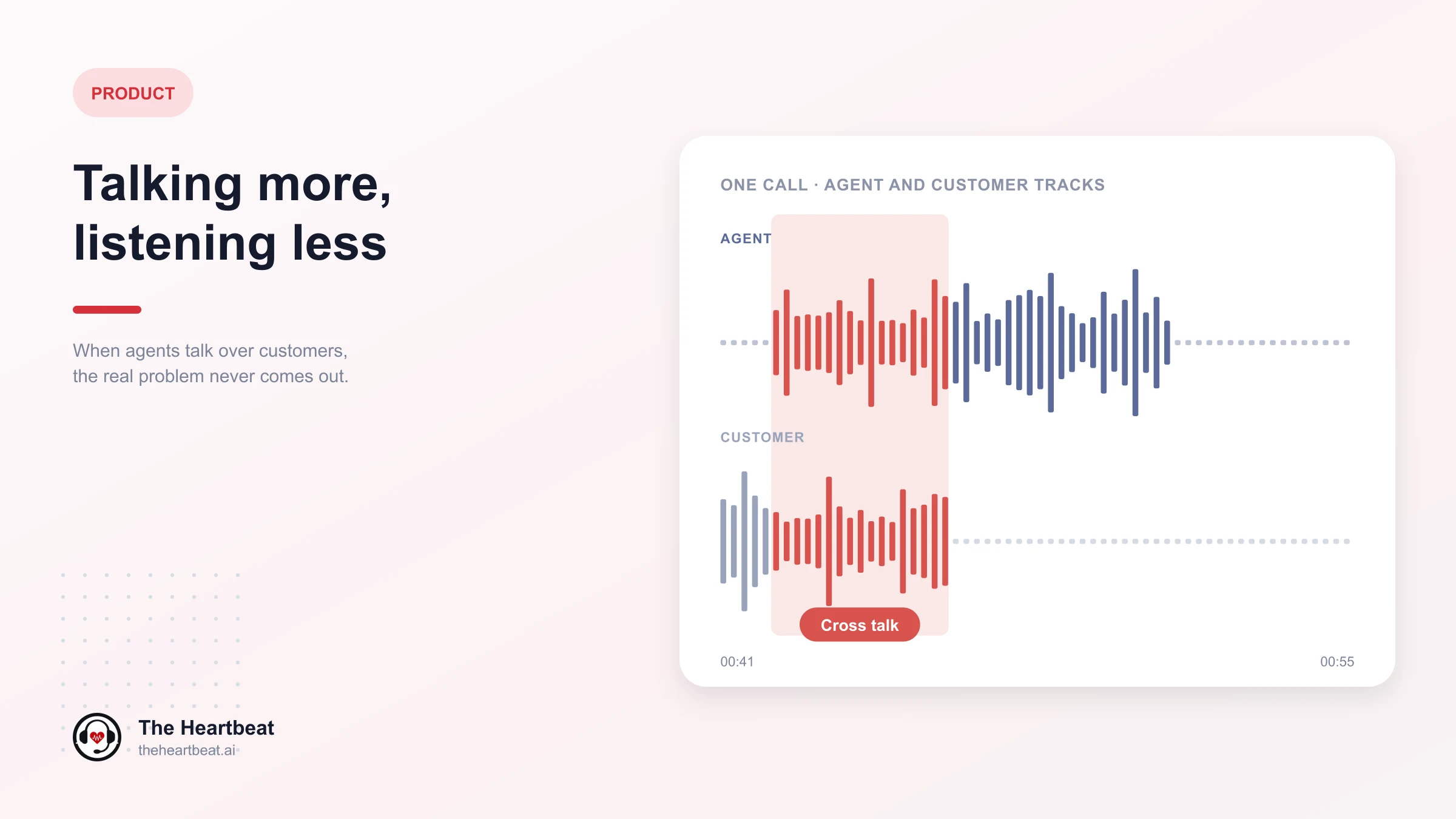
The customer starts explaining. Three words in, the agent is already answering — a different question. It feels efficient. It's the reason the call takes twice as long and the customer ends up explaining it all over again.
Continue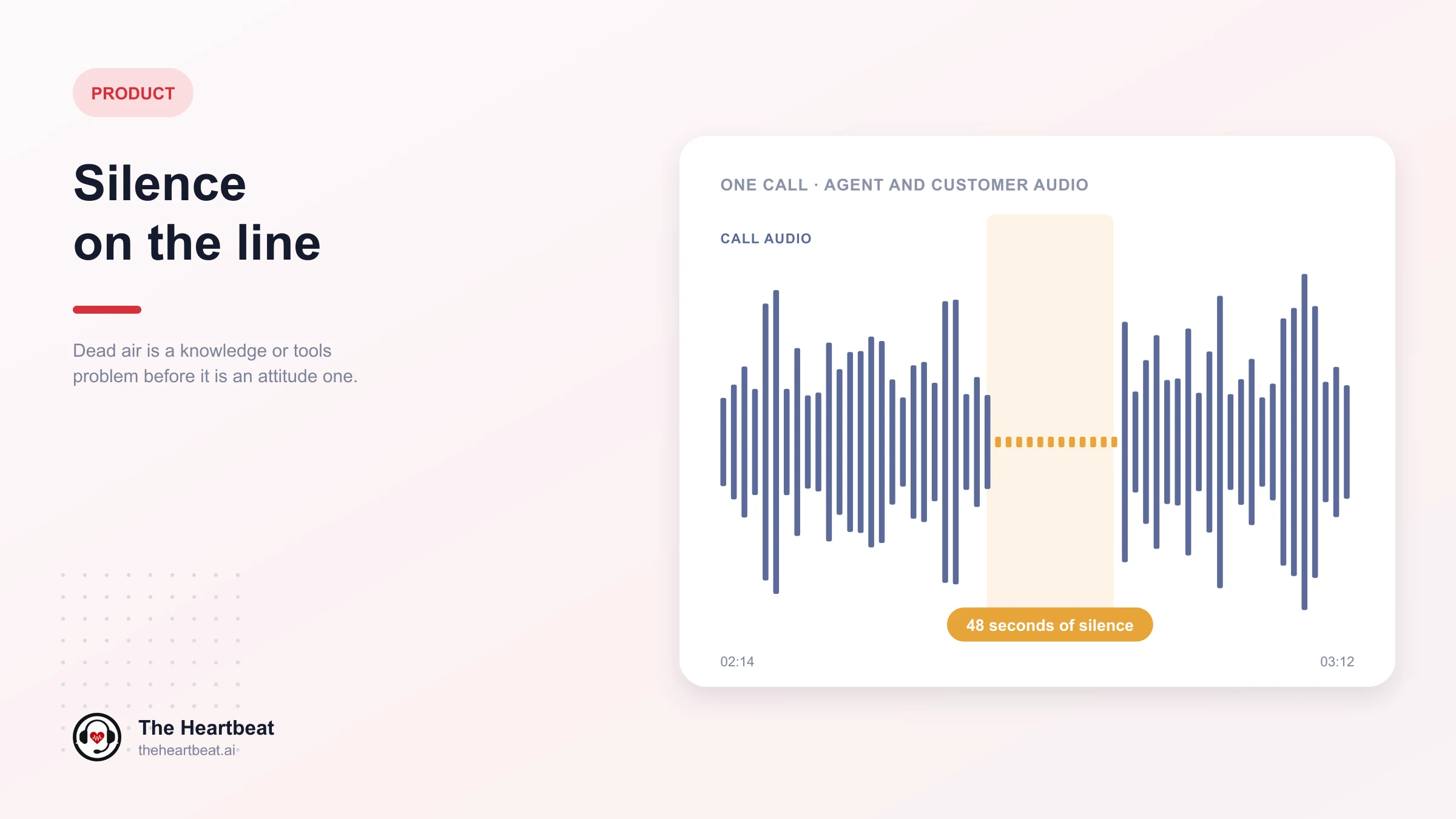
Forty seconds of silence feels like forever to a customer on hold. It's easy to blame the agent. But most dead air points at something the agent didn't know, or a system that was too slow — and that's what to fix first.
Continue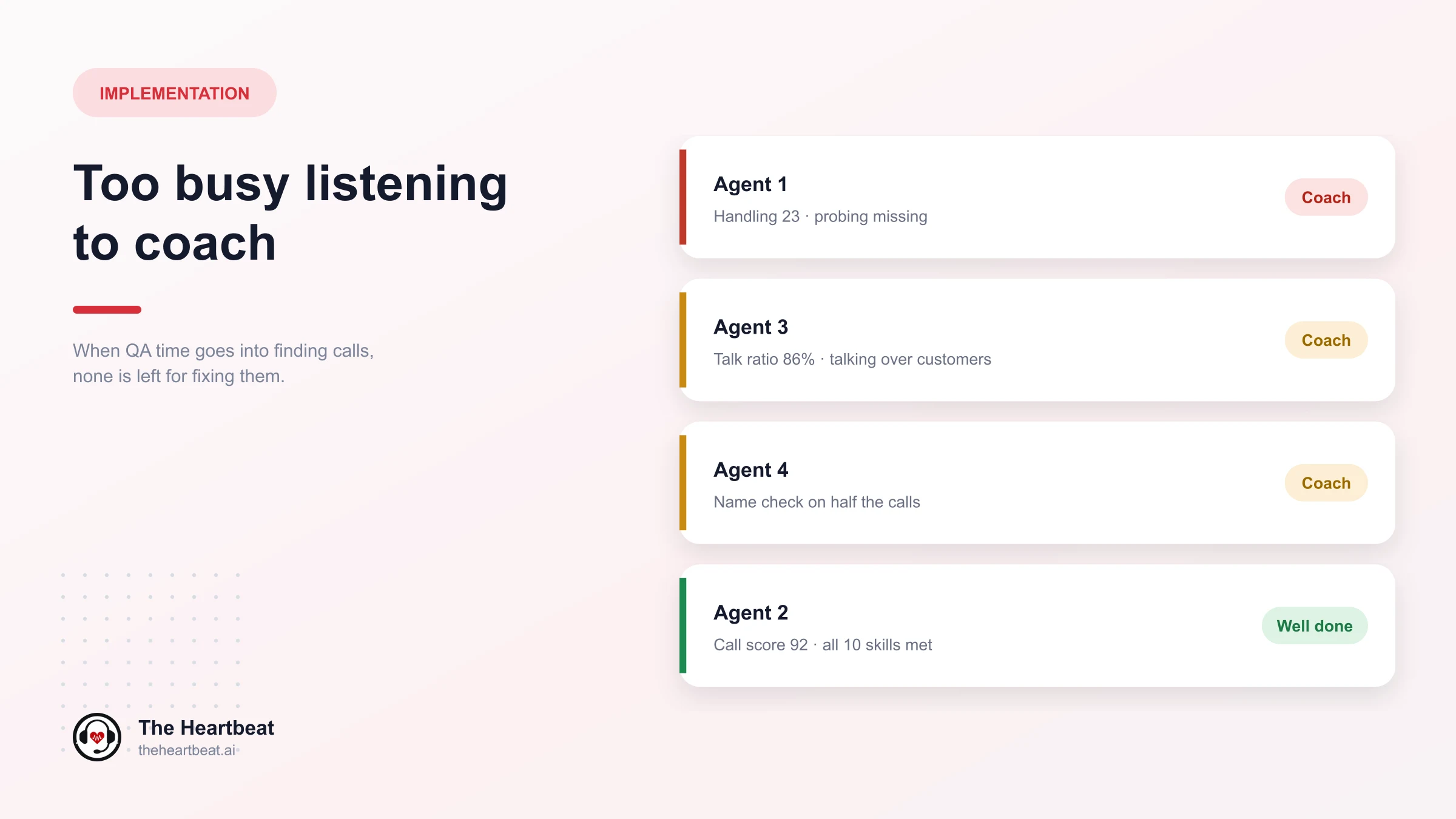
Ask your QA team where their week goes. Most of it is listening: picking calls, playing them, scoring them. By Friday, the coaching — the part that actually changes how agents work — is what gets squeezed.
Continue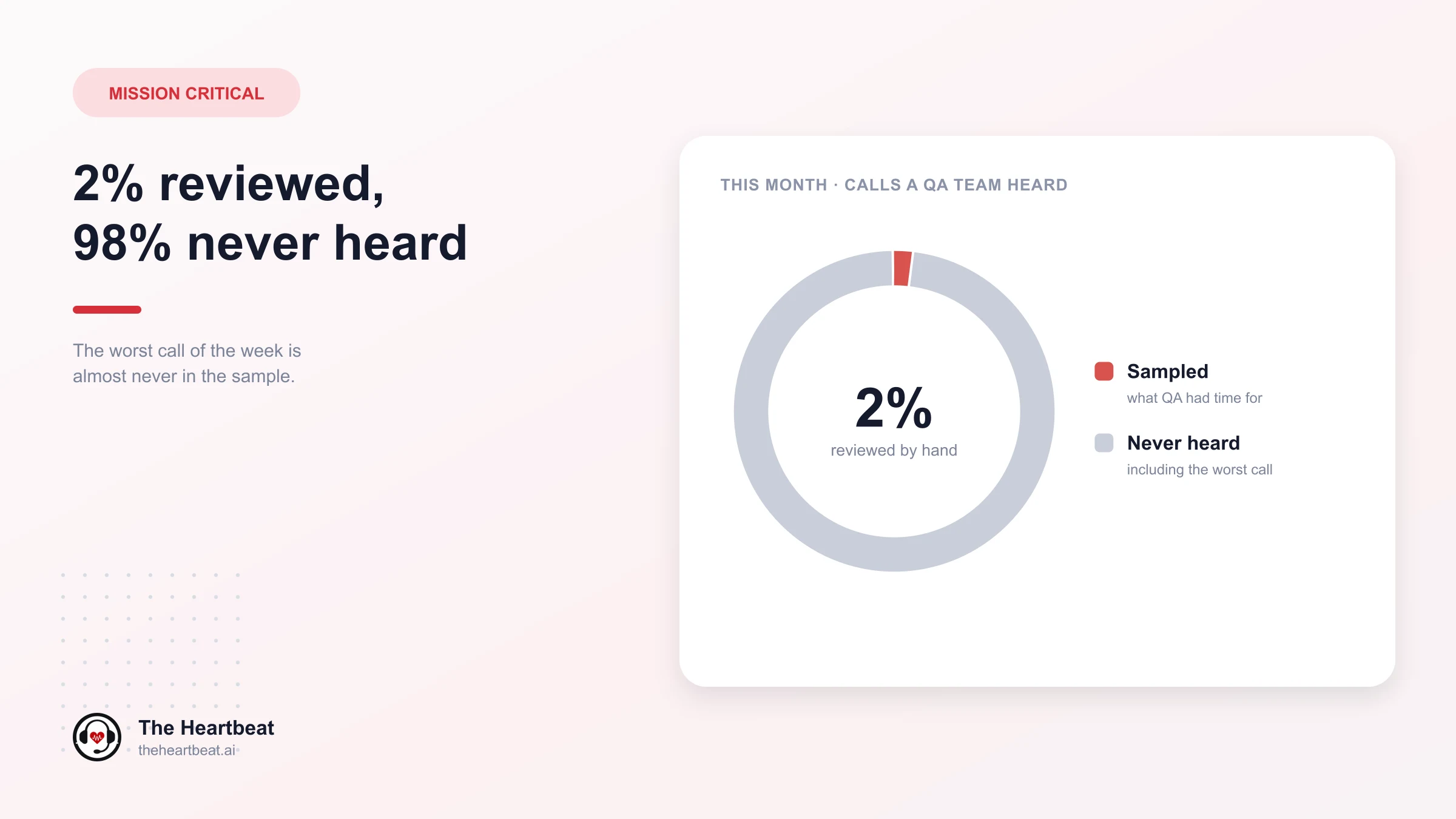
A QA team that listens to two calls in every hundred is doing its best. But the call that turns into next month's complaint is far more likely to be in the 98 nobody heard.
Continue
Audit-readiness is not a binder you assemble the week an auditor calls. It is whether, on any ordinary Tuesday, you can answer 'show me' — for any call, from any agent, in any of the last few months.
Continue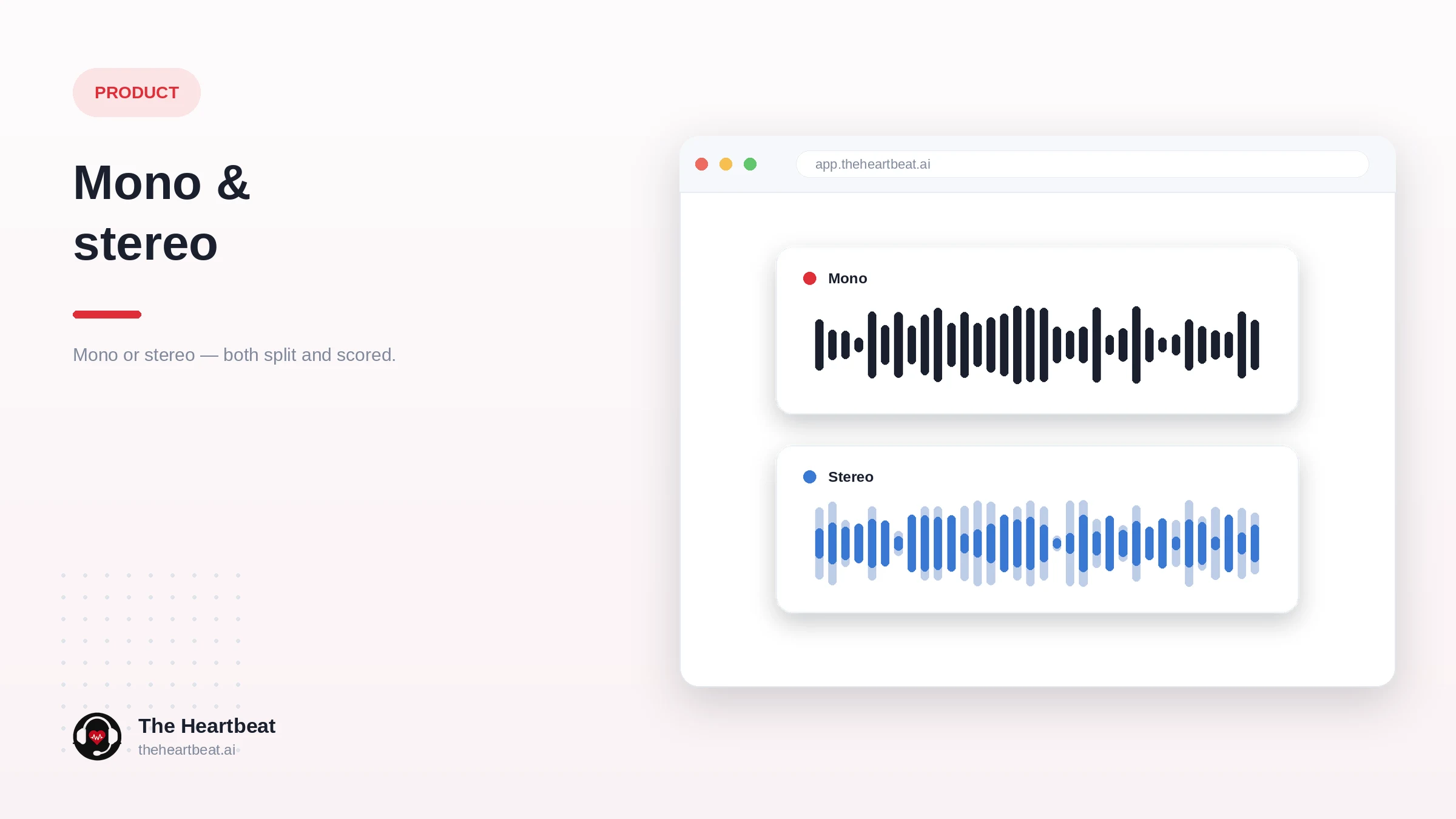
Two recording formats, two very different starting points for analysis. Stereo keeps the agent and customer on separate channels; mono blends them. Here is what that means for your QA — and why you should not have to re-plumb your dialer.
Continue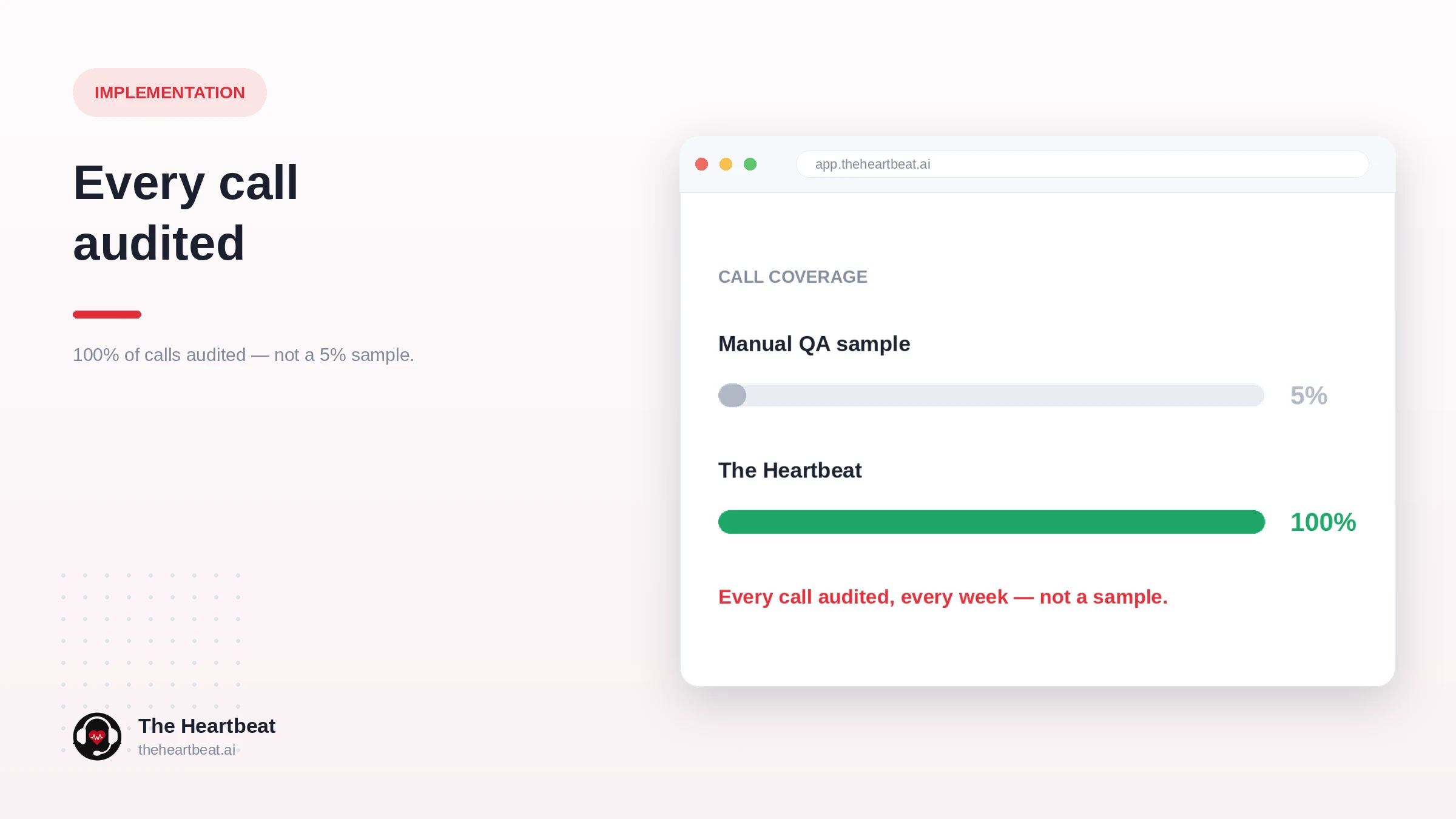
The maths of manual QA is brutal: a two-person team on a busy floor reviews a rounding error of your calls. Automation changes the coverage — but only if a human still stands behind the flags.
Continue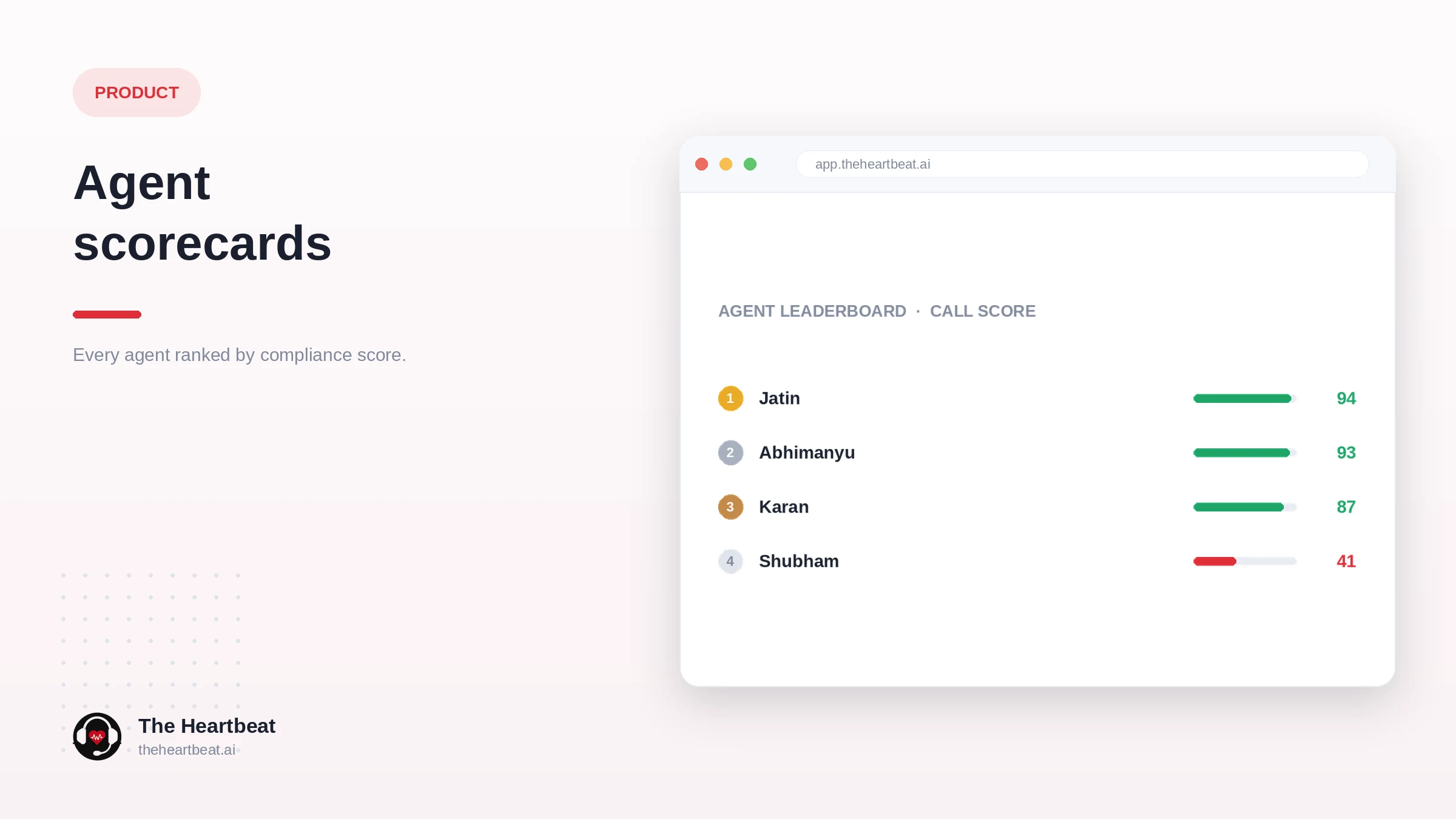
Every team leader has a mental ranking of their agents. It is usually built from the handful of calls they happened to overhear. Here is how to replace that gut feel with evidence that survives an argument.
Continue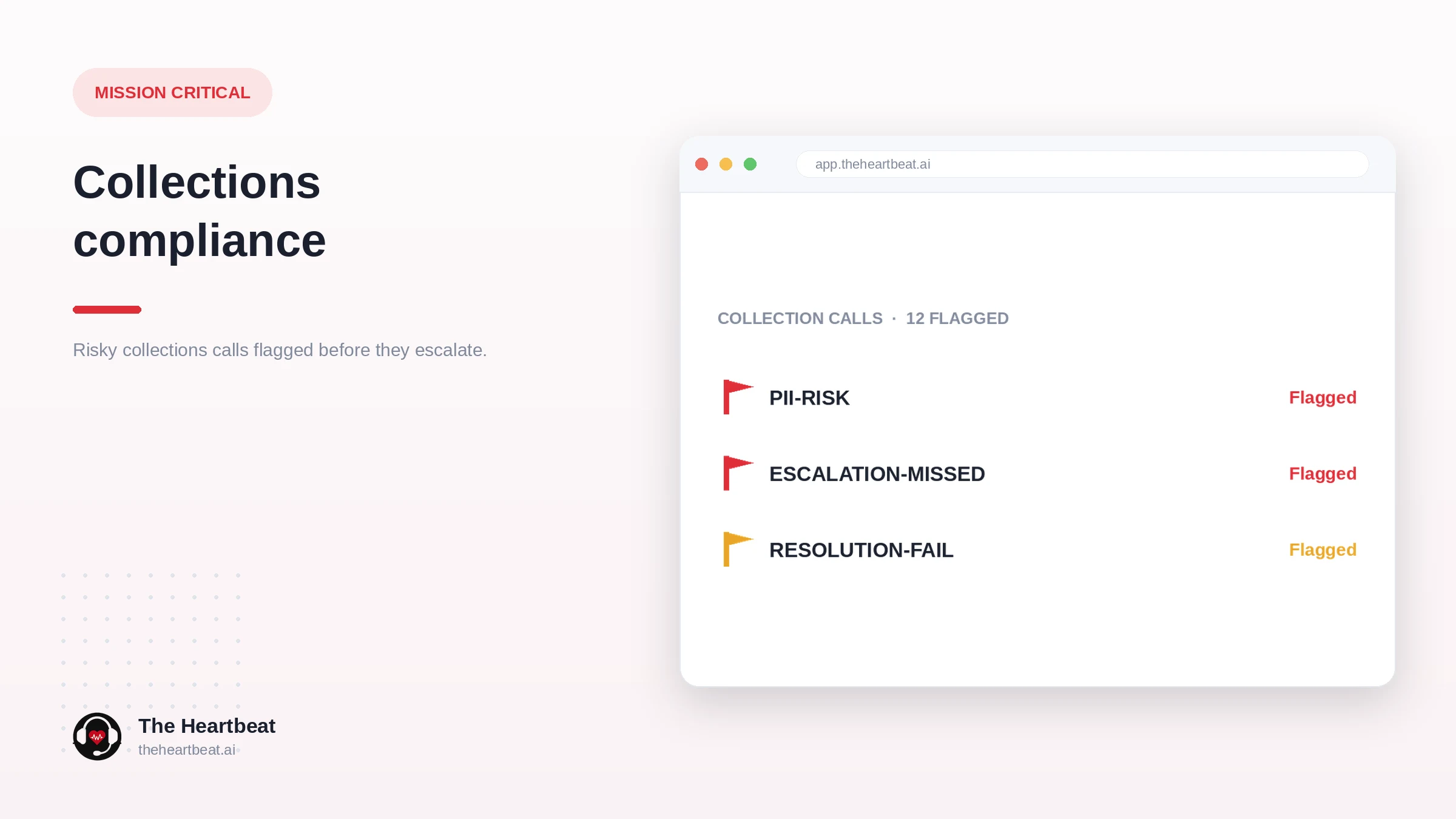
On a collections floor, the risky call is rarely the one you happen to sample. It is the one where an agent lost patience at 6pm on a Friday — and nobody ever heard it. Here is how to close that gap.
Continue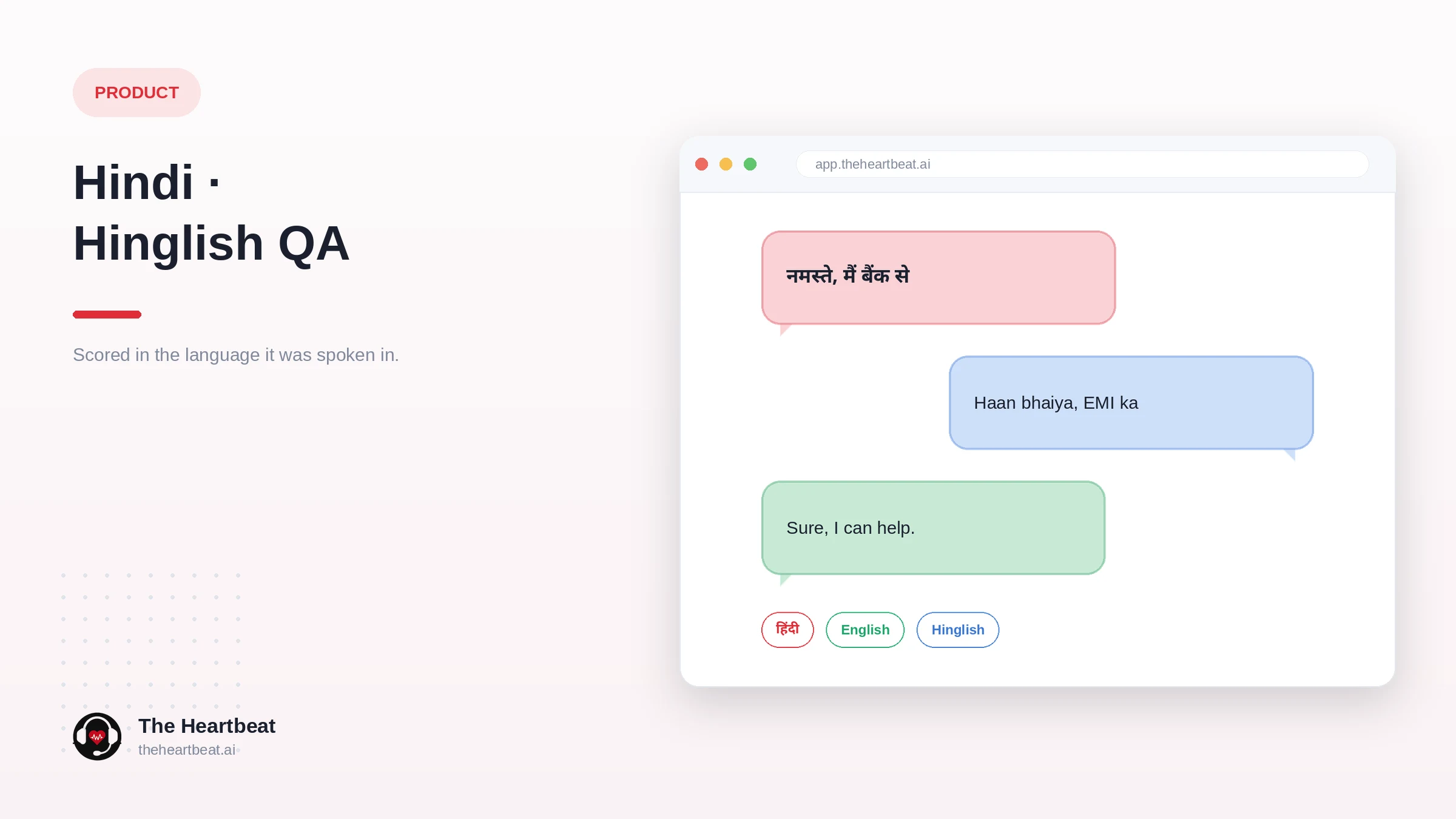
Your agents do not speak in one language. They switch between Hindi, English and Hinglish inside a single sentence. Most monitoring tools were never built for that — and it quietly wrecks their accuracy.
Continue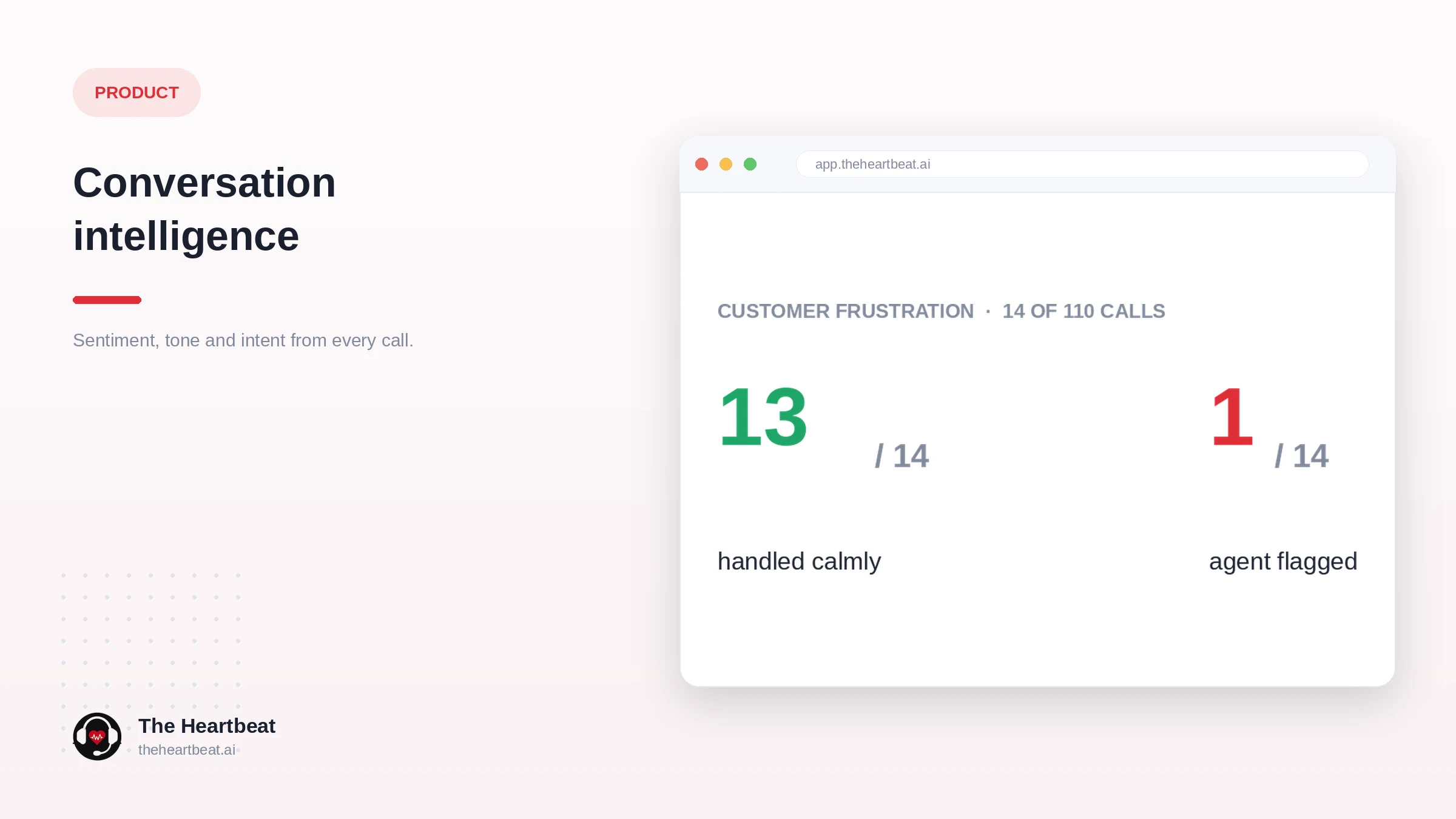
Conversation intelligence is one of those phrases that sounds impressive and explains nothing. Here is the plain version — what it does, what it does not, and why the human step is the part that matters most.
Continue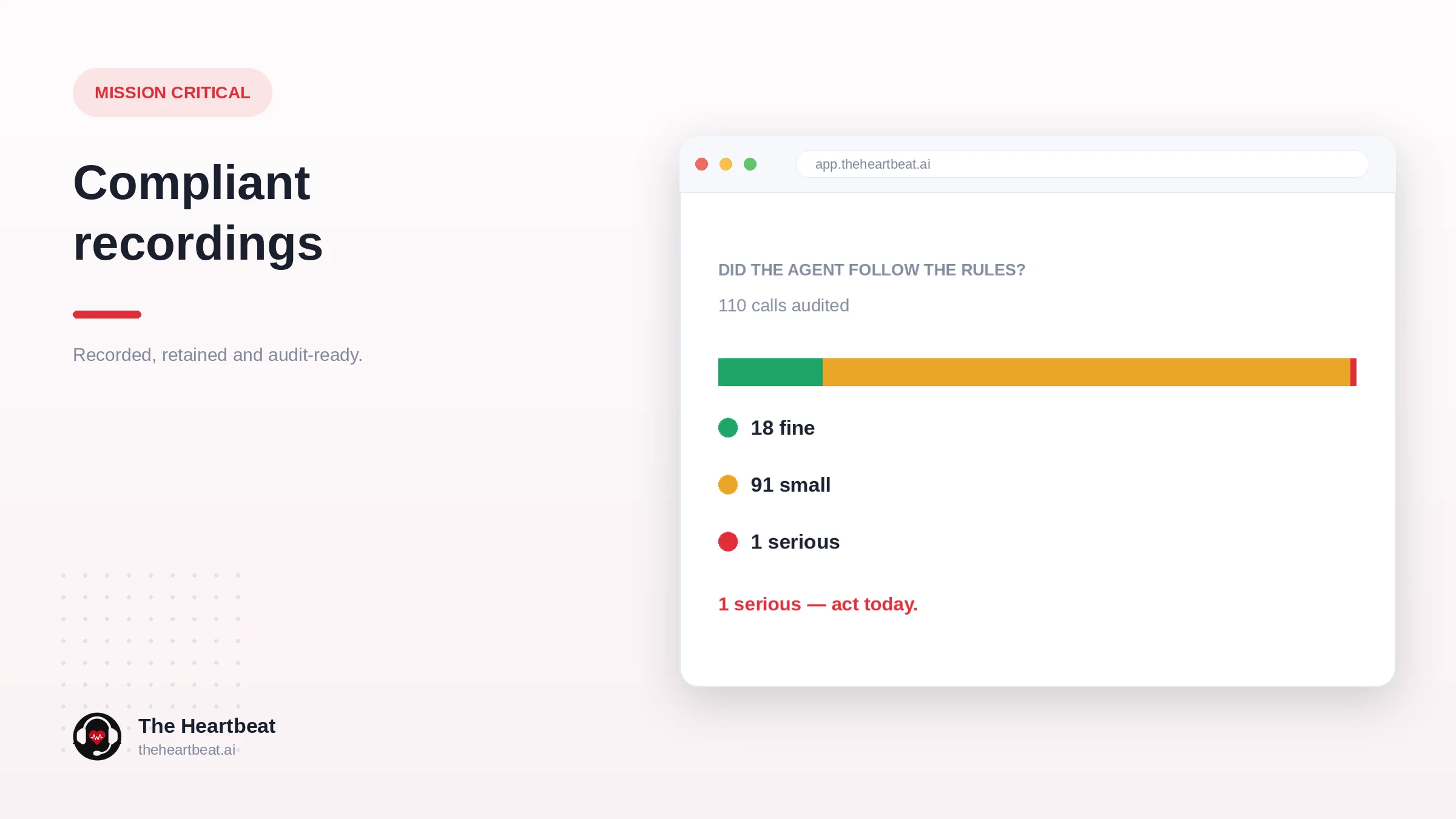
Recording every call is the easy part. Retaining it, storing it in India, and being able to produce it on demand is where most contact centres come up short. Here is what the rules expect — and how to close the gap.
Continue