
Two QA Reviewers, Two Different Scores
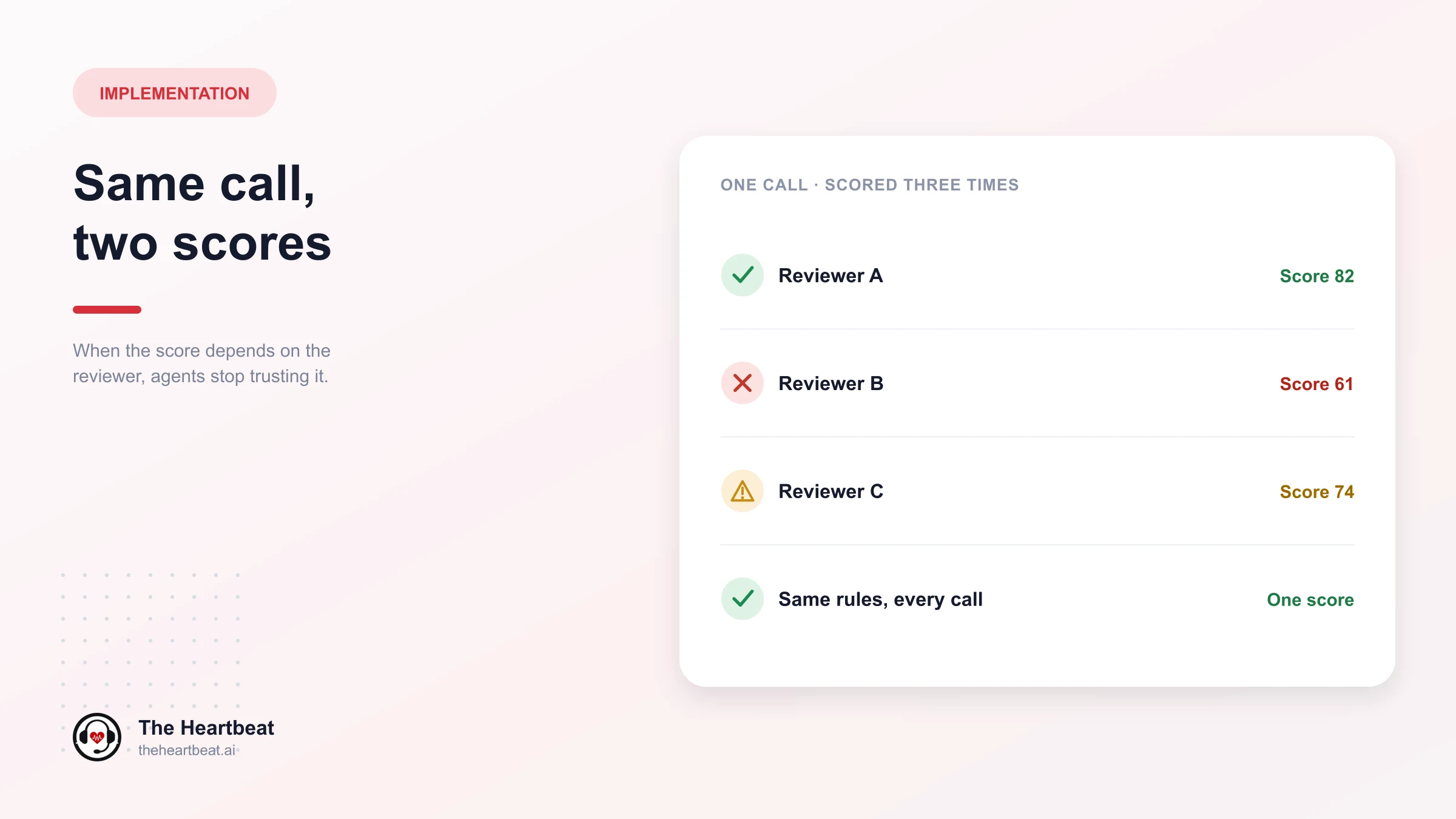
An agent sits down for a coaching session. Their call scored 61. They point out that last week, a call almost exactly like it scored 82, from a different reviewer.
They’re not wrong. And once an agent notices that, the conversation changes. It stops being about what happened on the call, and becomes about who scored it.
Why scores drift between reviewers
Nobody sets out to score inconsistently. It happens because scoring a call involves dozens of small judgements, and people make them differently.
The scorecard leaves room to interpret. “Showed empathy” or “handled the objection well” mean slightly different things to every reviewer.
Reviewers have different standards. One counts a rushed greeting as a greeting. Another doesn’t. Neither is wrong, but the scores differ.
Time pressure changes judgement. A reviewer with forty calls left to score on a Friday afternoon scores differently from one starting fresh on Monday.
Context bleeds in. A reviewer who knows an agent is “a strong performer” may give them the benefit of the doubt. One who’s heard complaints about them may not.
Standards drift over time. Even the same reviewer, six months later, often scores the same kind of call differently.
What inconsistent scoring costs
Agents stop trusting QA. If scores depend on the reviewer, agents learn to argue the score instead of learning from the call.
Comparisons stop working. Ranking agents means little if each one was scored by a different person against a slightly different standard.
Calibration eats QA time. Teams spend hours in sessions aligning reviewers, then drift again within weeks.
Good agents feel judged unfairly. The agents most likely to leave over a “wrong” score are often the ones you most want to keep.
One standard for every call
The fix is not better reviewers. It’s a scoring method that doesn’t change depending on who applies it.
That means every call is checked against the same list of steps, with the same weight given to each stage of the call, every time.
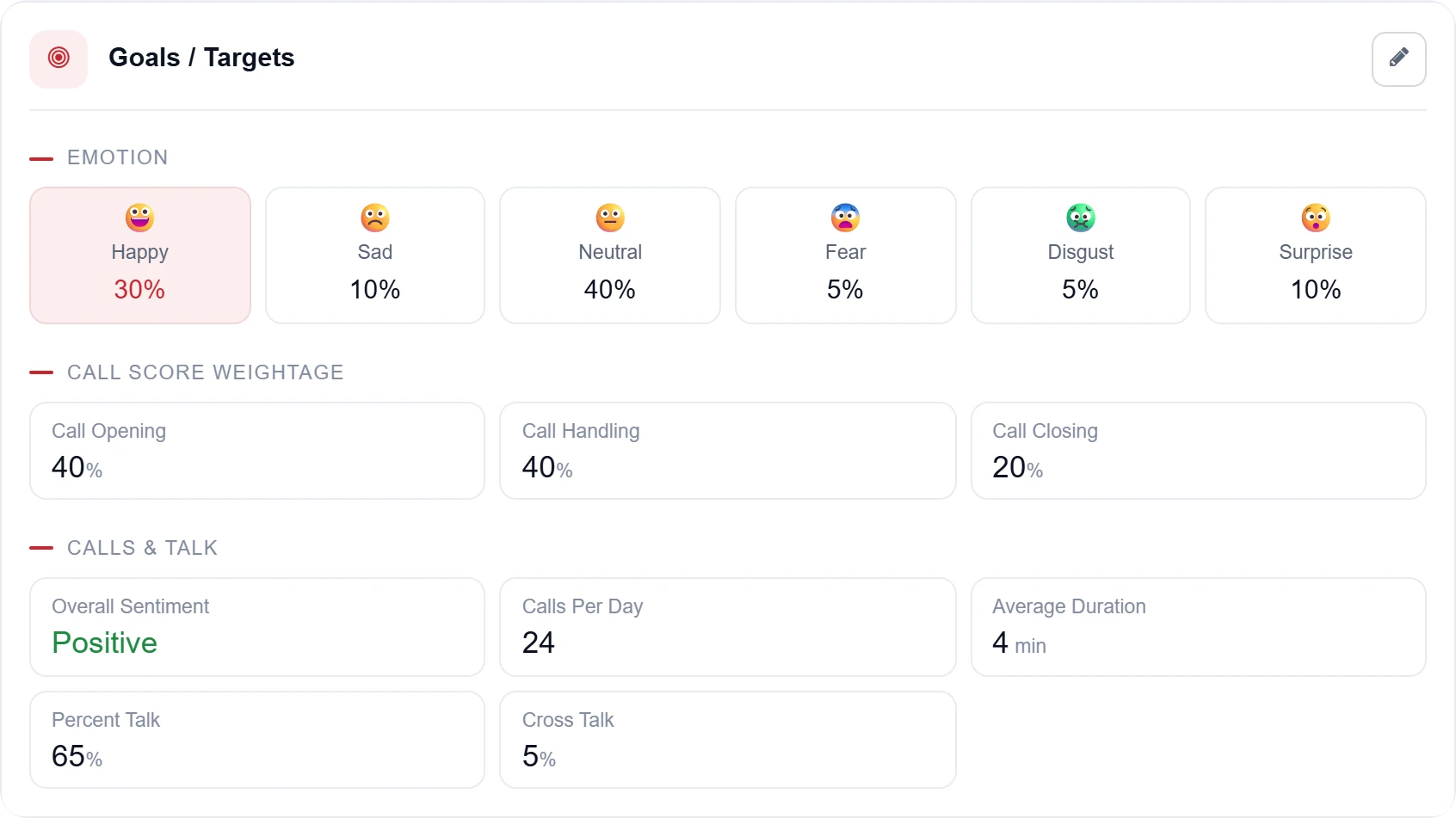
From The Heartbeat app: the call score weightage is set once for each workspace — here 40% opening, 40% handling, 20% closing — and every call is scored against it.
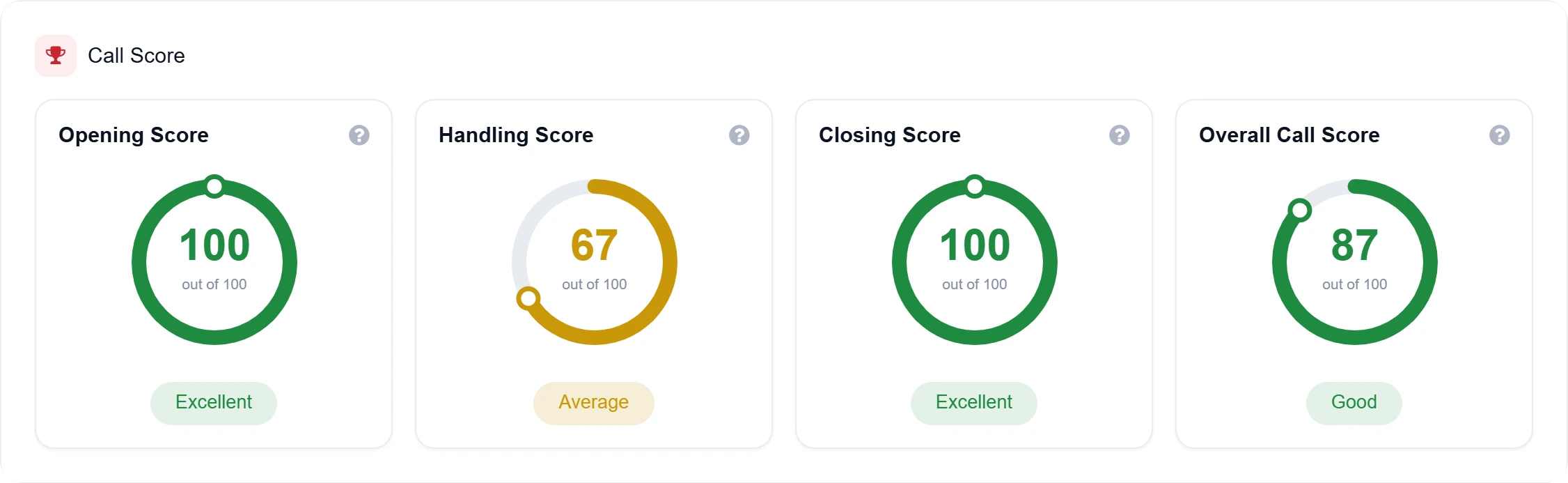
From The Heartbeat app: one call scored 87, and you can see why: opening 100, handling 67, closing 100, combined with the workspace’s 40/40/20 weightage. Every call is scored the same way, so two similar calls get similar scores whoever opens them.
When the weightage is yours and the method is the same for every call, a score means the same thing on Monday and Friday, for the newest agent and the most experienced one.
Where people still matter
Consistent scoring doesn’t remove people from QA. It moves them to where judgement actually helps:
- Listening to the calls that need it, rather than scoring every call by hand.
- Coaching, where tone, context and a good example matter far more than a number.
- Deciding the standard itself — what the weightage should be, and what a good call looks like for each process.
Making scores trustworthy
1. Fix the weights once. Agree how much the opening, the handling and the close each count, and keep it stable.
2. Score every call the same way. One method, applied to all calls, beats several careful reviewers applying their own.
3. Show agents how the score is built. When an agent can see which stage pulled their score down, they argue less and listen more.
4. Change the standard deliberately. If the weightage needs to change, change it for everyone, and explain why.
How The Heartbeat handles this
The Heartbeat reviews 100% of your agents’ calls, in any department. Analysts + AI go through every recording, in Hindi, English or Hinglish, and every AI flag is checked by a trained analyst before it reaches you.
Every call is scored the same way, on opening, handling and closing, using the weightage you set for each workspace. The score doesn’t depend on who reviewed the call or when, so agents can argue about what happened on the call instead of who scored it. Your data stays in India, hosted on AWS ap-south-1 (Mumbai).
A score only helps an agent improve if they believe it. Consistency is what makes them believe it.