Agents Who Answer Before They Understand
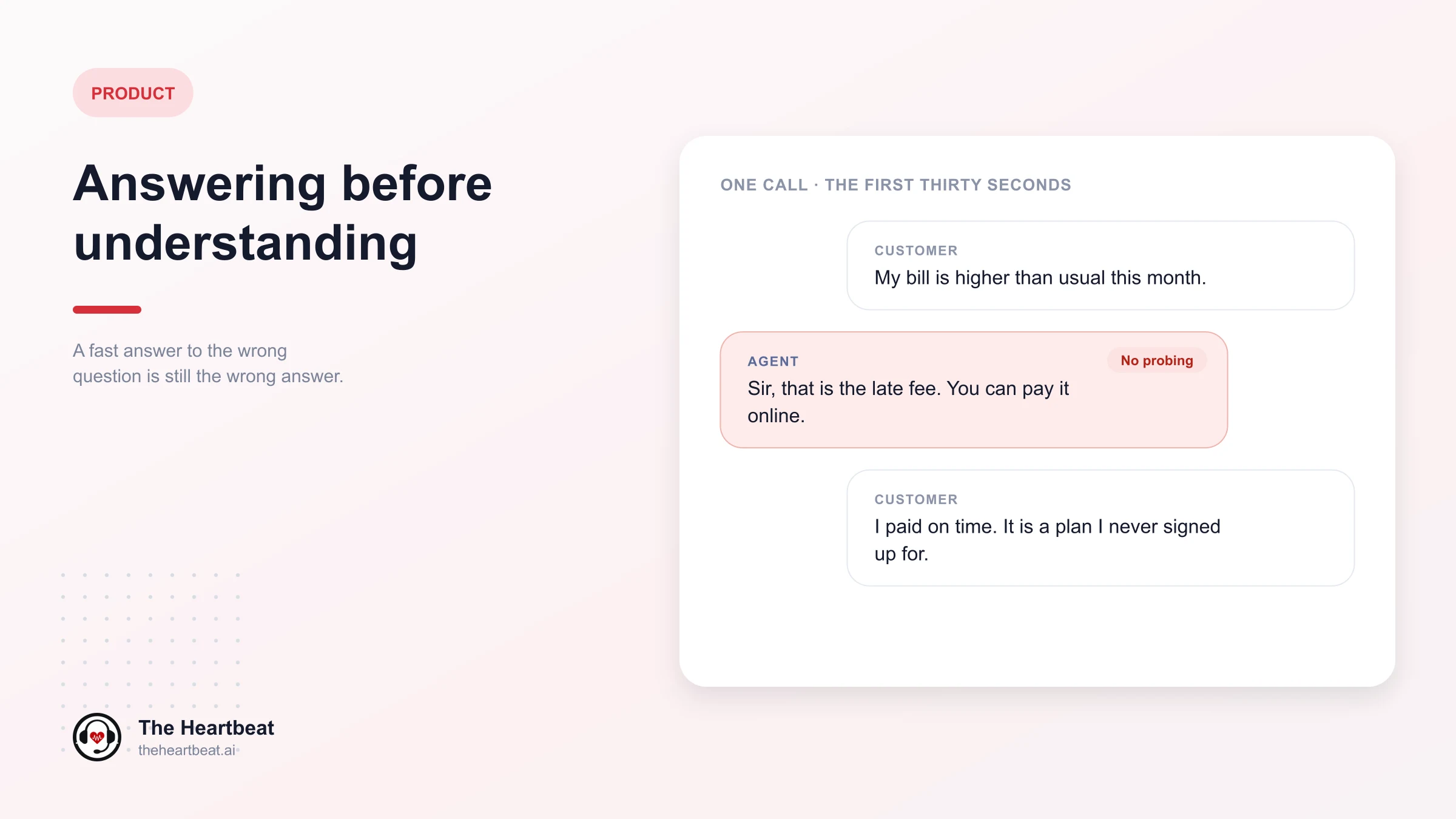
“My bill is higher than usual this month.”
“Yes sir, that’s the late fee. You can pay it online through the app.”
“But I paid on time. There’s a plan on here I never signed up for.”
The agent heard the first sentence and answered the most common reason for it. It’s a reasonable guess. It was also the wrong one, and now the call has to start again — with a customer who feels they weren’t listened to.
Why agents answer too quickly
Jumping to an answer usually comes from good intentions.
Experience creates shortcuts. An agent who has heard “my bill is high” a thousand times knows the usual reasons. They start answering before the customer has finished.
Speed feels like good service. Agents are often measured on handling time, so a quick answer feels like the right thing to do.
Questions can feel awkward. Asking “can you tell me more?” can feel like the agent doesn’t know the answer. Answering straight away feels more confident.
Scripts reward answers, not questions. Many scripts are written around solutions. The step of finding out what the customer actually needs is often missing.
What it costs
- The wrong problem gets solved. The customer gets a correct answer to a question they didn’t ask.
- Calls get longer, not shorter. The customer has to correct the agent and explain again.
- Customers call back. If the real issue never came out, it’s still there tomorrow.
- Trust drops. Customers notice when they’re answered before they’ve been heard.
Why it’s hard to spot
On paper, these calls often look fine. The agent was polite, gave accurate information and closed the call properly. A reviewer reading the transcript sees a confident, knowledgeable agent.
What’s missing is a single question — and a missing question doesn’t stand out the way a rude sentence does. You only see it when you look for it specifically, on every call.
Measure the question, not just the answer
Probing — asking the questions that establish what the real problem is — can be checked on every call, just like a greeting or a closing.
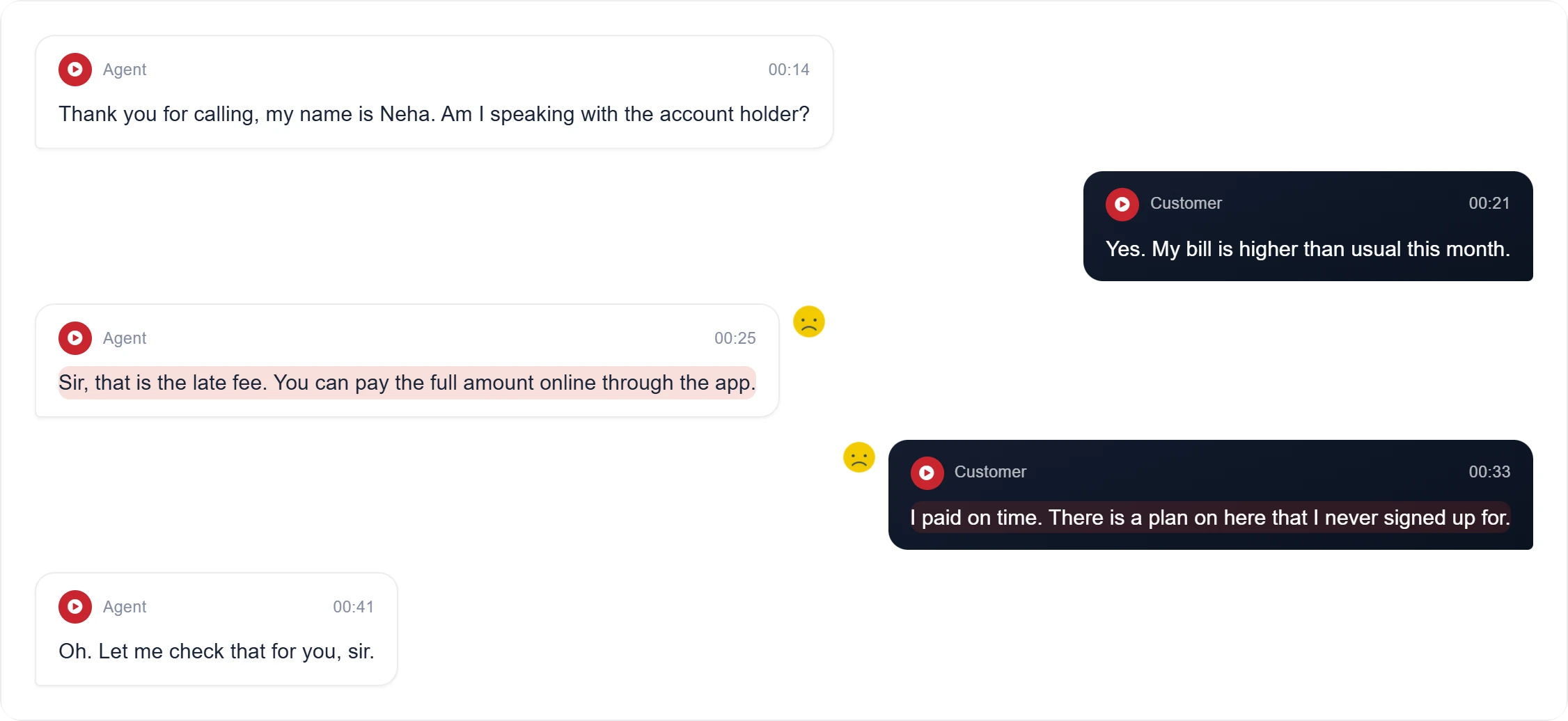
From The Heartbeat app: the call from the top of this post, line by line. Four seconds after “my bill is higher than usual”, the agent is explaining the late fee. Both the answer and the customer’s correction are marked as negative moments.
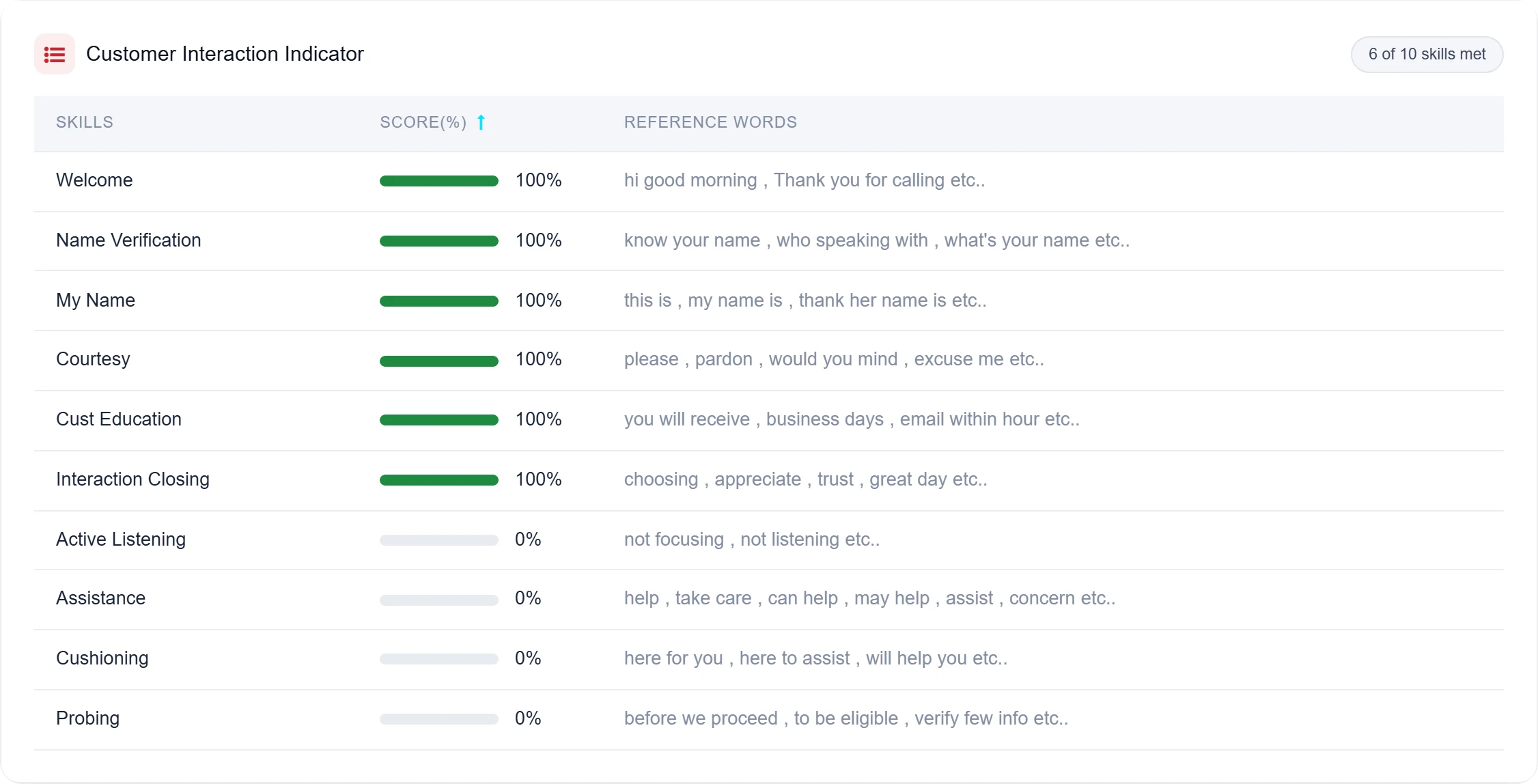
From The Heartbeat app: the same call, 6 of 10 skills met. The greeting, introduction, name check and close are all there. Probing is at 0%: the agent never asked what the problem actually was.
Across many calls, the pattern becomes clear. An agent who probes on a handful of calls out of fifty has a habit, not a bad day.
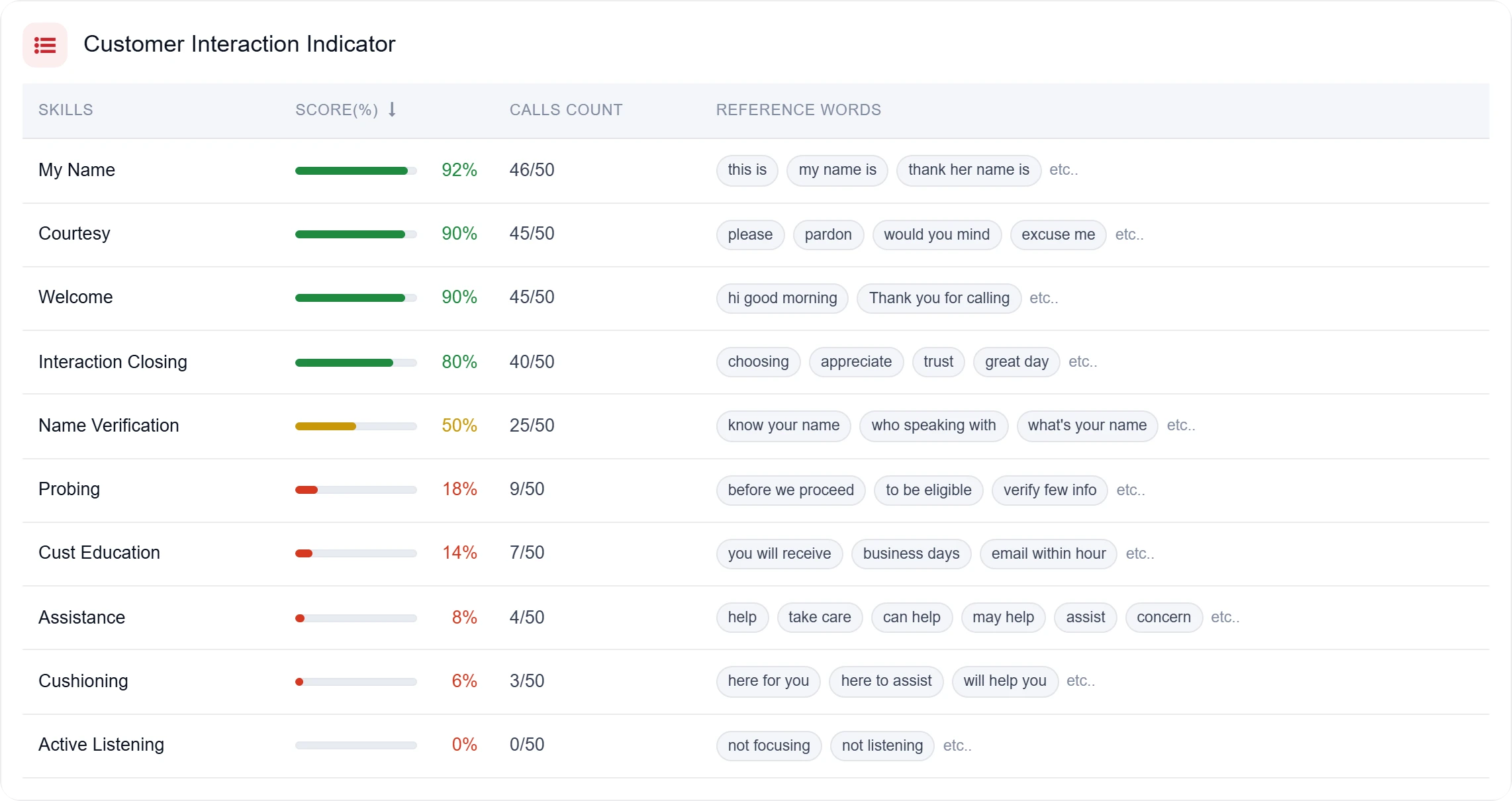
From The Heartbeat app: one agent across 50 calls. Probing shows up on 9 of them. The skills can be sorted so the weakest is at the top, which is where the coaching starts.
Coaching agents to ask first
1. One question before every answer. Make it a simple rule: before solving, ask one question to confirm the problem.
2. Give them the question. “Just so I check the right thing — is it the amount that’s wrong, or a charge you don’t recognise?” A ready-made line is far easier to use than a principle.
3. Repeat the problem back. “So there’s a plan on your bill you didn’t sign up for. Is that right?” It takes five seconds and saves the call.
4. Play their own calls. Let the agent hear the moment they answered too early, and the moment the customer corrected them.
5. Check it next week. If probing appears on more of their calls, the coaching worked. If not, try a different example.
How The Heartbeat handles this
The Heartbeat reviews 100% of your agents’ calls, in any department. Analysts + AI go through every recording, in Hindi, English or Hinglish, and every AI flag is checked by a trained analyst before it reaches you.
The “probing” skill is scored on every call, as one of the ten soft skills checked from the welcome to the close. Each agent’s skills can be sorted weakest first, with the reference words the platform listened for, so you can see exactly who isn’t asking questions and coach that one habit. Your data stays in India, hosted on AWS ap-south-1 (Mumbai).
The fastest route to the right answer is one good question.