Your QA Team Is Too Busy Listening to Coach
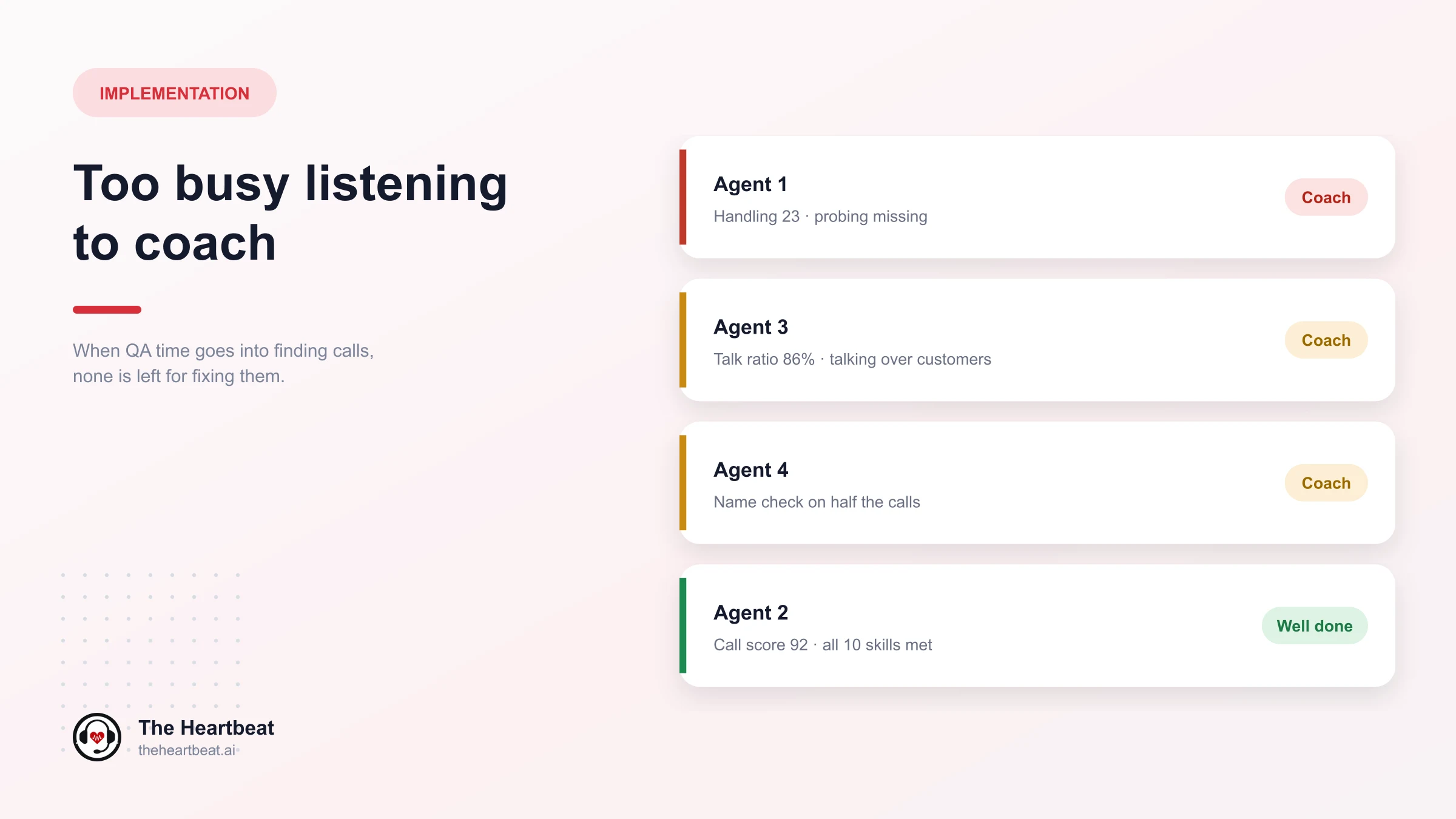
Ask a QA analyst where their week goes, and the answer is almost always the same: listening.
Picking which calls to review. Finding them in the recording system. Playing them, often at normal speed, because skimming misses things. Filling in the scorecard. Writing up notes. Then doing the same for the next call, and the next.
By the end of the week, they’ve reviewed a small share of the floor’s calls. And the part of the job that actually changes how agents work — sitting down with an agent and coaching them — is what gets pushed to “next week”.
Why QA becomes a listening job
Nobody designs a QA team to spend most of its time listening. It happens because of simple maths.
A single call can take as long to review as it took to handle, sometimes longer. A QA analyst has a fixed number of hours in a week. However hard they work, they can only hear a small fraction of the calls their floor takes.
So the job turns into a race to review enough calls to say the team was “covered”. Coaching becomes something done in the time left over, and there’s rarely much left over.
What gets lost
When QA time goes into finding problems, three things suffer:
Coaching quality. Feedback is rushed, generic or late. An agent hears about a call from three weeks ago that they no longer remember.
Coverage. Even a hard-working QA team hears a small share of calls. The serious ones can easily be in the part nobody reached.
Consistency. Different analysts score the same kind of call differently, especially under time pressure. Agents notice, and start to question every score.
The QA team isn’t failing. It’s spending its best people on the part of the job that adds the least value.
What QA time should be spent on
The most valuable things a QA team does are not listening. They are:
- deciding which agent needs help most this week, and with what;
- sitting down with that agent, playing the moment that matters, and agreeing what to do differently;
- checking the following week that it changed;
- spotting patterns across the team and fixing them once, instead of agent by agent;
- recognising the agents who are doing it right.
All of that depends on knowing what happened on the calls. None of it requires the QA team to personally listen to every call to find out.
Starting the week from the calls that need attention
Imagine your QA team’s week starting differently. Instead of a blank list of calls to pick from and hours of playback, every call has already been scored and summarised. The analyst opens a call and knows what happened before pressing play.
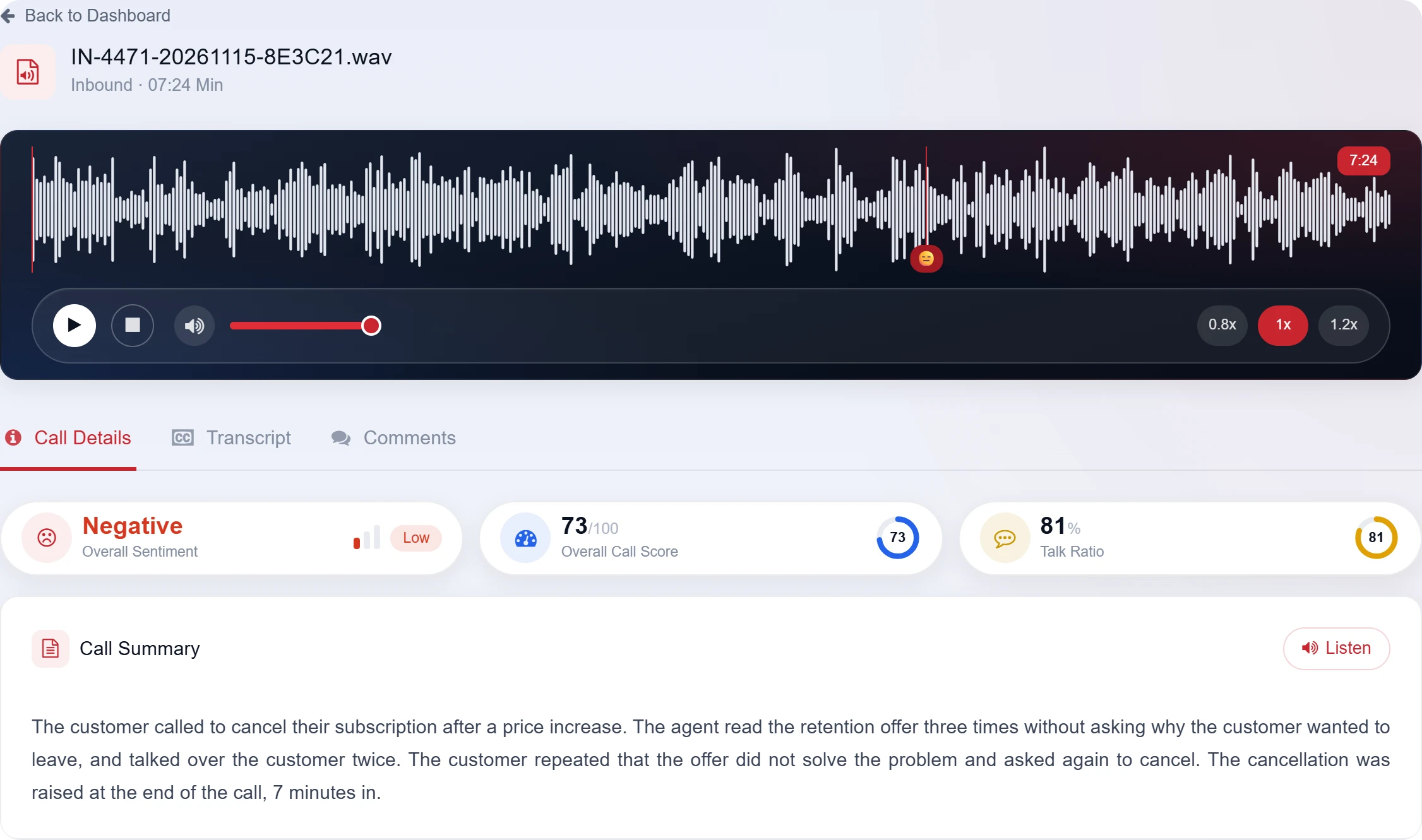
From The Heartbeat app: a 7-minute call, understood in about 20 seconds. The score is 73, the sentiment is negative, and the summary says what went wrong: the agent read the retention offer three times without asking why the customer wanted to leave. The marker on the waveform shows where to listen.
So the analyst doesn’t spend seven minutes finding the problem. They go straight to the moment that matters and spend their time on what to say to the agent.
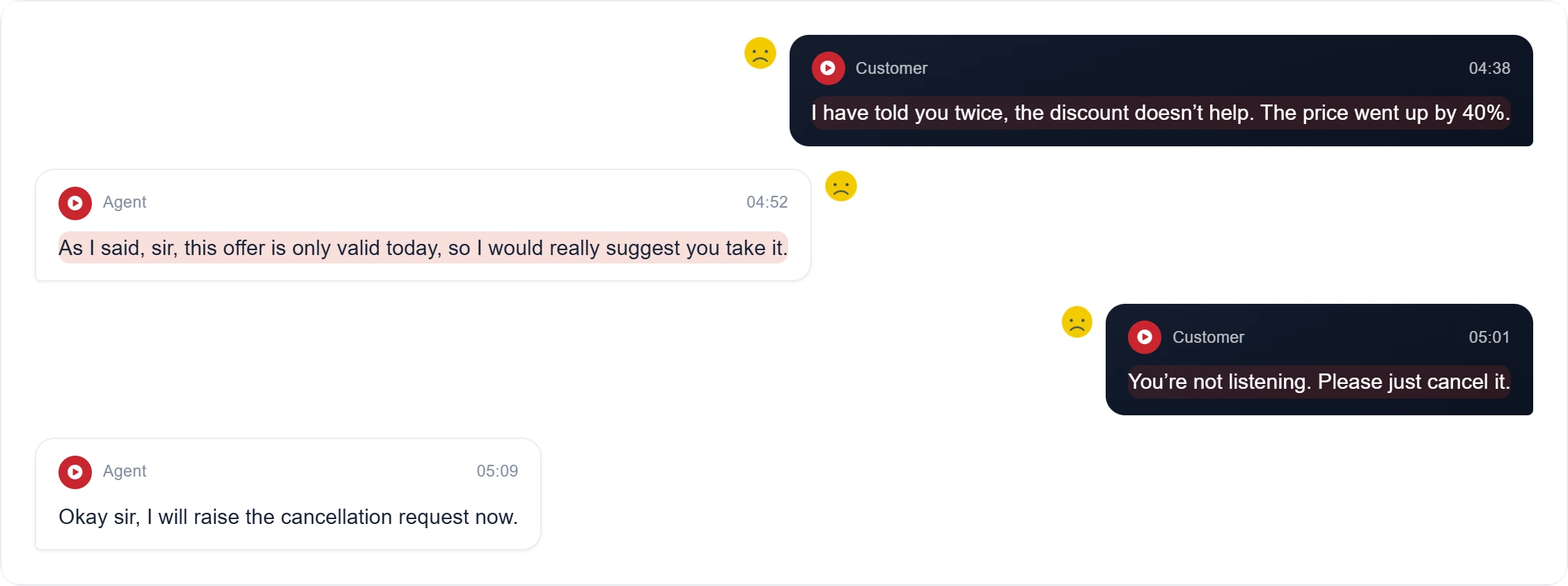
From The Heartbeat app: the moment to coach, at 04:52. The customer has said twice that the discount doesn’t help; the agent repeats the offer anyway. That’s the clip to play in the coaching session, and the habit to work on: ask why before offering anything.
With that in hand, the QA team’s time goes where it matters. They open the calls and agents that need attention first, play the exact moment, and spend their hours coaching. They still listen to calls, but to understand and coach, not to find.
What changes for the team
Coaching gets earlier. Feedback lands within days of the call, while the agent still remembers it.
Every call counts. Nothing serious is missed because it wasn’t in the sample.
Scoring gets consistent. The same standard is applied to every call, so agents argue about the call, not about who scored it.
QA analysts do the work they’re good at. Judgement, coaching and improvement, instead of hours of playback.
How The Heartbeat handles this
The Heartbeat reviews 100% of your agents’ calls, in any department. Analysts + AI go through every recording, in Hindi, English or Hinglish, and every AI flag is checked by a trained analyst before it reaches you.
Every call is scored and analysed automatically: its call score, the ten soft skills, sentiment, emotion, talk and silence. Each call has a summary and marked negative moments, so an analyst can see what happened and jump straight to the part worth playing. The dashboard and the agent league table show which calls and agents need attention first, so QA starts there, not from a blank list. Your data stays in India, hosted on AWS ap-south-1 (Mumbai).
Your QA team was hired to make agents better. The listening should support that, not replace it.