
The Opening Steps Your Team Quietly Skips
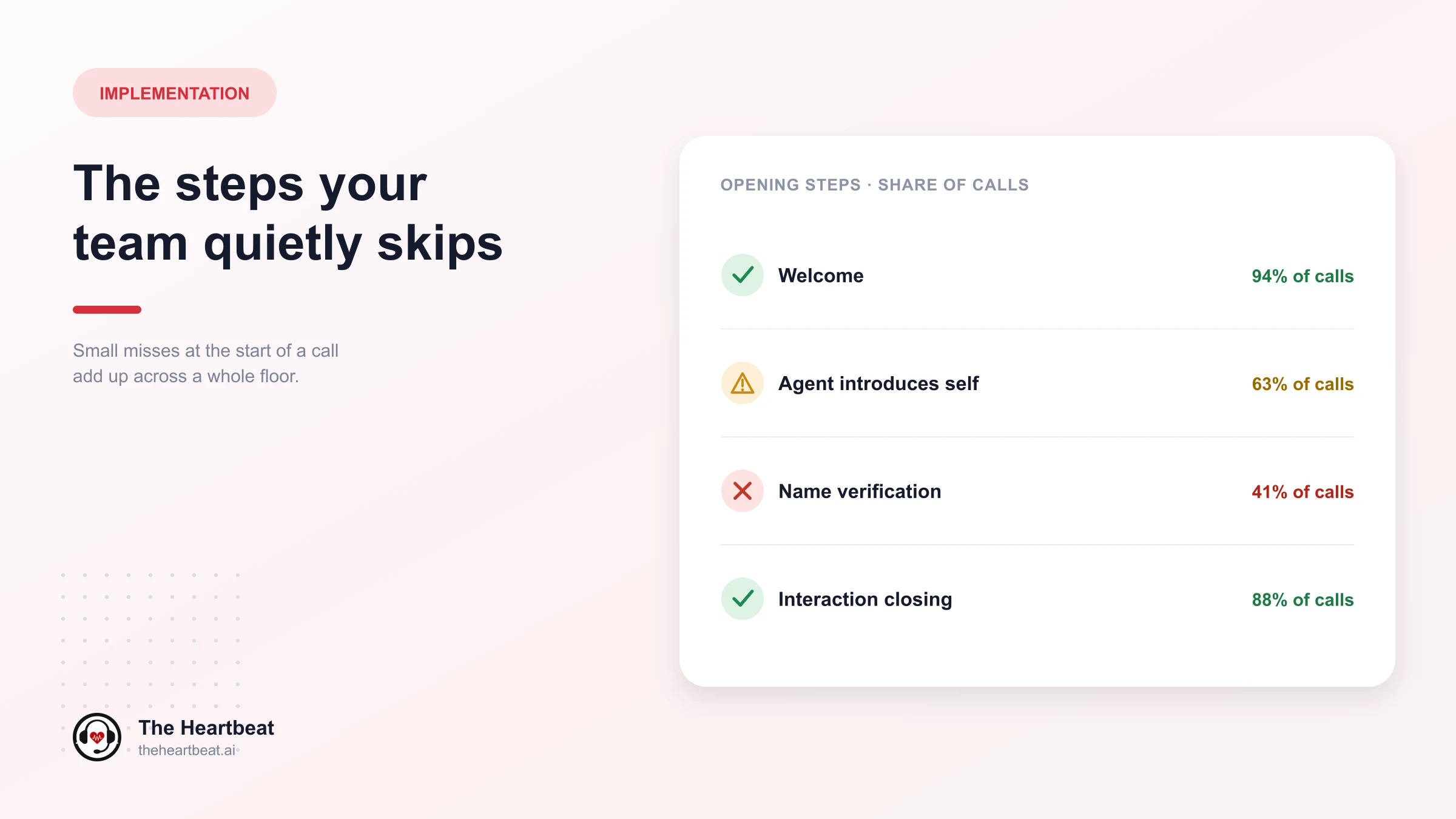
Every call script starts the same way. Greet the customer. Introduce yourself. Confirm who you’re speaking to. It takes fifteen seconds and every agent learned it in training.
Then, slowly, the steps start to disappear. An agent drops the introduction because the customer seems in a hurry. Another skips the name check because it feels awkward. A new joiner notices nobody else does it, and stops too.
No one decides to change the script. But six months later, the opening most of your customers hear is not the one you wrote.
Why skipped steps matter
Each opening step is there for a reason:
- The welcome sets the tone. A customer who’s greeted properly starts the call calmer.
- The agent’s introduction gives the customer a name to refer back to, and makes the call feel personal and accountable.
- Name verification makes sure the agent is talking to the right person before discussing anything about their account. Skip it, and an agent can end up sharing details with the wrong person.
On one call, a missed step rarely causes a problem. But it’s rarely one call. When a step is skipped, it’s usually skipped on most of that agent’s calls — and often by most of the team.
Why nobody notices
Skipped steps are a team-wide problem that sampled QA tends to treat as an individual one.
Each reviewer sees a few calls. A missed introduction on one call gets a note on that agent’s scorecard. Nobody adds up how many agents are missing the same step.
The calls still go fine. Customers rarely complain that an agent didn’t introduce themselves. The step disappears without anything going visibly wrong.
Coaching happens one agent at a time. Team leaders end up giving the same feedback to agent after agent, not realising it’s the same gap across the floor.
The result is a lot of repeated coaching and very little change, because the real problem is the team’s habit, not any one agent.
Seeing it across every call
The useful view is not “did Agent 4 verify the customer’s name?” It’s “on what share of calls did each step actually happen?”
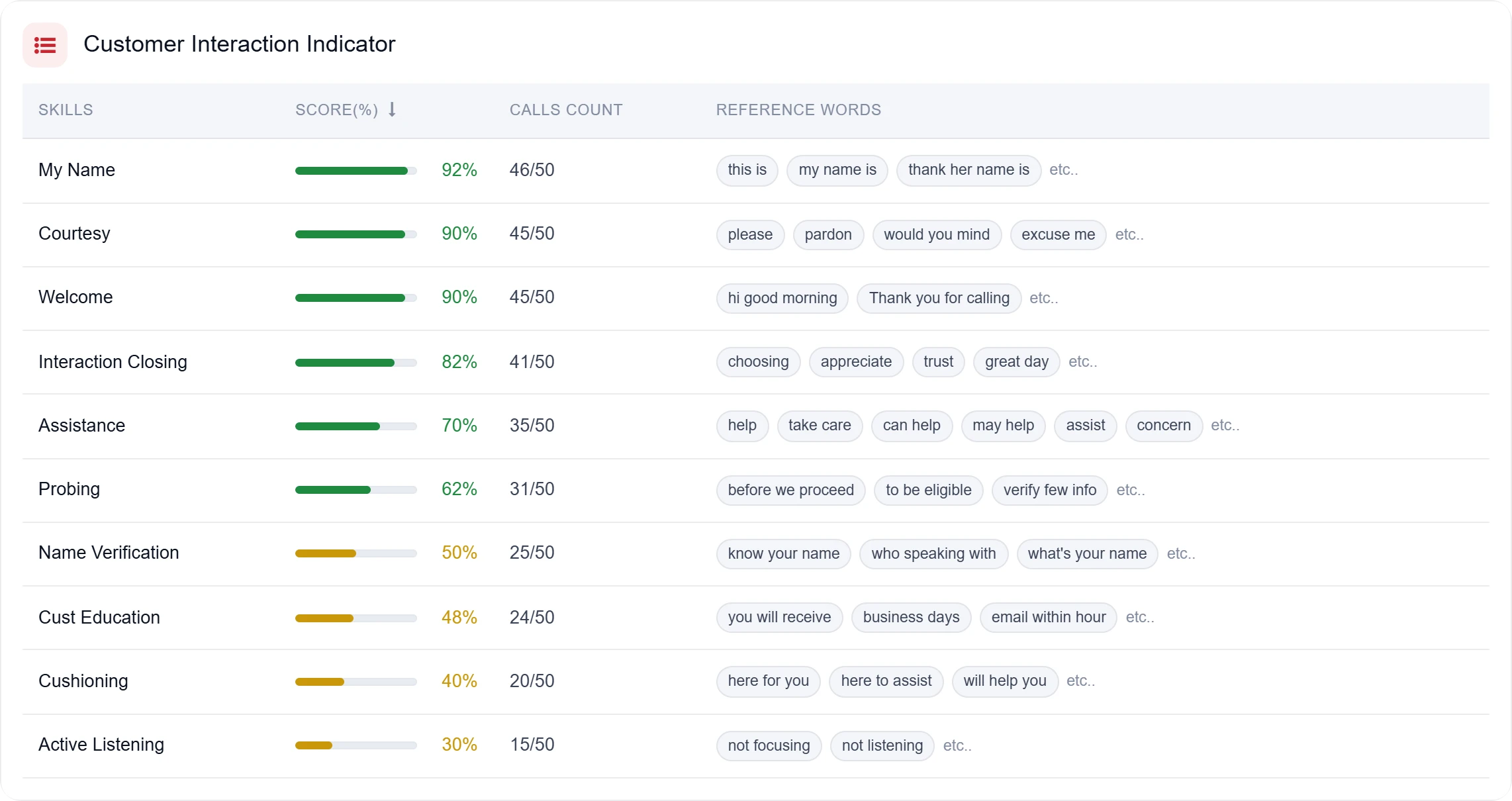
From The Heartbeat app, across 50 calls: the agent introduces themselves on 46 and greets the customer on 45 — but confirms who they’re speaking to on only 25.
Seen this way, the gap is obvious. The welcome and the introduction are fine. Name verification happens on only half the calls. That’s the step to fix — and when the same gap shows up across agents, to fix for everyone at the same time.
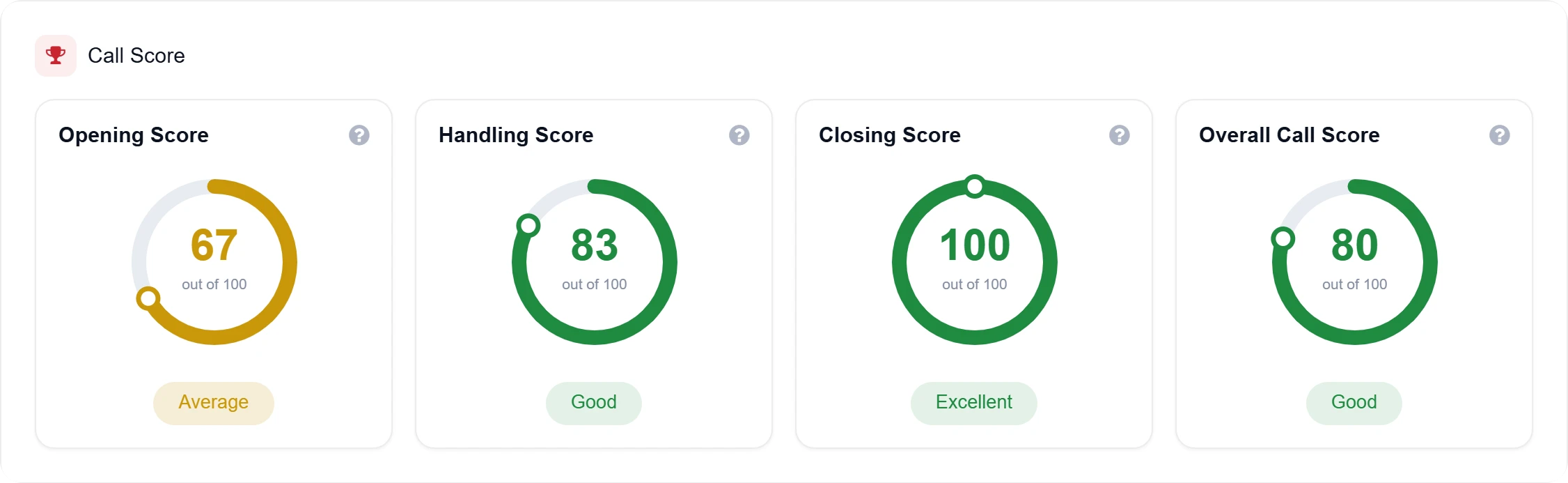
From The Heartbeat app: one call where the agent greeted the customer and gave their name but skipped the name check. The opening score is built from those three steps, so it drops to 67 straight away, while handling and closing stay strong.
Fixing it once, for everyone
When a gap is shared across many agents, coaching each one separately is slow and inconsistent. A better approach:
1. Run one short team refresher. Fifteen minutes in a huddle, with real examples from your own calls, does more than ten separate one-to-ones saying the same thing.
2. Explain why the step exists. Agents skip steps that feel pointless. A clear reason — “this is how we avoid sharing account details with the wrong person” — makes them stick.
3. Give the exact words. “Before I go ahead, may I confirm I’m speaking with Mr Sharma?” A line that sounds natural is far more likely to be used than a rule.
4. Coach individually only where it’s still missing. After the refresher, a few agents may still skip the step. They need a one-to-one; the rest don’t.
5. Recognise the agents who never skip. They’re proof that the full opening works on real calls, and they’re the people new joiners should sit beside.
How The Heartbeat handles this
The Heartbeat reviews 100% of your agents’ calls, in any department. Analysts + AI go through every recording, in Hindi, English or Hinglish, and every AI flag is checked by a trained analyst before it reaches you.
The welcome, the agent’s introduction and the name check are scored on every call, and together they make up the opening score. For each agent, you can see how often each step actually happened across their calls, with the reference words the platform listened for. Your data stays in India, hosted on AWS ap-south-1 (Mumbai).
Scripts don’t usually fail all at once. They wear away one skipped step at a time, until the call your customers hear is one nobody actually designed.