Angry Customers Aren't the Problem. How Your Agents Respond Is.
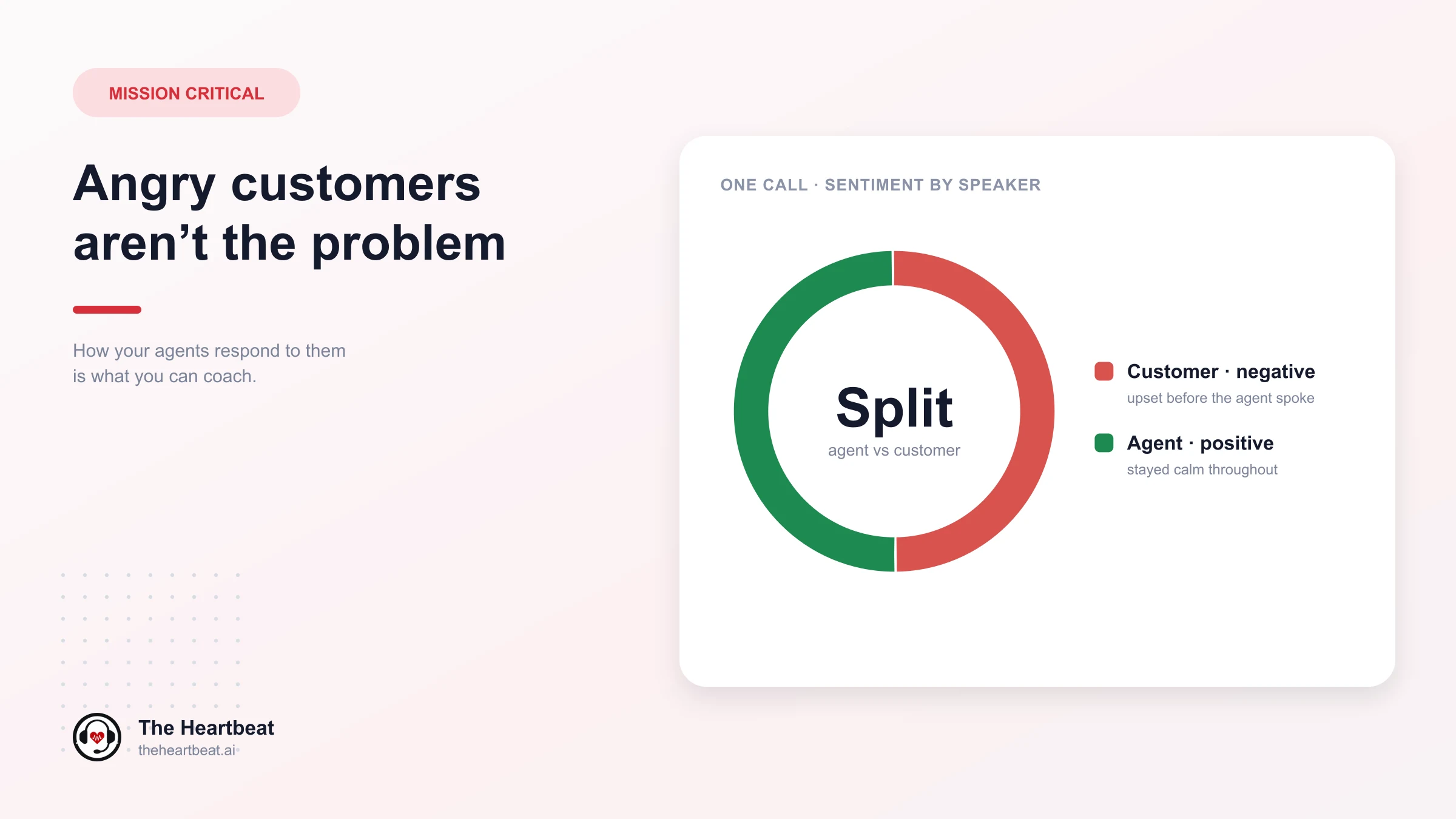
Some calls are going to be difficult before the agent says a word. A third failed repair visit. A charge the customer doesn’t recognise. A service that’s been down for two days. The customer is angry, and they have every reason to be.
Every contact centre has these calls, in every department. The question isn’t how to avoid them. It’s what happens when they reach your agents.
Two mistakes teams make with angry customers
Blaming the agent for the customer’s mood. If a call scores badly because the customer was angry, the agents who handle the hardest calls look like the worst agents. They’re often the opposite: the people who stayed calm through the toughest conversations on the floor.
Ignoring how the agent responded. The opposite mistake is to write off every difficult call as “the customer was angry, nothing to learn”. That hides the calls where the agent made things worse, and those are the ones that turn into complaints.
Both mistakes come from treating “the customer was angry” and “the agent handled it badly” as the same thing. They aren’t.
Frustration is context. The response is the score.
The fair way to look at these calls is to separate the two:
- The customer’s frustration is context. It tells you the call was hard. It should never lower the agent’s score on its own.
- The agent’s response is what gets judged. Did they stay professional? Did they acknowledge the problem? Did they escalate when they should have? Or did they get defensive, blame the customer, or raise their voice?
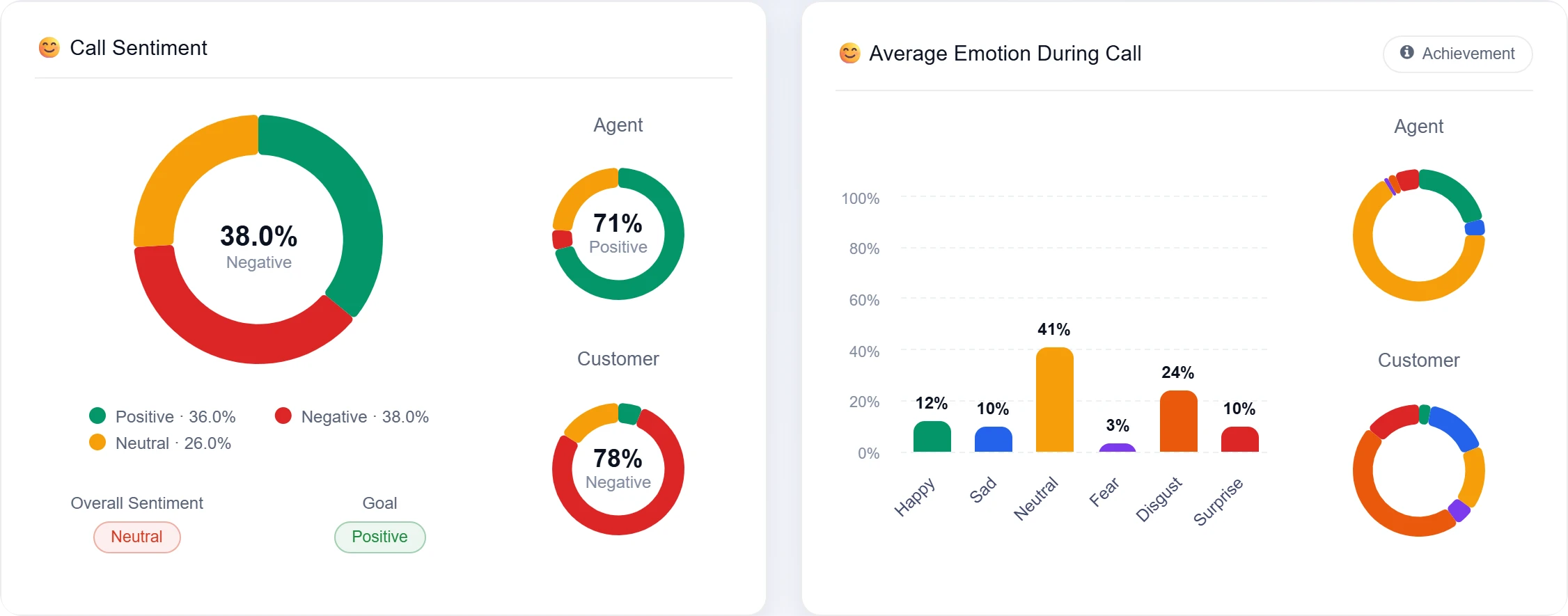
From The Heartbeat app: one hard call, measured for each speaker separately. The customer is 78% negative, and disgust leads their emotions. The agent stays 71% positive and mostly neutral in tone. That’s the split that matters: the call was hard, and the agent handled it well.
Seen this way, the picture is fairer and more useful. Most agents handling angry customers are doing well, and they deserve to hear it. The few who aren’t stand out clearly, and the coaching can focus on them.
What a bad response sounds like
When an agent’s response makes a call worse, it usually follows one of a few patterns:
- Getting defensive. “That’s not my department.” “I’m only telling you what the system says.”
- Blaming the customer. “You weren’t at home, so the visit was cancelled.”
- Dismissing the problem. “It’s just a small delay, sir.”
- Matching the customer’s tone. Raising their voice, talking faster, cutting the customer off.
Usually, it isn’t that the agent doesn’t care. They’ve had a long shift, they’ve taken several angry calls in a row, and on this one they ran out of patience. That’s exactly why it needs to be caught and coached — not punished.
Coaching agents to handle angry customers
1. Acknowledge before explaining. “I’m sorry this is the third visit. That’s really frustrating.” One sentence of acknowledgement does more than any explanation of policy.
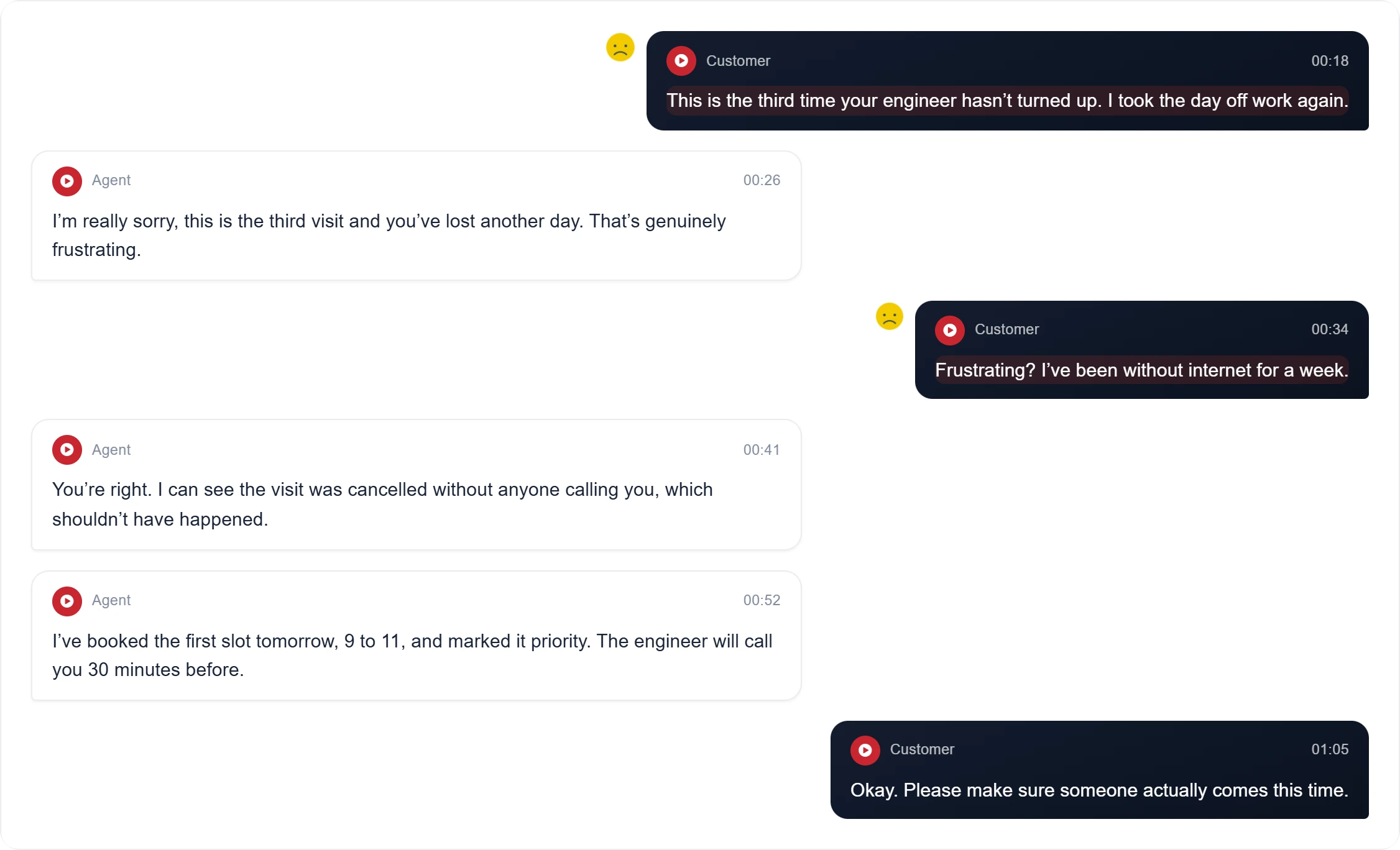
From The Heartbeat app: the third failed repair visit, handled well. The customer’s angry lines are marked as negative moments, and none of the agent’s are. The agent acknowledges first (“this is the third visit and you’ve lost another day”), owns what went wrong, then books a priority slot with a call ahead.
2. Never blame the customer, even when it’s partly their fault. The goal is to fix the problem, not win the argument.
3. Give the customer a next step. Angry customers calm down fastest when they hear what will happen now, and when.
4. Escalate early when it’s needed. If the agent can’t fix it, bringing in a supervisor is a good response, not a failure.
5. Recognise the agents who do this well. Staying calm on a hard call is a skill. Agents who show it should hear that it was noticed.
6. Watch for fatigue. If an agent’s responses slip late in a shift or after a run of difficult calls, the fix may be about scheduling and breaks, not just coaching.
How The Heartbeat handles this
The Heartbeat reviews 100% of your agents’ calls, in any department. Analysts + AI go through every recording, in Hindi, English or Hinglish, and every AI flag is checked by a trained analyst before it reaches you.
On every call, sentiment is shown separately for the agent and the customer, so an upset customer handled well looks different from an agent who turned the call negative. Emotion is read from the voice for each speaker as well, and the full transcript shows exactly what was said, so the coaching conversation starts from the call itself. Your data stays in India, hosted on AWS ap-south-1 (Mumbai).
You can’t stop customers from calling angry. You can make sure that how your agents respond is something you see, coach and recognise, on every call.