Your Good Agents Never Hear That They're Good
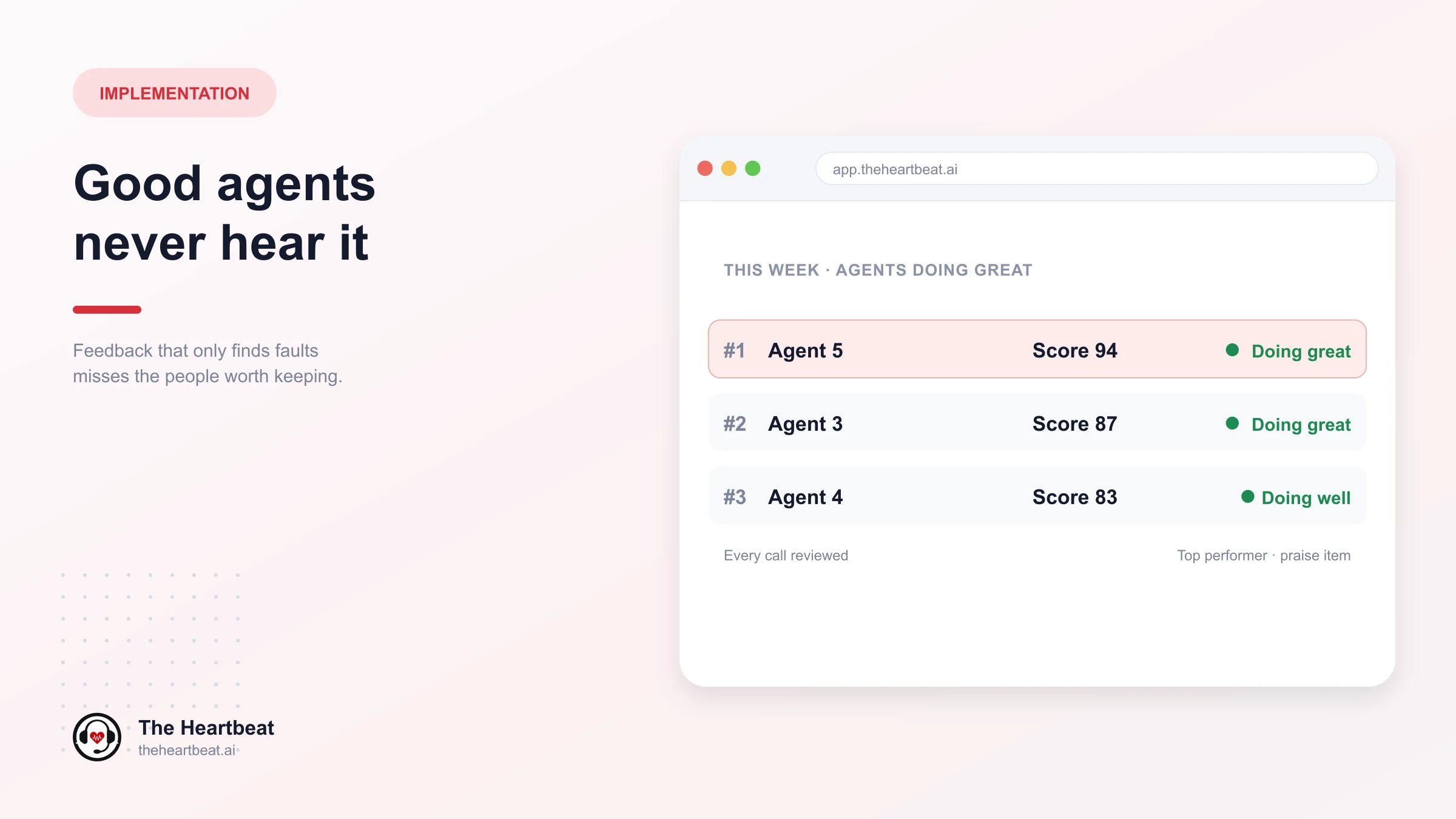
Think about the last ten coaching conversations on your floor. How many started with “you did something well”?
In most contact centres, feedback follows problems. A complaint comes in, a call gets flagged, a score drops — and someone sits the agent down. Agents who never cause a problem rarely get a conversation at all.
From the outside, that looks efficient. Time goes where it’s needed. But to the agent doing everything right, it feels like nobody is watching.
Why recognition gets skipped
QA is built to find faults. Scorecards, flags and reviews are designed to spot what went wrong. “Nothing went wrong” doesn’t trigger anything.
Time is short. With limited hours, team leaders spend them on the agents who are struggling. Praise feels like a nice-to-have.
Good work is quiet. A calm, well-handled call doesn’t produce a complaint, an escalation or a story. It just ends well.
Nobody has the evidence. “You’re doing great” is easy to say and easy to dismiss. Without specifics, it doesn’t land.
What it costs
Good agents leave. Agents who feel unnoticed are more likely to look elsewhere — and the best agents have the most options.
Good habits fade. If nobody tells an agent which of their habits are right, they have no reason to protect them on a busy day.
New joiners copy the wrong people. If the team’s best agents aren’t named, new joiners learn from whoever happens to sit nearest.
Feedback feels like punishment. When the only reason to be called in is a problem, every coaching invitation feels like bad news.
Recognition needs evidence too
The most useful recognition is specific. Not “good job this month”, but “you followed every step on every call this week, and your handling score is the highest on the team.”
That needs the same thing as good coaching: knowing what actually happened on the agent’s calls.
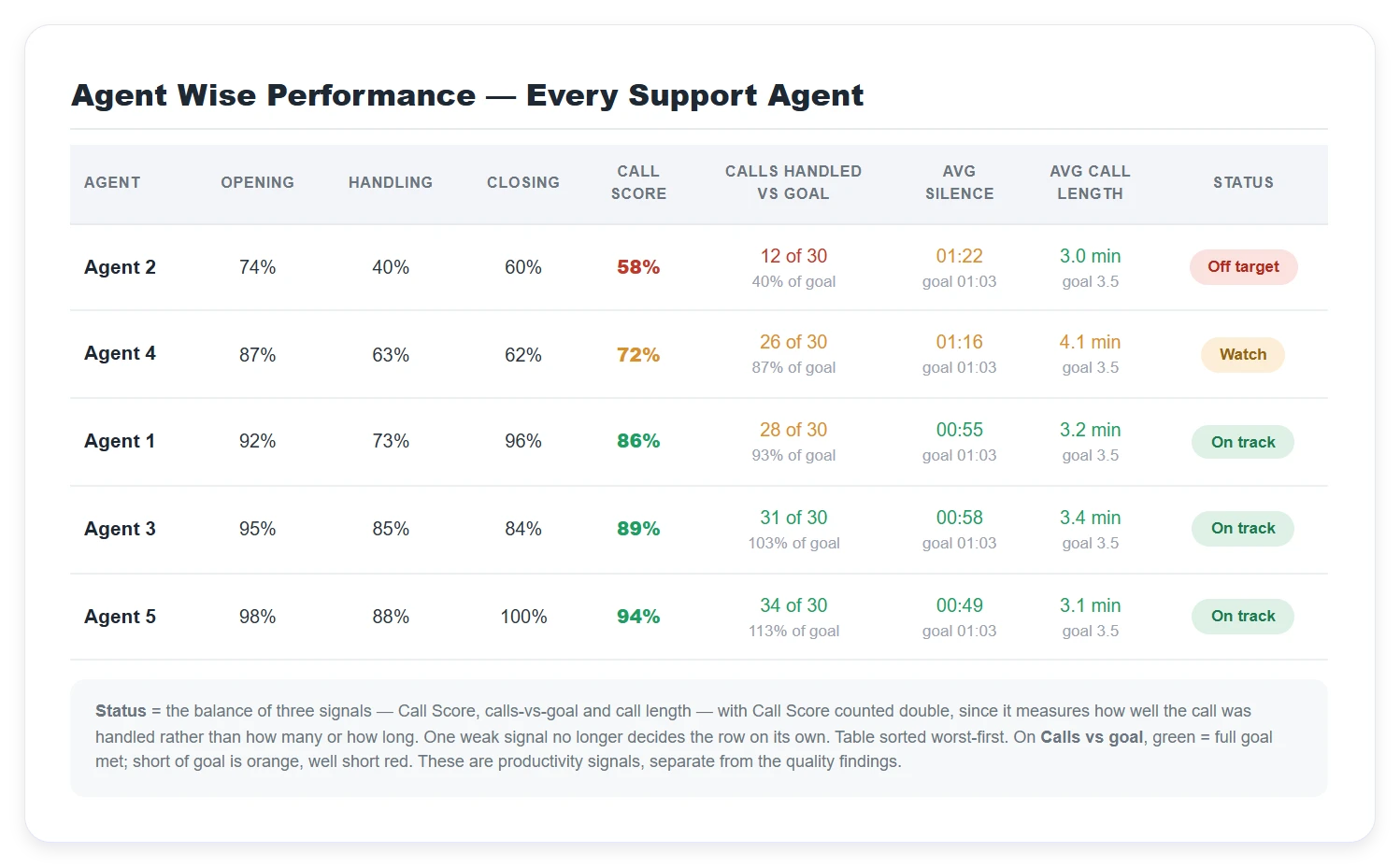
From The Heartbeat weekly report: the agents doing well sit in the same table as the ones who need help. Agent 5 has a 94% call score, handled 34 calls against a goal of 30, and kept calls short. That’s specific praise a team leader can say out loud.
When every agent is shown in one place, the strong performers are as easy to see as the ones who need help. And recognition stops depending on whether anyone happened to hear a good call.
Making recognition a habit
1. Name the top performers every week. Not just the ones who need coaching. Put both in the same list.
2. Be specific. Point to the skill, the score or the call. “Your opening is perfect on every call” means more than “nice work”.
3. Use their calls as examples. Playing a strong agent’s call in a team huddle is recognition and training at the same time.
4. Seat new joiners beside them. The agents doing it right are the best possible model for people still forming habits.
5. Recognise improvement, not just the top. An agent who moved from struggling to steady deserves to hear it as much as the best agent on the floor.
How The Heartbeat handles this
The Heartbeat reviews 100% of your agents’ calls, in any department. Analysts + AI go through every recording, in Hindi, English or Hinglish, and every AI flag is checked by a trained analyst before it reaches you.
“Doing great” agents are shown in the weekly report alongside everyone else, so the strong performers are never invisible. The action list is not only bad news: the top performer on call score gets a praise item, so recognition is a task with an owner, not something left to chance. Your data stays in India, hosted on AWS ap-south-1 (Mumbai).
The agents you most want to keep are often the ones you talk to least. Make sure they hear it.