One QA Standard Doesn't Fit Every Department
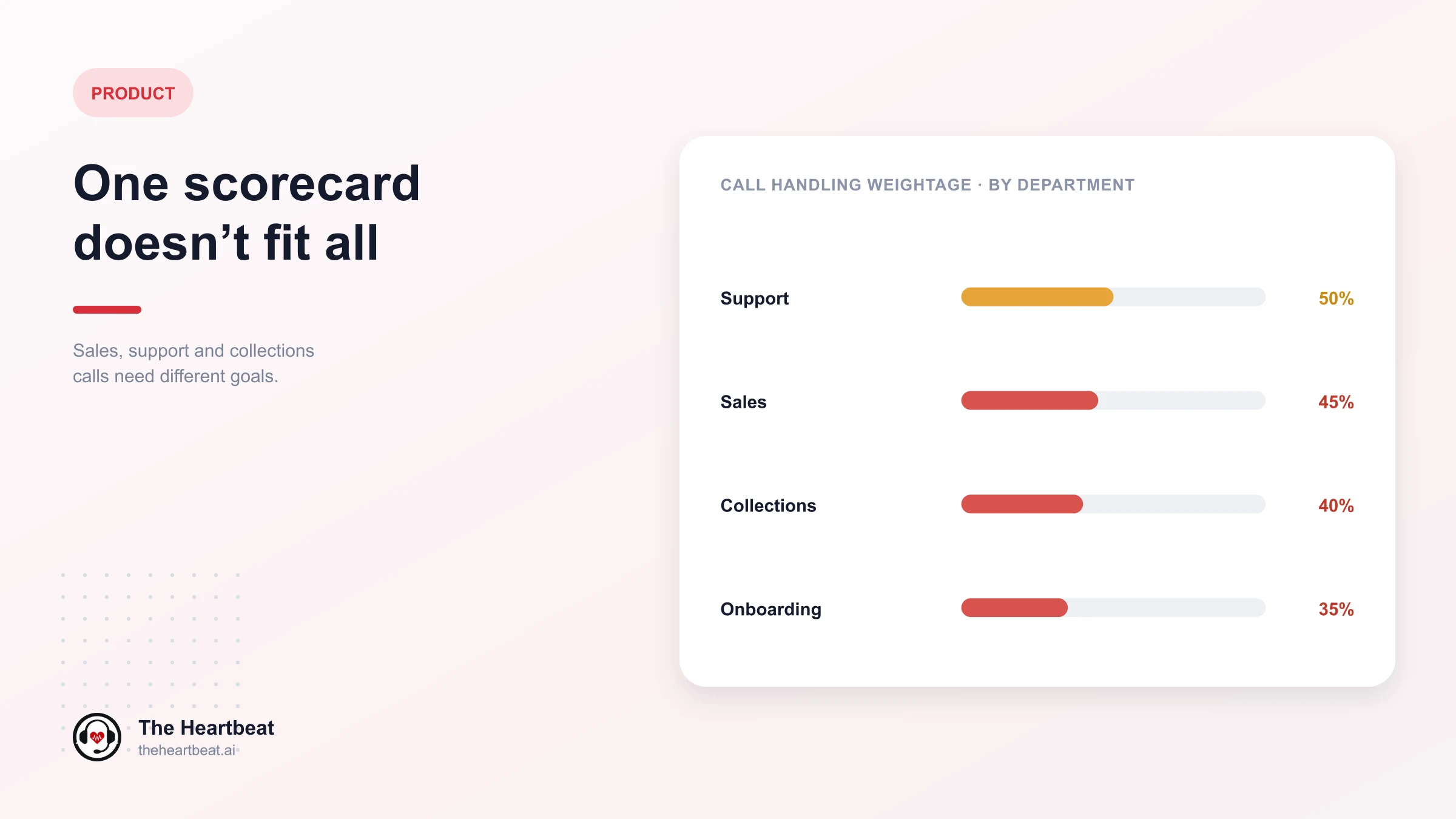
Many contact centres run several very different processes under one roof. A sales team making outbound calls. A support team fixing problems. A collections team handling difficult conversations about payments. An onboarding team walking new customers through setup.
And very often, all of them are judged on the same scorecard, with the same targets.
Why one standard doesn’t work
Each type of call has a different shape, a different goal and different risks.
Call length means different things. A three-minute sales call might be ideal. A three-minute support call might mean the problem was brushed aside.
The important stage differs. In support, the middle of the call — understanding and fixing the problem — matters most. In some processes, the opening and the verification steps carry the most risk.
Talk patterns differ. An onboarding agent explaining a product will talk more than a collections agent who needs to listen.
The rules differ. What an agent must say, must avoid saying and must check varies by process.
What one scorecard does to your teams
- Scores stop meaning anything. A department that looks weak may simply be measured against the wrong standard.
- Agents game the wrong targets. If support agents are pushed to match sales call lengths, they cut calls short.
- Team leaders lose faith in QA. If the scorecard doesn’t fit their process, they stop using it to coach.
- Comparisons mislead. Ranking departments against each other on one standard rewards the ones whose calls happen to fit it.
Give each department its own standard
The fix is to treat each team as its own space, with goals that match its calls.
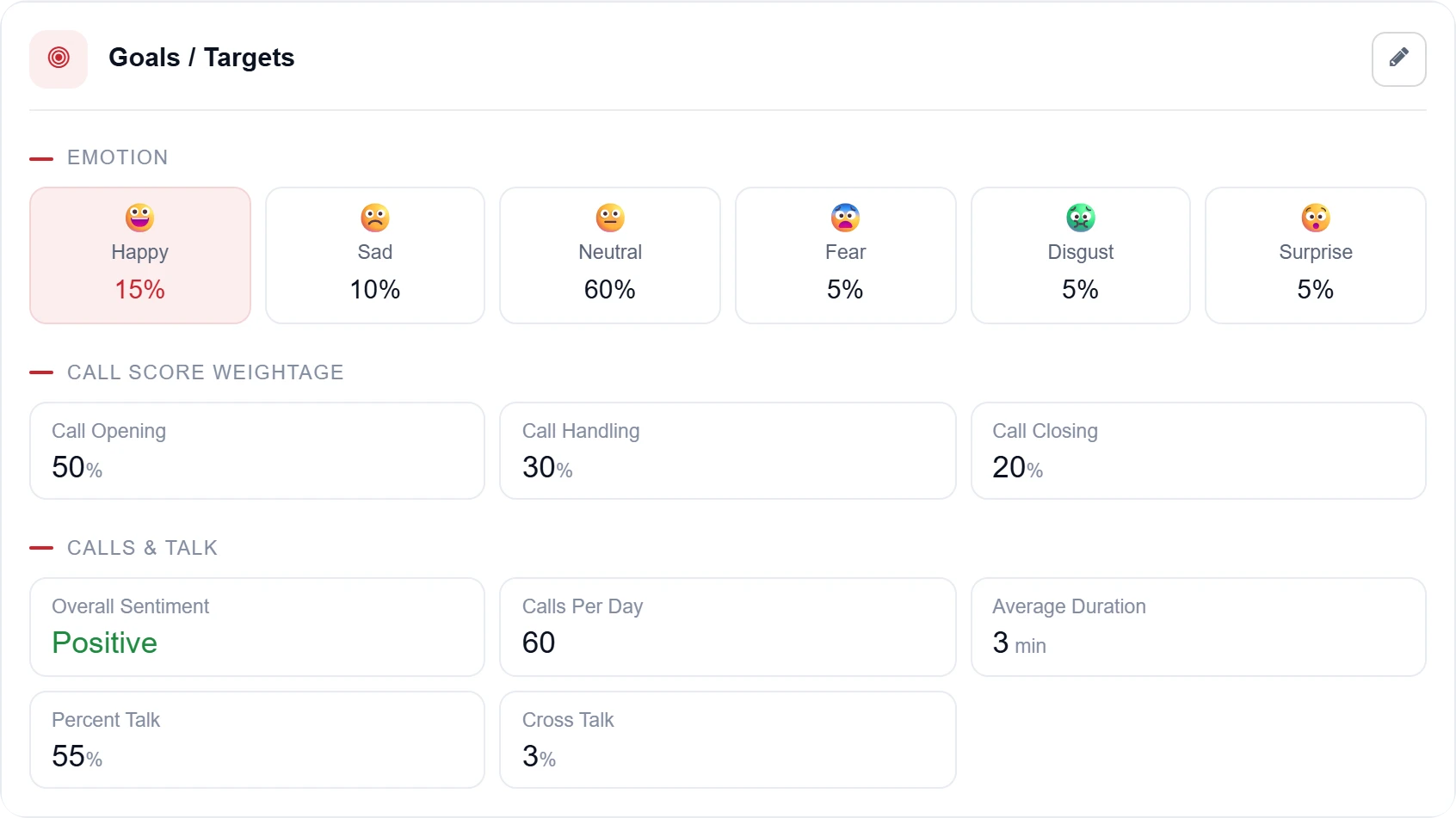
From The Heartbeat app: the goals for a Collections workspace. The opening carries 50% of the call score, because that’s where verification and disclosures happen. The targets are 60 calls a day at 3 minutes each, with talk at 55% so the agent listens more. A support workspace beside it can weight handling highest and allow longer calls.
With its own standard, each department’s score answers the right question: is this team doing well at the job it actually has?
Setting the right standard for each team
1. Start from what a good call looks like. For each process, agree what a good call achieves and how long it should reasonably take.
2. Weight the stages to match. If the middle of the call matters most, give handling more weight. If verification is critical, make sure the opening counts.
3. Set realistic targets. Calls per day, call length and talk share should reflect each team’s real work, not a company-wide average.
4. Keep each team’s settings separate. Rules, language, keyword lists and targets should belong to the team they apply to.
5. Review the standard as processes change. A new product or a new script may need new targets.
How The Heartbeat handles this
The Heartbeat reviews 100% of your agents’ calls, in any department. Analysts + AI go through every recording, in Hindi, English or Hinglish, and every AI flag is checked by a trained analyst before it reaches you.
Each department is its own workspace, with its own goals, call-score weightage and settings — language, PII masking, dead-air threshold and keyword lists. So a sales team, a support team and a collections team are each scored against a standard that fits their own calls. Your data stays in India, hosted on AWS ap-south-1 (Mumbai).
A score is only useful if it measures the right thing. For each team, that’s a different thing.