
"I Never Said That": Coaching Without Evidence
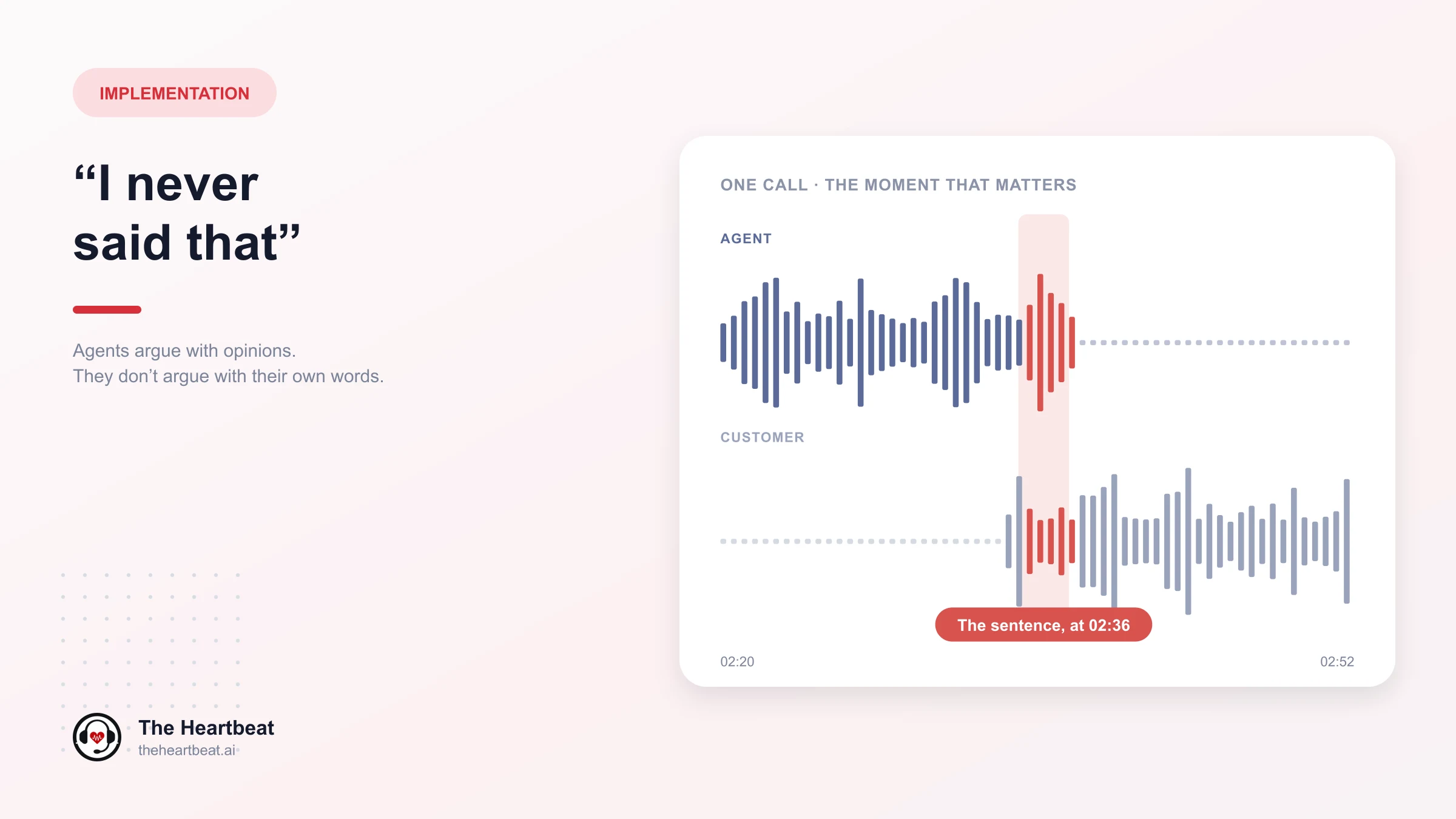
“On Tuesday, you were rude to a customer.”
“I wasn’t rude. Which call? What did I say?”
“The reviewer’s note says your tone was dismissive.”
“That’s their opinion. I was just being direct.”
Ten minutes in, the coaching session has become a debate about what happened on a call neither person can quite remember. The agent leaves feeling judged. The team leader leaves frustrated. Nothing changes.
Why coaching turns into an argument
Notes are opinions. “Dismissive tone” or “poor empathy” is a reviewer’s interpretation. Agents can — and do — interpret it differently.
Memory fades fast. An agent who takes forty calls a day won’t remember one from last week. Without the call itself, they can’t agree or disagree honestly.
Second-hand feedback feels unfair. Hearing about your call from someone who heard it from someone else makes any agent defensive.
There’s no way to settle it. When the only evidence is a note, the conversation comes down to whose word counts.
What changes with the call in the room
Agents argue with opinions. They rarely argue with their own words.
When the team leader can open the call, go to the moment and play it — or show the exact line in the transcript — the conversation changes. It’s no longer “the reviewer thinks you were rude”. It’s “listen to this part. How do you think the customer heard it?”
Most agents, hearing themselves, will say it before you do.
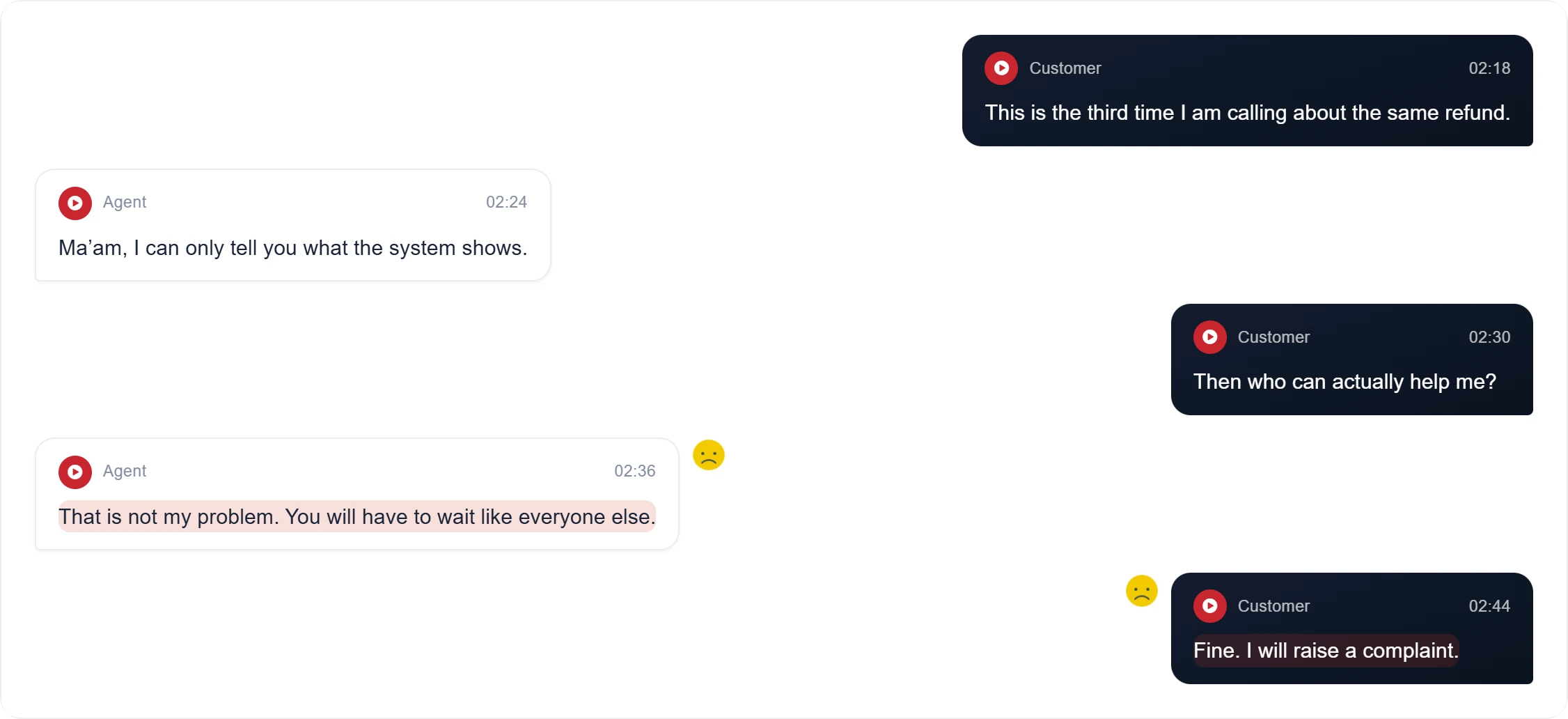
From The Heartbeat app: the exact line, at 02:36, highlighted as a negative moment. There’s nothing to argue about: it’s the agent’s own words, with the customer’s lines either side of it.
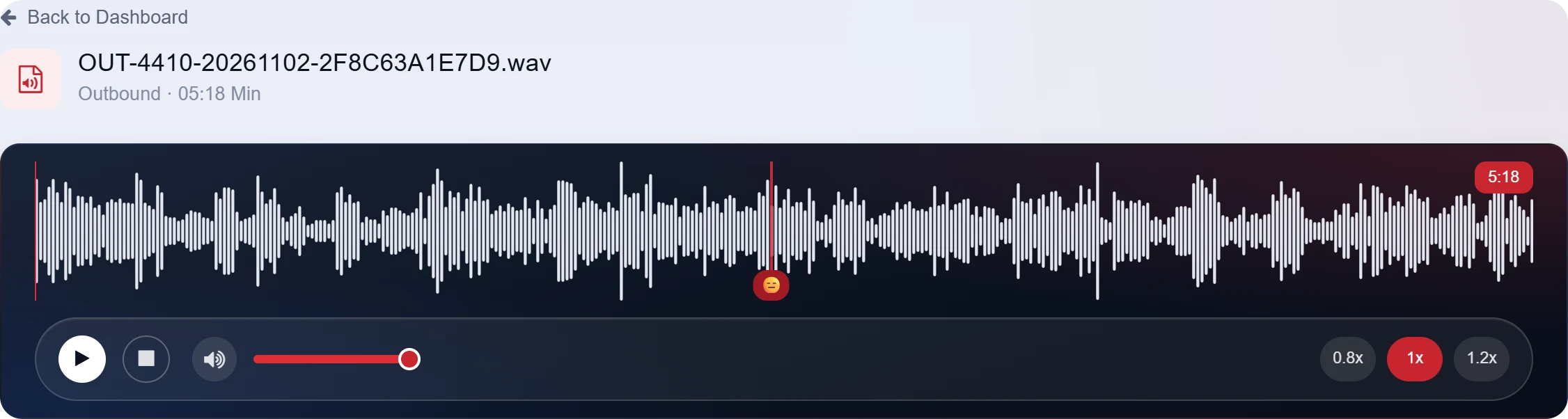
From The Heartbeat app: the same call’s recording. The red marker sits on the agent’s negative moment, so the team leader can click straight to it and play it in the session.
Coaching from evidence
1. Bring the call, not the note. Open the recording and transcript together in the session.
2. Play the moment first. Let the agent hear it before you say anything about it.
3. Ask before telling. “How do you think that came across?” lets the agent reach the point themselves.
4. Play a good example too. Follow it with a call where the same situation was handled well — ideally one of their own.
5. Agree one change. Leave with a specific line or habit to try, and check it on their calls next week.
6. Coach soon after the call. The closer the session is to the call, the more the agent remembers, and the less there is to argue about.
How The Heartbeat handles this
The Heartbeat reviews 100% of your agents’ calls, in any department. Analysts + AI go through every recording, in Hindi, English or Hinglish, and every AI flag is checked by a trained analyst before it reaches you.
Every call has its recording, full transcript and scores in one place, so coaching starts from what was actually said rather than from someone’s notes. Notes and comments go on the call itself, so the next person to open it finds the context there. Your data stays in India, hosted on AWS ap-south-1 (Mumbai).
The best evidence in any coaching conversation is the agent’s own voice.